
Major Tech Companies Adopt Google's SynthID AI Watermarking Technology
Here's what it means for you.
As AI-generated content becomes ubiquitous, understanding its authenticity is crucial for professionals across industries.
Why it matters
The integration of SynthID by major tech companies signals a pivotal shift towards transparency in digital media, impacting trust and verification standards.
What happened (in 30 seconds)
- On May 19, 2026, Google announced the adoption of its SynthID AI watermarking technology by companies like OpenAI and Nvidia.
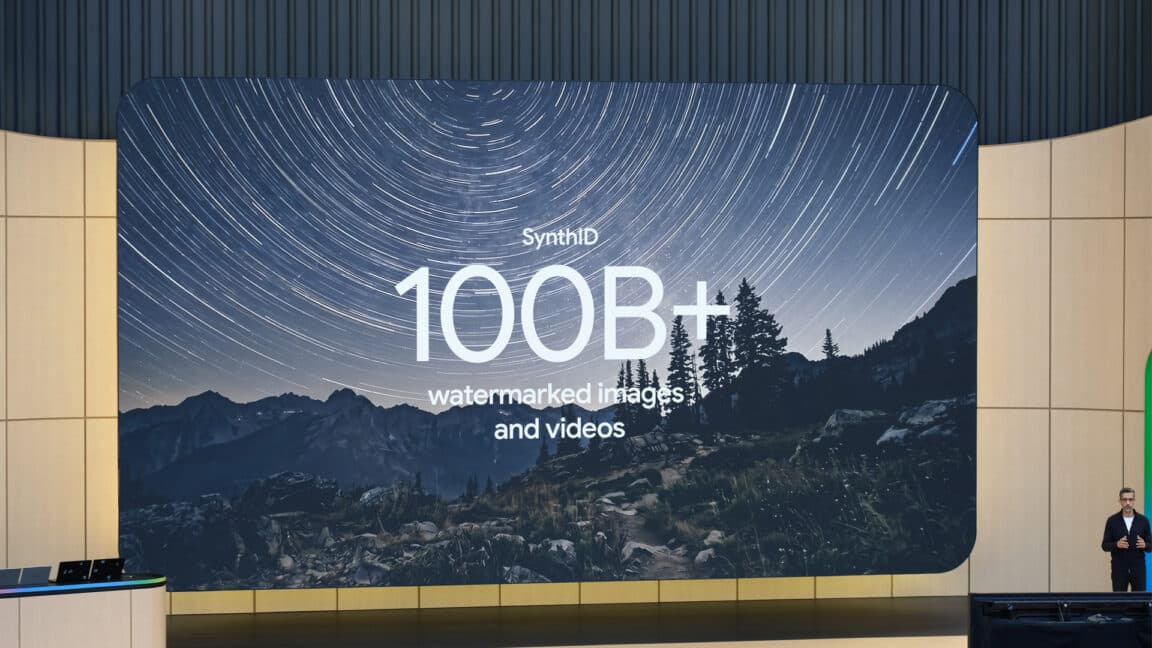
- SynthID has been applied to over 100 billion images and videos, addressing concerns about the authenticity of AI-generated content.
- The technology aims to enhance content verification, with tools like the Gemini app and Chrome's right-click image check already in use.
The context you actually need
- SynthID is an invisible watermarking system designed to identify AI-generated content, launched publicly in late 2025.
- Major players like OpenAI and Nvidia are embedding SynthID into their platforms, indicating a collective industry effort towards content authenticity.
- The technology's adoption has been positively received, with stakeholders emphasizing the need for robust verification systems to combat misinformation.
What's really happening
The adoption of Google's SynthID AI watermarking technology marks a significant evolution in how digital content is created, shared, and verified. As generative AI tools become increasingly sophisticated, the potential for misinformation and manipulated media rises. SynthID addresses these challenges by providing a means to authenticate AI-generated content, thereby enhancing trust among users and stakeholders.
The technology operates by embedding an invisible watermark into digital media, which can be detected by various tools. Since its public launch in late 2025, SynthID has been applied to over 100 billion images and videos, as well as 60,000 years of audio assets. This extensive application underscores the urgency and necessity of establishing verification standards in an era where AI-generated content is prevalent.
The integration of SynthID by major companies like OpenAI and Nvidia signifies a collaborative approach to tackling the authenticity crisis in digital media. OpenAI has embedded SynthID into images generated by its models, while Nvidia plans to incorporate it into its Cosmos models. This multi-partner rollout not only enhances the credibility of AI-generated content but also sets a precedent for industry-wide standards.
Moreover, Google is expanding SynthID's detection capabilities to consumer-facing services, allowing users to verify the authenticity of media through tools like the Gemini app and Chrome's right-click image check. This accessibility is crucial for everyday users who may encounter AI-generated content across various platforms.
The positive feedback from industry stakeholders highlights a growing recognition of the importance of transparency in AI-generated media. As misinformation becomes a pressing concern, the demand for robust verification systems is likely to increase. This trend may lead to regulatory frameworks that prioritize content authenticity, influencing how companies operate and how consumers engage with digital media.
In summary, the adoption of SynthID represents a proactive step towards enhancing transparency and trust in AI-generated content. As this technology becomes more integrated into various platforms, it will likely reshape the landscape of digital media, impacting everything from content creation to regulatory measures.
Who feels it first (and how)
- Content creators: They will need to adapt to new verification standards and may benefit from enhanced credibility.
- Tech companies: Firms adopting SynthID will likely gain a competitive edge in trust and transparency.
- Consumers: Users will have greater confidence in the authenticity of the media they consume.
- Regulators: Authorities may feel pressure to establish guidelines for AI-generated content verification.
What to watch next
- Regulatory developments: Keep an eye on how governments respond to the need for verification standards in AI-generated content, as this could shape market dynamics.
- Adoption rates: Monitor how quickly other companies integrate SynthID or similar technologies, which will indicate the industry's commitment to transparency.
- Consumer behavior: Watch for shifts in how users engage with AI-generated content, particularly regarding trust and verification.
Major tech companies are adopting SynthID to enhance content authenticity.
Regulatory frameworks will evolve to address the need for verification in AI-generated media.
The long-term impact on consumer trust and engagement with digital media remains to be seen.
Frequently Asked Questions
- Why it matters?
- The integration of SynthID by major tech companies signals a pivotal shift towards transparency in digital media, impacting trust and verification standards.
- What happened (in 30 seconds)?
- On May 19, 2026, Google announced the adoption of its SynthID AI watermarking technology by companies like OpenAI and Nvidia. SynthID has been applied to over 100 billion images and videos, addressing concerns about the authenticity of AI-generated content. The technology aims to enhance content verification, with tools like the Gemini app and Chrome's right-click image check already in use.
- What's really happening?
- The adoption of Google's SynthID AI watermarking technology marks a significant evolution in how digital content is created, shared, and verified. As generative AI tools become increasingly sophisticated, the potential for misinformation and manipulated media rises. SynthID addresses these challenges by providing a means to authenticate AI-generated content, thereby enhancing trust among users and stakeholders. The technology operates by embedding an invisible watermark into digital media, whic
- Who feels it first (and how)?
- Content creators: They will need to adapt to new verification standards and may benefit from enhanced credibility. Tech companies: Firms adopting SynthID will likely gain a competitive edge in trust and transparency. Consumers: Users will have greater confidence in the authenticity of the media they consume. Regulators: Authorities may feel pressure to establish guidelines for AI-generated content verification.
- What to watch next?
- Regulatory developments: Keep an eye on how governments respond to the need for verification standards in AI-generated content, as this could shape market dynamics. Adoption rates: Monitor how quickly other companies integrate SynthID or similar technologies, which will indicate the industry's commitment to transparency. Consumer behavior: Watch for shifts in how users engage with AI-generated content, particularly regarding trust and verification.
Consumer tech news, reviews, and buying guides for gadgets and electronics.
"TechRadar is known for comprehensive buying advice, hardware reviews, and consumer tech news targeted at mainstream audiences."
— A47 Editor
With SynthID, Google is cleaning up the AI mess it helped make, but Omni power makes it clear we'll never get ahead of generative AI fiction
Google has introduced SynthID, a watermarking technology aimed at distinguishing authentic AI-generated content from fake material, addressing the challenges posed by generative AI models. This initiative comes as the company grapples with the implic...
Opinionated AI coverage for general audiences.
"TNW’s AI vertical covering tools, ethics, and trends."
— A47 Editor
OpenAI adopts C2PA standard and Google’s SynthID to make AI-generated images easier to identify
OpenAI has announced its adoption of the Coalition for Content Provenance and Authenticity (C2PA) standard and a partnership with Google to integrate the SynthID watermark into its AI-generated images. This initiative aims to enhance the identificati...
Research, news, and analysis on blockchain startups, DeFi, and regulations.
"Crypto Briefing provides research, news, and analysis on blockchain startups, DeFi, and crypto regulations with investor-focused coverage."
— A47 Editor
OpenAI adopts Google’s SynthID watermarking to build dual-layer AI content detection
OpenAI has adopted Google's SynthID watermarking technology to enhance its AI content detection capabilities, marking a significant step towards unified verification of digital content. This dual-layer approach aims to bolster trust in AI-generated m...
Tech startup news, programming trends, and discussions shared by the developer community.
"Hacker News is a community-driven source highlighting influential tech discussions, startup launches, and programming insights."
— A47 Editor
OpenAI Adopts Google's SynthID Watermark for AI Images with Verification Tool
OpenAI has adopted Google's SynthID watermarking technology for AI-generated images, integrating a verification tool to help distinguish authentic content from fabricated material. This move is part of OpenAI's ongoing efforts to enhance the credibil...
In-depth coverage of hardware, software, science, and policy.
"Ars Technica provides expert technology news, hardware reviews, and analysis for a technically savvy audience."
— A47 Editor
Google's SynthID AI watermarking tech is being adopted by OpenAI, Nvidia, and more
Google's SynthID AI watermarking technology is being adopted by major players in the tech industry, including OpenAI and Nvidia, as a means to distinguish authentic AI-generated content from fabricated material. This development highlights the growin...
In-depth reporting on tech, policy, and science including AI.
"Respected analysis for technically savvy readers, including AI topics."
— A47 Editor
Google's SynthID AI watermarking tech is being adopted by OpenAI, Nvidia, and more
Google's SynthID AI watermarking technology is being adopted by major players in the tech industry, including OpenAI and Nvidia, as a means to distinguish authentic AI-generated content from fabricated material. This development highlights the growin...
Curated tech headlines including AI stories.
"Influential aggregator surfacing the day’s top tech/AI links."
— A47 Editor
OpenAI adds support for Google's SynthID watermarks in AI images, and previews a public portal to let users verify if an image was generated by OpenAI's tools (Jess Weatherbed/The Verge)
OpenAI has announced the integration of Google's SynthID watermarks into images generated by its tools, including ChatGPT, and is set to launch a public portal for users to verify the origin of these images. This move aims to enhance transparency and...
Business tech news, enterprise IT, and innovation analysis.
"ZDNet offers enterprise IT news, reviews, and strategy guidance."
— A47 Editor
OpenAI's new image watermarks make it easier to spot AI fakes - here's how
OpenAI has introduced a new image watermarking technology that embeds signals directly into the pixels of images, making it easier to identify AI-generated content and combat misinformation. This approach marks a significant shift from older methods ...
Big data technologies that power AI systems.
"Covers data platforms and analytics for AI workloads."
— A47 Editor
OpenAI's new image watermarks make it easier to spot AI fakes - here's how
OpenAI has introduced a new image watermarking technology that embeds signals directly into the pixels of images, making it easier to identify AI-generated content and combat misinformation. This approach marks a significant shift from older methods ...
Startup news with frequent AI coverage.
"Covers launches, funding, and product updates in AI."
— A47 Editor
OpenAI is making it easier to check if an image was made by their models
OpenAI has announced two significant measures to enhance the detection of AI-generated imagery by joining the open C2PA standard and integrating Google's SynthID into its products. These initiatives aim to improve transparency and trust in AI-generat...