
Iran and U.S. Engage in Nuclear Negotiations Amidst Enriched Uranium Concerns
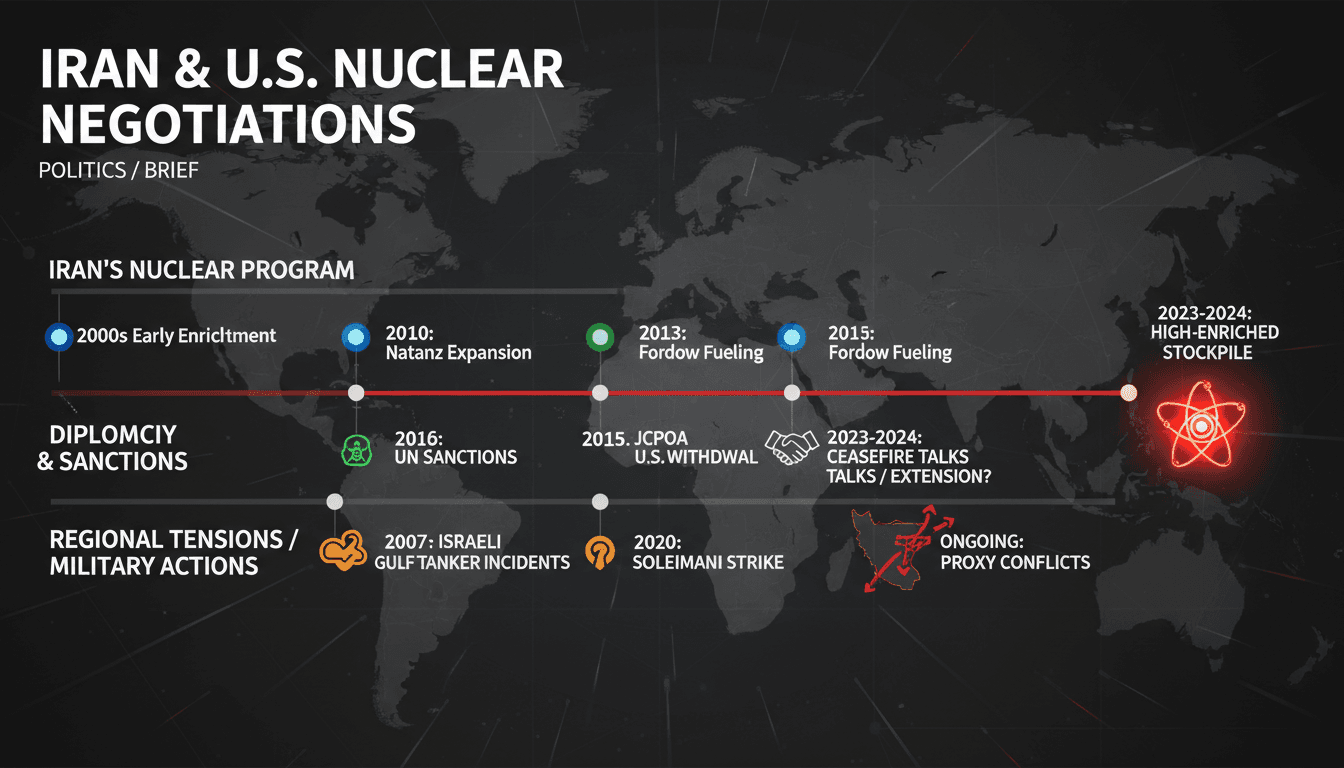
Here's what it means for you.
The ongoing negotiations between Iran and the United States over Iran's nuclear program are critical for regional stability and international security. The significant stockpile of highly enriched uranium held by Iran raises alarms for U.S. officials, who are focused on preventing nuclear weapon development. The outcome of these talks could influence not only U.S.-Iran relations but also the broader geopolitical landscape in the Middle East. As discussions progress, stakeholders will be closely monitoring the potential implications for military actions and diplomatic relations in the region. The stakes are high, and any escalation could lead to renewed tensions that impact global markets and security policies.
What happened
Iran and the United States are currently engaged in discussions aimed at extending a ceasefire to negotiate the future of Iran's nuclear program. This dialogue is driven by concerns over Iran's substantial stockpile of highly enriched uranium, which poses a significant threat to U.S. interests in preventing nuclear weapon development. Despite previous military actions that have damaged Iran's enrichment infrastructure, the country has managed to retain a considerable amount of enriched uranium.
The negotiations come at a critical time, as the international community remains vigilant about Iran's nuclear capabilities. The U.S. insists that Iran must not be allowed to develop nuclear weapons, making these talks essential for both parties. The outcome of these discussions could have lasting implications for regional stability and nuclear proliferation.
The Context
Iran's uranium enrichment capabilities have long been a focal point in international negotiations, with the U.S. aiming to curb any potential nuclear weapon development. Recent military actions, including strikes in June 2026 that damaged Iran's nuclear infrastructure, have not significantly impacted the country's stockpile of enriched uranium. This situation underscores the urgency of the current negotiations, as U.S. officials remain concerned about the implications of Iran's nuclear ambitions.
The timeline of events highlights the escalating tensions, with military actions preceding the current discussions that began in May 2026. The stakes are high, as both nations navigate a complex landscape of diplomacy and security. The outcome of these negotiations will not only affect U.S.-Iran relations but also influence regional allies and the broader geopolitical environment.
Takeaway
As negotiations continue, the international community will be closely monitoring Iran's actions and the U.S. response. The potential for renewed military actions looms if talks fail, which could further destabilize the region. Observers will also be watching how these negotiations impact U.S.-Iran relations and the positions of regional allies.
The implications of these discussions extend beyond immediate diplomatic outcomes, as they could shape the future of nuclear proliferation in the Middle East. The stakes are high, and the world is watching closely as both sides work to find common ground.
Regional and international reporting focused on Middle Eastern politics, diplomacy, and economics.
"Asharq Al-Awsat is a Saudi-owned international newspaper reflecting mainstream Gulf political perspectives."
— A47 Editor
Iran's Strongest Card in Nuclear Talks: Its Highly Enriched Uranium
Iran's nuclear negotiations are currently centered around its highly enriched uranium, which is viewed as a significant leverage point in discussions with the United States. The ongoing conflict has reached a stalemate, prompting renewed focus on Ira...
Regional coverage and analysis focused on politics, diplomacy, and business across the Middle East.
"Al-Monitor is known for analytical reporting on Middle East politics and policy developments."
— A47 Editor
Explainer-Iran's strongest card in nuclear talks: its highly enriched uranium
Iran and the United States are currently engaged in discussions to extend a ceasefire, with a focus on negotiations regarding Iran's nuclear program. The U.S. insists that Iran must not acquire the capability to develop nuclear weapons, especially in...
Oil, metals, and agriculture: supply/demand headlines, OPEC chatter, inventories, and price action.
"Solid tape for energy and metals traders tracking macro and micro catalysts."
— A47 Editor