
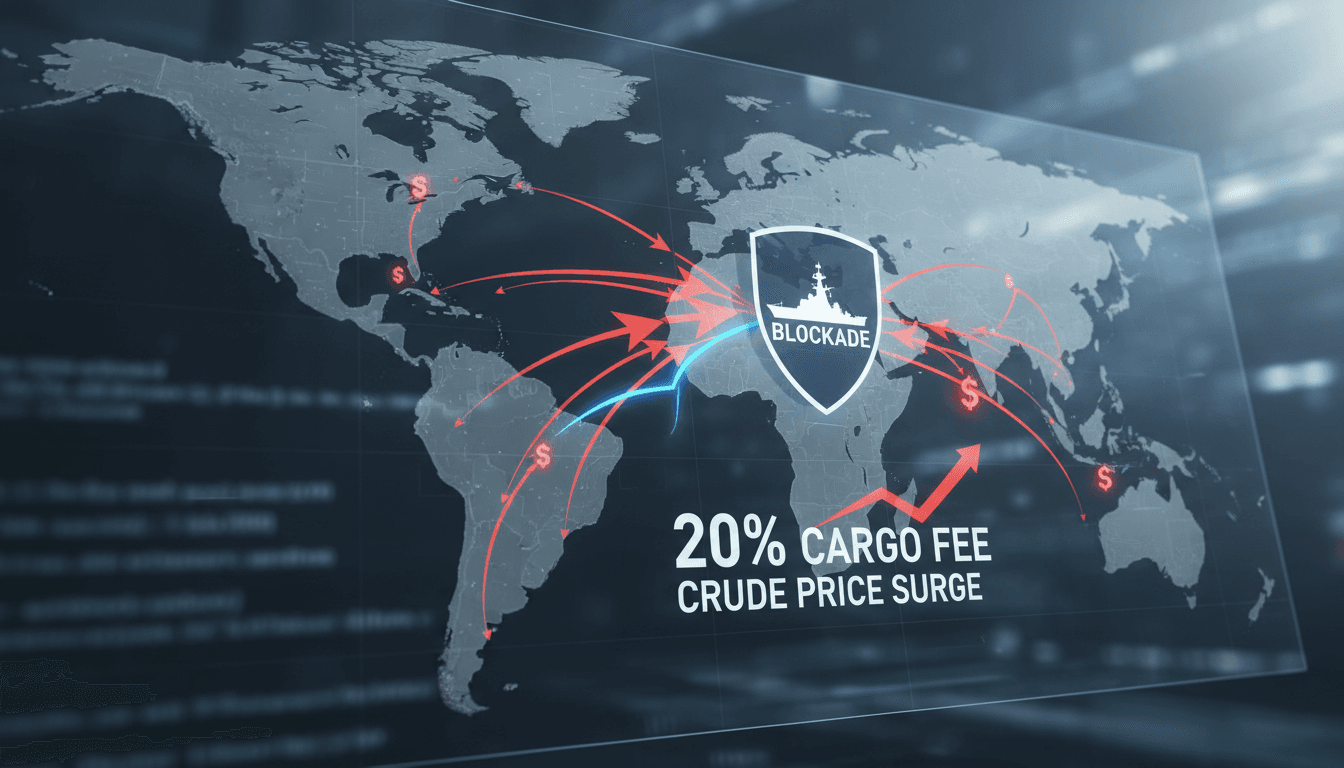
Trump reinstates U.S. blockade on Iranian ships in the Strait of Hormuz with a 20% cargo fee
Here's what it means for you.
The reinstatement of the U.S. blockade on Iranian ships in the Strait of Hormuz, along with a 20% cargo fee, signals a significant shift in U.S. foreign policy that could have far-reaching implications for global oil markets. This move is likely to increase shipping costs and could lead to heightened tensions in the region, impacting both trade dynamics and energy prices. Stakeholders in the oil and shipping industries should prepare for potential volatility as market reactions unfold.
What happened
President Donald Trump has reinstated the U.S. blockade of Iranian ships in the Strait of Hormuz, introducing a 20% fee on all cargo transiting this critical waterway. This decision comes amid rising crude prices and the anticipation of significant economic data and Federal Reserve testimony. The blockade specifically targets Iranian shipping, reflecting ongoing tensions between the U.S. and Iran.
The announcement was made on July 14, 2026, and is expected to have immediate effects on shipping costs and trade dynamics in the region. The 20% fee could significantly alter the economics of transporting goods through this vital chokepoint for global oil shipments.
The Context
The Strait of Hormuz is a crucial passage for oil shipments, with a significant portion of the world's crude oil passing through its waters. The reinstatement of the blockade underscores the strained relationship between the U.S. and Iran, which has been characterized by a series of escalating confrontations. Market reactions are further influenced by expectations surrounding Federal Reserve interest rate decisions, which are anticipated to be announced soon.
As crude prices rise, the geopolitical landscape becomes increasingly complex, with stakeholders closely monitoring the implications of U.S. policy changes. The blockade not only affects Iranian shipping but also has broader ramifications for global oil markets and international trade.
Takeaway
The reinstatement of the blockade may escalate tensions in the region and significantly impact global oil markets. Observers should closely monitor the Federal Reserve's interest rate decisions later this month, as these could influence market dynamics further. Additionally, potential responses from Iran regarding the blockade will be critical to watch, as they may shape the future of U.S.-Iran relations and regional stability.
As the situation develops, the implications for international shipping and oil prices will be closely scrutinized, particularly in light of the economic indicators that are set to be released soon.
Coverage of national news and issues shaping the United States, including politics, economy, and society.
"The Wall Street Journal is one of the most respected financial and news publications in the U.S., known for its rigorous reporting and center-right editorial perspective."
— A47 Editor
U.S. Reimposes Iranian Blockade as Trump Scraps Hormuz Toll
President Donald Trump has announced the reimposition of a U.S. naval blockade on the Strait of Hormuz, which includes a 20% toll on shipping, amid escalating tensions with Iran following recent military strikes. This decision comes as the U.S. has i...
Global markets, investing, and macroeconomics from a premier financial newsroom.
"Bloomberg is respected for in-depth financial reporting and data-driven analysis."
— A47 Editor
Trump Plans Hormuz Charge, Stocks Steady Before Warsh & CPI | The Opening Trade 7/14/2026
President Donald Trump has reinstated the U.S. blockade on Iranian ships transiting the Strait of Hormuz and imposed a 20% charge on all cargo passing through this critical maritime route. This decision comes amid escalating military tensions between...
Global markets, investing, and macroeconomics from a premier financial newsroom.
"Bloomberg is respected for in-depth financial reporting and data-driven analysis."
— A47 Editor
Trump Reinstates Iran Blockade, Plans Hormuz Ship Fee
President Donald Trump has reinstated the U.S. blockade on Iranian ships transiting the Strait of Hormuz and announced a 20% fee on all cargo passing through this critical maritime route. This decision follows heightened military tensions between the...