
Egyptian Government Denies Withdrawal of Controversial Personal Status Law Amid Backlash
Here's what it means for you.
The Egyptian government's denial of withdrawing the Personal Status Law signals ongoing tensions surrounding women's rights in the country. This situation highlights the complexities of legislative processes influenced by public opinion and religious authority. Stakeholders, including lawmakers and Al-Azhar, are under scrutiny as the debate unfolds, potentially impacting future policies.
What happened
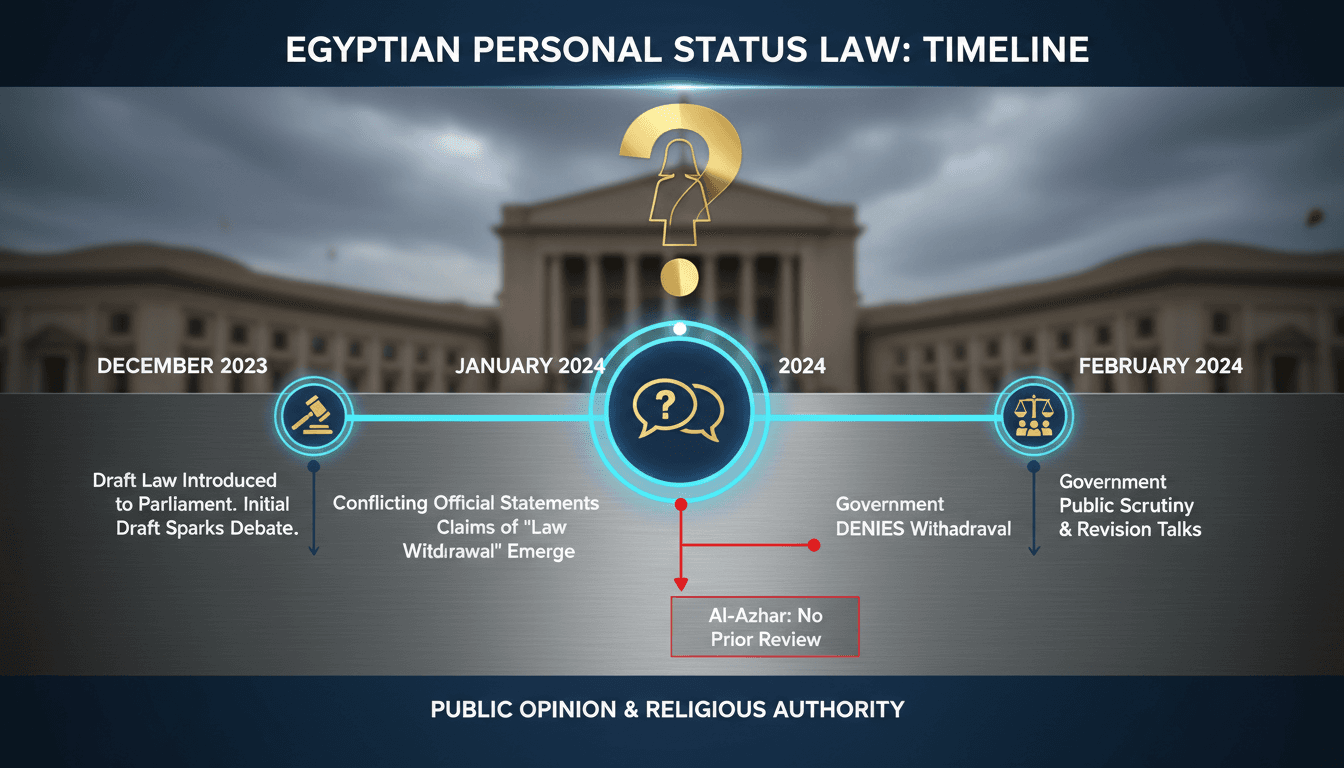
The Egyptian government has officially refuted claims that it is withdrawing the controversial Personal Status Law from Parliament. This law, which has sparked significant debate, particularly regarding women's rights in marriage dissolution, was submitted to Parliament on May 3. Conflicting statements from various lawmakers have contributed to the confusion surrounding the law's status, raising public concern.
Despite the backlash, particularly from Al-Azhar, a key religious authority that has not reviewed the law prior to its parliamentary submission, the government maintains its position. The situation remains fluid as discussions continue, with the potential for revisions based on public and religious feedback.
The Context
The Personal Status Law includes provisions that directly affect women's rights to divorce, making it a focal point of public and political debate in Egypt. The absence of prior review by Al-Azhar has raised questions about the law's acceptance and legitimacy. Conflicting statements from members of Parliament have further complicated the narrative, indicating uncertainty about the law's future.
This controversy emerges at a critical time when societal tensions regarding women's rights are increasingly visible. The ongoing discussions reflect broader issues within Egyptian society, where the intersection of legal frameworks and religious authority plays a significant role in shaping public policy.
Takeaway
As discussions surrounding the Personal Status Law continue, the fate of the legislation will likely hinge on public opinion and the influence of religious authorities. Potential revisions to the law may emerge as stakeholders respond to the backlash and seek to address concerns raised by various groups. Further statements from Al-Azhar regarding their stance on the law will be crucial in determining its future.
The ongoing debate serves as a barometer for societal attitudes toward women's rights in Egypt, indicating that any legislative changes will be closely monitored by both advocates and critics alike.
Pan-Arab news coverage spanning politics, business, sports, and regional affairs.
"Asharq Al-Awsat reflects a broad Arab editorial perspective with strong attention to regional geopolitics."
— A47 Editor
لماذا يثير تعديل قانون «الأحوال الشخصية» جدلاً في مصر؟
The Egyptian government denied on Friday that it had withdrawn the draft Personal Status Law from the House of Representatives, following widespread controversy over its failure to present the law to Al-Azhar before referring it to the council on May...
Arabic-language coverage of international news and geopolitics.
"RT Arabic is a Russian state-funded outlet often criticized for promoting Kremlin-aligned narratives."
— A47 Editor
مصر.. ما حقيقة سحب قانون الأحوال الشخصية بعد بيان الأزهر؟
Recent statements from members of the Egyptian Parliament have created confusion regarding the fate of the personal status law, known as the 'Family Law,' which has sparked controversy due to its provisions concerning women's rights to divorce. The l...
Arabic-language coverage of international news and geopolitics.
"RT Arabic is a Russian state-funded outlet often criticized for promoting Kremlin-aligned narratives."
— A47 Editor
مصر.. مفاجأة مدوية بقانون الأسرة بعد اعتراض الأزهر
Egyptian MP Dr. Reda Abdel Salam revealed a significant development regarding the family law, as the government has withdrawn the personal status law project from Parliament following extensive controversy and a statement from Al-Azhar, which indicat...