
U.S. military escalates airstrikes in Iran targeting key infrastructure
Here's what it means for you.
The recent escalation of U.S. airstrikes in Iran signals a significant shift in military strategy, with potential implications for global oil markets and regional stability. As tensions rise over the Strait of Hormuz, stakeholders in energy sectors should prepare for volatility in oil prices and supply chain disruptions. The international community is closely monitoring the situation, which could lead to broader geopolitical ramifications. The ongoing conflict may also influence U.S. foreign policy and military engagements in the Middle East, prompting discussions on diplomatic resolutions. Businesses and governments alike should stay informed about developments that could affect trade and security in the region.
What happened
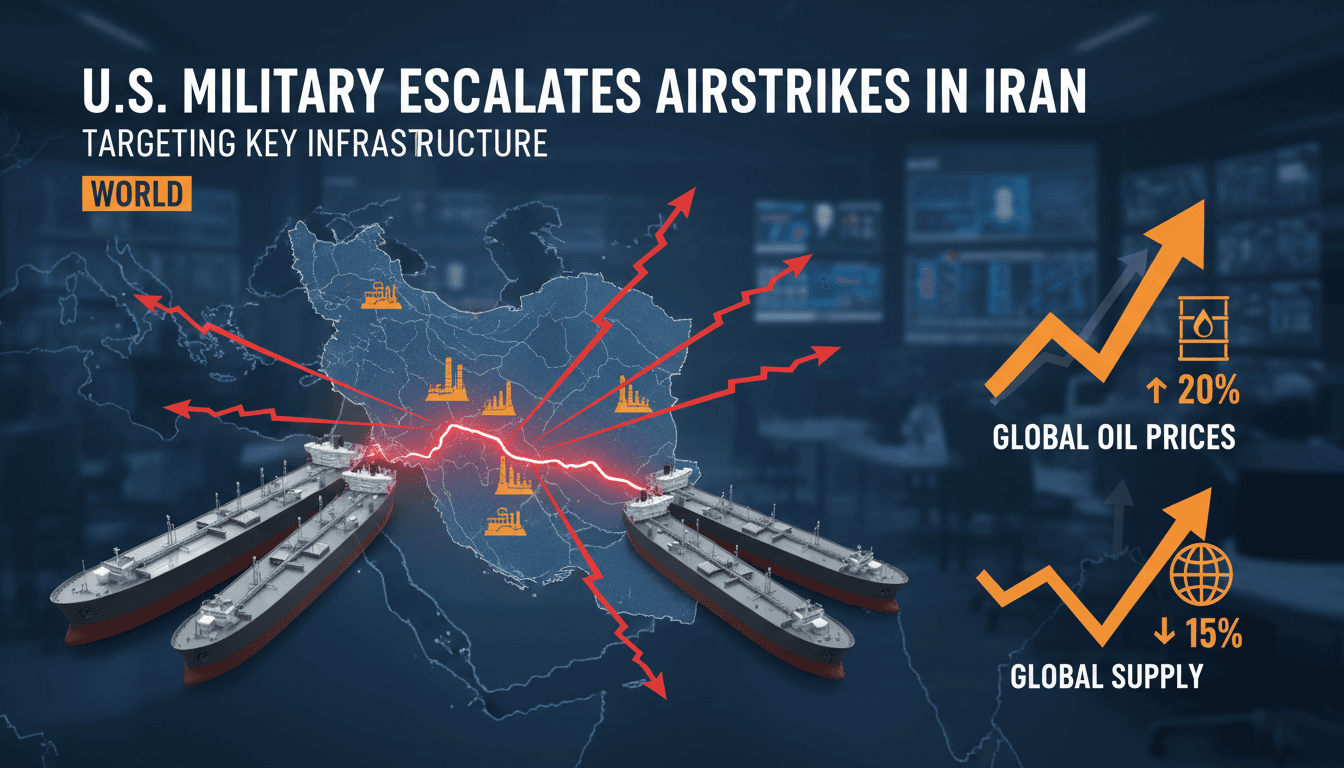
The U.S. military has conducted its sixth consecutive night of airstrikes against Iran, focusing on critical military infrastructure. These strikes have targeted key assets, including bridges and a surveillance tower, resulting in significant damage and casualties. Reports indicate that at least seven individuals have been killed, underscoring the human cost of this escalating conflict.
The airstrikes occurred in the Hormozgan province, specifically in Bandar Khamir, a strategic area near the Strait of Hormuz. This military action is part of a broader U.S. strategy aimed at degrading Iranian military capabilities amid rising tensions in the region.
The Context
The conflict between the U.S. and Iran has intensified over control of the strategically vital Strait of Hormuz, a crucial route for global oil shipments. Iran has accused the U.S. of targeting civilian infrastructure, leading to civilian casualties and further complicating the situation. As both nations expand their military objectives, the risk of a broader conflict looms.
The U.S. has also reimposed a maritime blockade on Iranian ports to curb oil shipments, adding another layer to the ongoing tensions. The international community is watching closely, as any miscalculation could lead to a significant escalation in hostilities.
Takeaway
The ongoing military actions suggest a potential for further escalation in U.S.-Iran tensions, with both sides poised for additional military responses. Observers should monitor developments regarding U.S. military strategy in the region, as well as Iranian responses and potential retaliatory actions against U.S. interests. The situation remains volatile, and diplomatic efforts may be necessary to de-escalate the conflict.
As the international community remains vigilant, the implications of these airstrikes could reverberate beyond the immediate region, affecting global markets and security dynamics.
International stories from NPR’s global desk.
"NPR is an American public media organization known for thoughtful reporting and a slightly left-leaning editorial tone."
— A47 Editor
U.S. strikes bridges in Iran, Tehran targets U.S. bases in the Gulf
The United States has intensified its military operations against Iran, conducting airstrikes targeting bridges and military sites in southern Iran, as Tehran retaliates by targeting U.S. bases in the Gulf. This escalation comes amid ongoing tensions...
International coverage of politics, culture, and current affairs.
"BBC News is widely regarded as a reputable international news organization, known for its impartial tone and public service mandate."
— A47 Editor
Iran accuses US of hitting civilian infrastructure
The United States has intensified its military actions against Iran, conducting airstrikes that have reportedly targeted civilian infrastructure, including bridges and a marine control tower. Iran has accused the US of undermining peace agreements an...
Global news coverage with extensive reporting on Middle Eastern conflicts and geopolitics.
"Al Jazeera is a Qatar-based broadcaster known for wide regional coverage and alternative perspectives."
— A47 Editor
US strikes destroy key bridges, tower in southern Iran
Recent U.S. airstrikes have targeted key infrastructure in southern Iran, including bridges and a marine control tower, resulting in significant damage and casualties. This escalation marks the continuation of a military campaign that has intensified...
Comprehensive coverage of Middle Eastern and global issues.
"Al Jazeera is a prominent voice from the Global South, especially the Middle East, with an emphasis on underreported stories."
— A47 Editor
US strikes destroy key bridges, tower in southern Iran
Recent U.S. airstrikes have targeted key infrastructure in southern Iran, including bridges and a marine control tower, resulting in significant damage and casualties. This escalation marks the continuation of a military campaign that has intensified...
Arabic-language coverage of political affairs and current events.
"Okaz political coverage typically follows mainstream Saudi framing on national and regional affairs."
— A47 Editor
استهدف جسوراً وبرج مراقبة.. الجيش الأمريكي يوسع أهداف الحرب على إيران
The United States has expanded its airstrikes against Iran, targeting several bridges and destroying a tower in a major Iranian port, as part of President Donald Trump's threats to attack infrastructure to pressure Tehran to cease its actions in the ...
National headlines across the United States including breaking stories and societal issues.
"NBC News is a mainstream media outlet known for comprehensive national and international news coverage with a centrist to slightly left-leaning editorial tone."
— A47 Editor
Iranian bridges severely damaged after sixth night of U.S. strikes
The U.S. military has conducted its sixth consecutive night of airstrikes against Iran, resulting in severe damage to bridges and targeting coastal surveillance, air defense sites, and military logistics infrastructure, according to CENTCOM.