
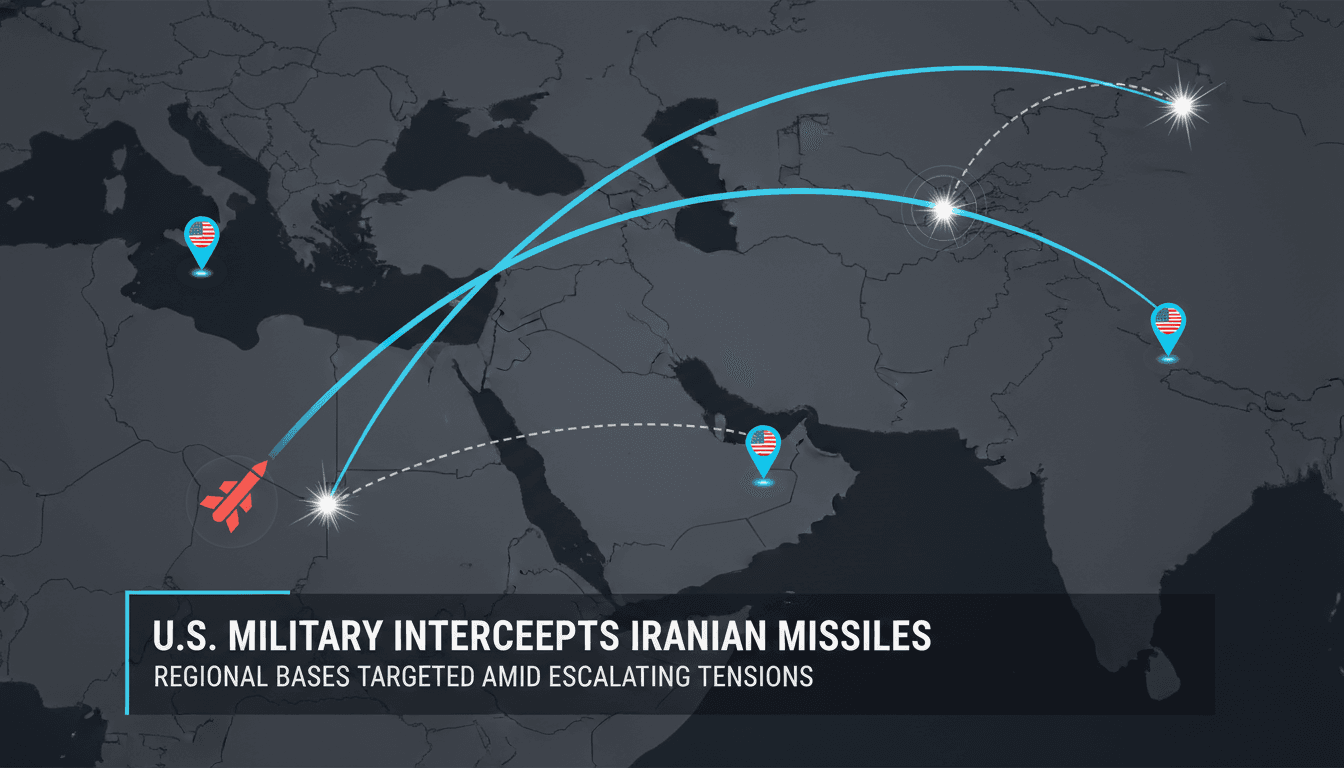
U.S. military intercepts Iranian missiles targeting regional bases
Here's what it means for you.
The successful interception of Iranian missiles by the U.S. military underscores a significant commitment to regional security and the protection of U.S. interests and allies. This event highlights the ongoing tensions between the U.S. and Iran, which could lead to further military escalations. Stakeholders in defense and international relations should closely monitor these developments as they may influence policy decisions and market stability in the region. The effectiveness of U.S. missile defense systems, demonstrated by the 100% interception rate, reinforces the military's readiness to counter threats. This situation may prompt Iran to reassess its missile strategies and responses to U.S. actions.
What happened
The U.S. military successfully intercepted multiple Iranian missiles aimed at its bases in Bahrain, Kuwait, and Jordan. This operation was part of a broader effort to protect U.S. interests and allies, including Israel, from Iranian threats. Reports indicate that nearly all missiles and drones launched towards these bases were neutralized.
The interceptions were confirmed by multiple U.S. officials and news agencies, showcasing the effectiveness of U.S. missile defense systems. This proactive defense strategy highlights the military's commitment to safeguarding personnel and allies in a volatile region.
The Context
The interceptions occurred amid heightened tensions between the U.S. and Iran, with Iran increasingly threatening regional stability through its missile capabilities. The U.S. military's actions reflect a strategic response to these threats, aiming to deter further aggression from Iran.
As the situation evolves, the implications for U.S. foreign policy and military strategy are significant. The ongoing military readiness of the U.S. suggests a sustained focus on countering Iranian aggression, which could influence diplomatic relations and security dynamics in the Middle East.
Takeaway
Looking ahead, the potential for escalation in military actions between the U.S. and Iran remains high. The U.S. is likely to continue enhancing its defensive measures while closely monitoring Iran's military activities. Responses from Iran regarding these interceptions will be critical in shaping future interactions and strategies.
The situation warrants attention from policymakers and analysts alike, as it could lead to shifts in regional alliances and security protocols. Observers should remain vigilant for any developments that may arise from this ongoing conflict.
Jordanian news and regional updates.
"Roya News is a Jordanian outlet focused on breaking news and local affairs."
— A47 Editor
مسؤول أمريكي: واشنطن اعترضت عدة صواريخ إيرانية أُطلقت في المنطقة
A U.S. official reported that Washington intercepted several Iranian missiles launched in the region, highlighting ongoing tensions between the two nations. This incident underscores the heightened military activity and potential threats in the area.
Arabic-language coverage of international news and geopolitics.
"RT Arabic is a Russian state-funded outlet often criticized for promoting Kremlin-aligned narratives."
— A47 Editor
"رويترز": أمريكا اعترضت كل الصواريخ التي أطلقتها إيران على قواعدها بالبحرين والكويت والأردن
According to Reuters, a U.S. official reported that the American military intercepted nearly all missiles and drones launched by Iran targeting its bases in Bahrain, Kuwait, and Jordan. This development highlights the ongoing tensions in the region a...
Arabic-language coverage of international news and geopolitics.
"RT Arabic is a Russian state-funded outlet often criticized for promoting Kremlin-aligned narratives."
— A47 Editor
مصدر يكشف لـCNN ما فعلته واشنطن لحماية إسرائيل من صواريخ إيران
A U.S. official revealed to CNN that American forces launched interceptor missiles to destroy rockets fired by Iran towards Israel. This action underscores the ongoing tensions in the region and the U.S. commitment to supporting its ally, Israel, ami...