
US Intensifies Military Strikes Against Iran Amid Geopolitical Tensions
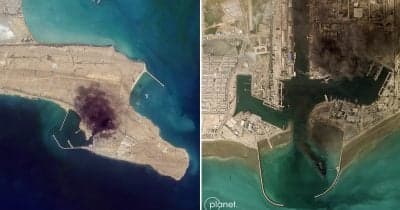
Here's what it means for you.
The recent escalation in U.S. military actions against Iran signals a critical juncture in geopolitical relations that could have far-reaching implications. Investors should brace for volatility in financial markets, particularly in cryptocurrencies like Bitcoin, which have already shown signs of fluctuation. The closure of the Strait of Hormuz by Iran adds another layer of complexity, potentially impacting global oil supply and prices. As tensions rise, market participants must remain alert to the evolving situation, as it could influence both policy decisions and economic stability. The interplay between military actions and market responses will be crucial to monitor in the coming days.
What happened
The U.S. has launched multiple strikes on Iranian naval bases, marking a significant escalation in military engagement. This series of actions represents the third strike against Iran within a week, intensifying the ongoing conflict. The strikes coincide with Iran's reported closure of the Strait of Hormuz, a vital oil shipping route, further heightening global tensions.
In response to these developments, Bitcoin's price has shown volatility, dipping below $73K amid the geopolitical unrest. As the situation unfolds, the implications for financial markets are becoming increasingly pronounced.
The Context
The recent military actions by the U.S. come at a time of heightened geopolitical tensions in the region. The closure of the Strait of Hormuz by Iran is particularly significant, as it is a critical passage for global oil shipments. This closure could lead to increased oil prices and supply chain disruptions, affecting economies worldwide.
The ongoing conflict has already caused notable fluctuations in various financial markets, including stocks, bonds, and gold. Investors are closely watching these developments, as they could signal broader implications for global economic stability.
Takeaway
As the conflict between the U.S. and Iran continues, market participants should remain vigilant regarding potential escalations. The situation is fluid, and further military actions could have significant impacts on both geopolitical stability and financial markets. Observers should also monitor the effects of the Strait of Hormuz closure on oil supply and prices, as these factors will likely influence market dynamics.
In the cryptocurrency sector, Bitcoin's resilience will be tested as investors react to ongoing geopolitical instability. The coming days will be crucial for understanding how these developments will shape market sentiment and valuations.
Research, news, and analysis on blockchain startups, DeFi, and regulations.
"Crypto Briefing provides research, news, and analysis on blockchain startups, DeFi, and crypto regulations with investor-focused coverage."
— A47 Editor
US strikes Iranian naval base as Bitcoin dips below $73K on geopolitical shock
The United States has conducted a military strike on an Iranian naval base, escalating geopolitical tensions in the region. This action comes amid a backdrop of increasing military confrontations between the US and Iran, which have already affected g...
Real-time updates, analysis, and reports on the blockchain and cryptocurrency sectors.
"Crypto News delivers real-time updates, analysis, and reports on the blockchain and cryptocurrency sectors."
— A47 Editor
Bitcoin price holds above $62K as ETF inflows return amid Iran war
Bitcoin's price has stabilized above $62,800 amidst ongoing U.S.-Iran military tensions, with recent ETF inflows marking an end to eight weeks of net withdrawals. This comes as the U.S. has intensified airstrikes against Iran, further complicating ge...
Covers blockchain, cryptocurrency news, project analysis, and market insights.
"CoinDesk is a well-established cryptocurrency and blockchain news provider, offering comprehensive insights, market data, and industry research."
— A47 Editor
Bitcoin, ether little changed as U.S. launches fresh Iran strikes
The United States has conducted airstrikes against Iran for the third time this week, further escalating tensions in the region, while Tehran has reportedly closed the Strait of Hormuz again, a critical maritime route for global oil shipments.