
U.S. military strikes escalate tensions with Iran over Strait of Hormuz closure
Here's what it means for you.
The recent military strikes by the U.S. against Iran signal a significant escalation in tensions that could have far-reaching implications for global oil markets. With approximately 20% of the world's oil trade passing through the Strait of Hormuz, any disruption in this vital shipping route could lead to increased oil prices and economic instability. Stakeholders in the energy sector should closely monitor developments, as the situation remains fluid and could impact supply chains. As both nations assert conflicting claims over the waterway, the potential for further military engagements looms large. This conflict not only affects regional stability but also has broader implications for international relations and energy security.
What happened
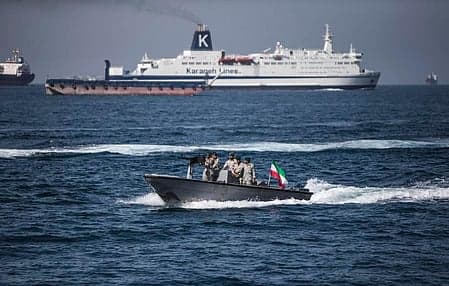
The U.S. launched military strikes against Iran following Tehran's announcement of the closure of the Strait of Hormuz. This closure has significant implications for global shipping, particularly for oil supplies. The Iranian Islamic Revolutionary Guard Corps (IRGC) has declared that the strait will remain closed until further notice, escalating tensions in the region.
In response, U.S. President Trump has asserted that the waterway is open, contradicting Iran's claims. The military actions taken by the U.S. are a direct response to Iran's provocative stance, marking a critical moment in U.S.-Iran relations.
The Context
The Strait of Hormuz is a crucial shipping route for global oil supplies, making its security vital for international energy markets. The ongoing conflict between the U.S. and Iran has historical roots, with both nations vying for influence in the region. The timing of these events is particularly significant, as rising oil prices and disruptions in shipping traffic have already begun to affect Gulf markets.
Iran's closure of the strait has raised alarms among global stakeholders, prompting concerns over the stability of oil supplies. The situation is further complicated by the geopolitical dynamics at play, as both nations navigate their next moves in this high-stakes confrontation.
Takeaway
The ongoing conflict between the U.S. and Iran may lead to further military engagements and significant disruptions in global oil supply. Stakeholders should monitor developments in U.S.-Iran relations, as diplomatic efforts may emerge in response to the escalating tensions. Additionally, fluctuations in oil prices and shipping routes are likely as the situation evolves.
As both sides assert their positions, the potential for economic repercussions remains high. The international community will be watching closely to gauge the impact of these developments on regional stability and global energy markets.
Macro commentary, policy analysis, growth/inflation themes, and global outlooks.
"Contextual macro coverage that complements day-to-day market headlines."
— A47 Editor
U.S. hits Iran with fresh strikes after Trump earlier reinstated Hormuz blockade
The United States has conducted fresh airstrikes against Iran following President Trump's reinstatement of a blockade on the Strait of Hormuz. This escalation comes amid heightened military tensions, with Iran intensifying its attacks on U.S. bases i...
Pan-Arab news coverage spanning politics, business, sports, and regional affairs.
"Asharq Al-Awsat reflects a broad Arab editorial perspective with strong attention to regional geopolitics."
— A47 Editor
أسواق الخليج تتراجع مع تصاعد الصراع وإغلاق «هرمز»
Gulf markets have declined amid escalating U.S.-Iran tensions and the announcement of the closure of the Strait of Hormuz, leading to a surge in oil prices and heightened supply concerns.
Editor-curated FT homepage stories spanning markets, business, world, and opinion.
"The Financial Times is a globally respected business publication with a centrist/center-left tone and strong markets focus."
— A47 Editor
US launches new strikes on Iran in battle over Strait of Hormuz
The United States has launched new airstrikes against Iran amid escalating tensions over the Strait of Hormuz, following missile attacks on commercial vessels attributed to Iranian forces. President Trump has claimed that the waterway remains open, w...
UAE-based English-language newspaper covering regional politics, economics, and global affairs.
"The National reflects Emirati policy perspectives while maintaining international editorial standards."
— A47 Editor
Shipping through Hormuz collapses as Iran closes strait
Iran has officially closed the Strait of Hormuz, a vital maritime route, following escalating tensions with the United States and missile strikes by its Revolutionary Guards on commercial vessels. This closure has led to a significant disruption in s...
UAE-based newspaper covering Gulf politics, society, and international developments.
"Gulf News is one of the UAE’s most prominent English-language publications."
— A47 Editor
Iran says Hormuz is shut: What happens next?
Iran has declared the closure of the Strait of Hormuz, a critical maritime route, following heightened tensions with the United States and missile strikes by its Revolutionary Guards on commercial vessels. This closure comes amid ongoing military hos...
A curated Gulf News feed featuring major stories across news, business, opinion, and lifestyle.
"Gulf News is a major UAE newspaper whose featured stories feed reflects a broad editorial mix shaped for a Gulf audience."
— A47 Editor
Iran says Hormuz is shut: What happens next?
Iran has declared the closure of the Strait of Hormuz, a critical maritime route, following heightened tensions with the United States and missile strikes by its Revolutionary Guards on commercial vessels. This closure comes amid ongoing military hos...
Regional and international reporting focused on Middle Eastern politics, diplomacy, and economics.
"Asharq Al-Awsat is a Saudi-owned international newspaper reflecting mainstream Gulf political perspectives."
— A47 Editor
US Attacks Iran, IRGC Says Strait of Hormuz to Remain Closed ‘Until Further Notice’
The United States has launched a series of airstrikes against Iranian targets, prompting Iran's Revolutionary Guards to declare that the Strait of Hormuz will remain closed until further notice. This escalation follows a breakdown of a ceasefire agre...