
Iran's chief negotiator declares US peace talks futile after Israeli strike on Beirut
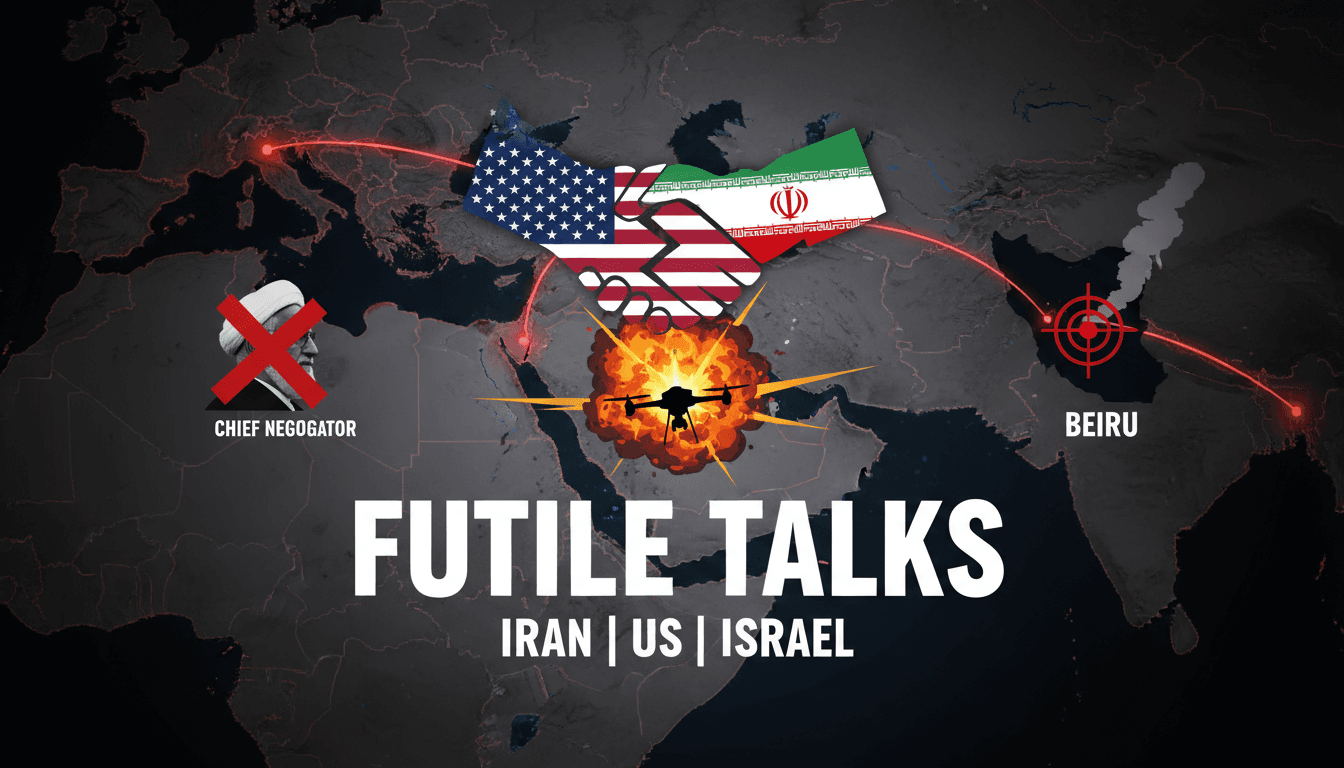
Here's what it means for you.
The declaration by Iran's chief negotiator, Mohammad Bagher Ghalibaf, signals a significant setback for US diplomatic efforts in the region. As tensions rise following the Israeli strike on Beirut, the implications for international relations and regional stability are profound. Stakeholders in global markets and policy circles should prepare for potential escalations in military confrontations, which could disrupt existing agreements and economic conditions. The rejection of peace talks underscores a critical moment in US-Iran relations, suggesting that diplomatic avenues may be closing. This development could lead to increased volatility in the Middle East, impacting energy markets and geopolitical alliances.
What happened
Iran's chief negotiator, Mohammad Bagher Ghalibaf, has publicly stated that ongoing peace talks with the United States are futile in light of a recent Israeli strike on Beirut. This assertion follows an attack that targeted the southern suburbs of the Lebanese capital, intensifying existing regional tensions. Ghalibaf criticized the US-Israel diplomatic strategy, labeling it as outdated and ineffective.
His remarks come amid a backdrop of heightened hostilities, reflecting a significant shift in Iran's diplomatic stance. Ghalibaf's long-standing role in negotiations, spanning three decades, positions him as a key figure in shaping Iran's response to external pressures.
The Context
The Israeli strike on Beirut, which occurred on June 14, 2026, has escalated the already fraught dynamics between Iran and the United States. Ghalibaf's comments highlight the growing scrutiny of the US-Israel relationship, particularly as Iran calls for accountability regarding military actions in the region. The timing of these statements is critical, as they coincide with a period of increased military confrontations.
Ghalibaf, at 64 years old, has emerged as a prominent voice in Iran's leadership amid the ongoing conflict. His criticism of the US-Israel "good cop, bad cop" tactics reflects a broader sentiment within Iran regarding the effectiveness of current diplomatic efforts.
Takeaway
The future of US-Iran negotiations appears increasingly uncertain as military actions continue to escalate. Ghalibaf's rejection of peace talks suggests that Iran is unlikely to engage in negotiations under the current circumstances. Observers should monitor potential responses from the US regarding these statements, as well as further developments in the Israeli-Iranian conflict.
As tensions rise, the prospects for diplomatic resolutions seem bleak, indicating a potential shift towards more aggressive posturing from both sides. The implications of this situation could reverberate across the region, affecting not only Iran and Israel but also broader international relations.
Regional coverage and analysis focused on politics, diplomacy, and business across the Middle East.
"Al-Monitor is known for analytical reporting on Middle East politics and policy developments."
— A47 Editor
Ghalibaf: ambitious 'public face' of post-Ali Khamenei Iran
Iranian parliament speaker Mohammad Bagher Ghalibaf has emerged as a prominent figure in the Islamic Republic's leadership, playing a crucial role in negotiations following the recent US-Israeli war, which has led to a ceasefire agreement.
RT is a Russian state-funded network covering global events from a Russian perspective.
"RT is widely criticized for promoting pro-Kremlin narratives and is considered by many to be a state propaganda outlet."
— A47 Editor
US-Israeli ‘good cop, bad cop’ tactics outdated – Iran’s chief negotiator
Iran's chief negotiator, Mohammad Ghalibaf, criticized the outdated 'good cop, bad cop' tactics employed by the US and Israel following a deadly Israeli airstrike on Beirut. This incident has heightened tensions in the region, complicating ongoing ne...
24/7 international news from a French perspective in multiple languages.
"France 24 is viewed as a globally focused outlet with balanced coverage and a European perspective."
— A47 Editor
Beirut strikes: 'No point' in talks if US cannot uphold 'commitments'
Iranian chief negotiator Mohammad Bagher Ghalibaf announced that there is 'no point' in continuing peace talks with the United States following Israeli airstrikes on Beirut's southern suburbs, which have escalated tensions in the region.