
Trump Abandons Cargo Fee for Strait of Hormuz in Favor of Gulf Investments
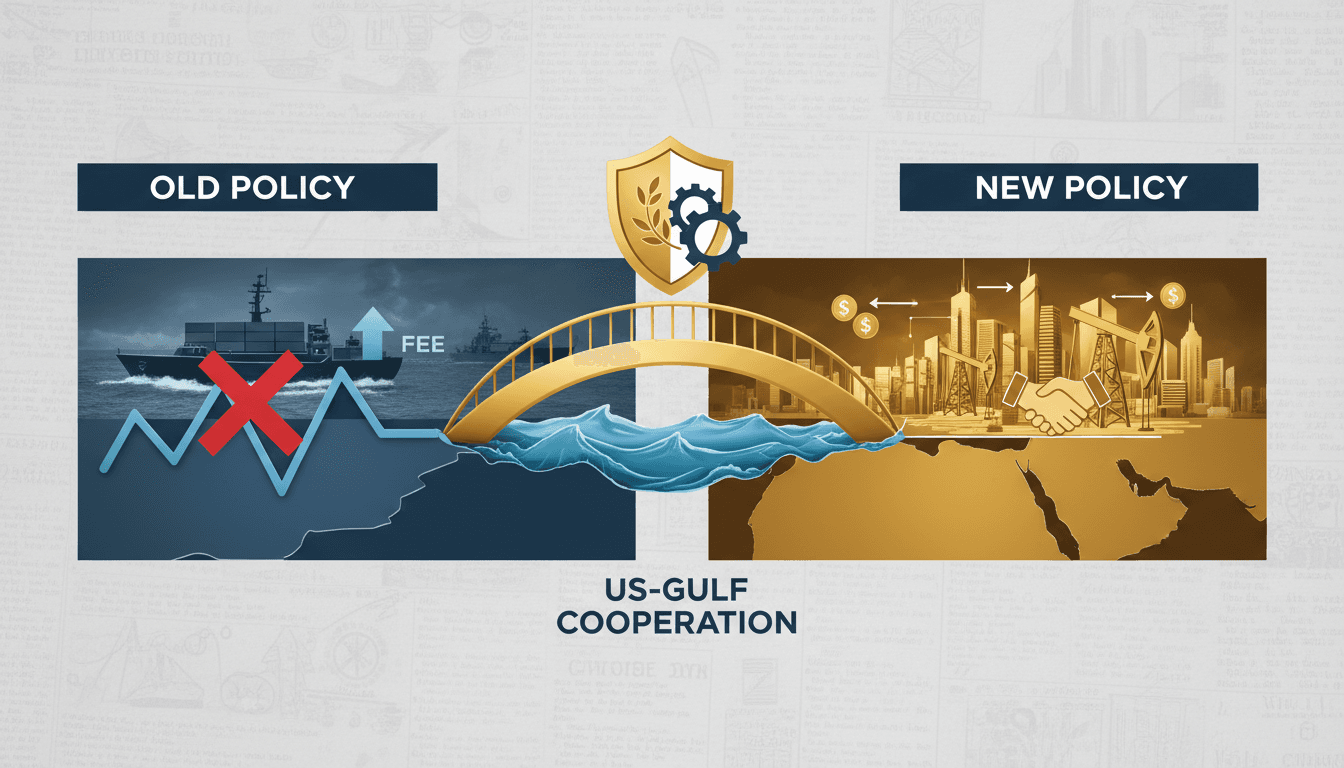
Here's what it means for you.
President Trump's decision to abandon the proposed cargo fee for the Strait of Hormuz signals a strategic pivot towards fostering deeper economic ties with Gulf states. This shift may enhance collaboration in security and economic matters, potentially reshaping the geopolitical landscape in the Middle East. Stakeholders in the oil market and international relations should closely monitor the implications of this policy change. The abandonment of the fee could lead to increased investments from Gulf nations, which may bolster regional stability amid ongoing military tensions. As the U.S. military continues its operations in the area, the focus on collaboration over financial burdens may redefine alliances in this critical shipping lane.
What happened
President Trump has officially announced the abandonment of a proposed cargo fee for vessels passing through the Strait of Hormuz. Instead of imposing this fee, which was set at 20%, the administration will pursue investment deals with Gulf states. This decision aligns with ongoing military actions in the region, including a seventh wave of U.S. strikes against Iranian targets.
The move reflects a significant shift in U.S. policy, emphasizing collaboration with Gulf nations rather than imposing financial tolls. By prioritizing investments, the Trump administration aims to strengthen alliances while addressing the complexities of military engagement in the area.
The Context
The Strait of Hormuz is a vital shipping lane for global oil transport, making it a focal point for international trade and security. The U.S. military has been actively involved in the region, conducting strikes against Iranian targets as tensions escalate. Trump's decision to drop the cargo fee underscores a broader strategy to enhance ties with Gulf nations, which have significant economic influence.
This policy change comes at a critical time, as the U.S. seeks to navigate the challenges posed by regional powers. By fostering investments instead of imposing fees, the administration aims to create a more cooperative environment that could lead to long-term stability in the Middle East.
Takeaway
The shift away from a toll system in favor of Gulf investments may lead to increased cooperation between the U.S. and Gulf states in both security and economic matters. Observers should watch for potential reactions from Iran regarding the U.S. military presence and the implications of this policy change. Future investments from Gulf states in U.S.-led initiatives could further reshape the dynamics in the region.
As the U.S. pivots towards collaboration, the geopolitical landscape in the Middle East may evolve, potentially reducing tensions while also inviting new challenges from regional powers. The long-term effects of this decision will be crucial for stakeholders in international relations and the global oil market.
Editor-curated FT homepage stories spanning markets, business, world, and opinion.
"The Financial Times is a globally respected business publication with a centrist/center-left tone and strong markets focus."
— A47 Editor
Trump says US to abandon proposed Strait of Hormuz cargo fee
President Trump announced that the United States will abandon its proposed 20% fee on cargo ships passing through the Strait of Hormuz, a vital maritime route for global oil transportation, opting instead for investment deals with Gulf states. This d...
Oil, metals, and agriculture: supply/demand headlines, OPEC chatter, inventories, and price action.
"Solid tape for energy and metals traders tracking macro and micro catalysts."
— A47 Editor
Trump says no one should be able to charge a fee for the Strait of Hormuz
President Donald Trump has stated that no fees should be charged for the Strait of Hormuz, a critical maritime route for global oil supplies. This statement comes after he rescinded a proposal to impose a 20% fee on cargo ships traversing the strait,...
UAE-based English-language newspaper covering regional politics, economics, and global affairs.
"The National reflects Emirati policy perspectives while maintaining international editorial standards."
— A47 Editor
Trump drops 20% Hormuz toll in favour of deals with Gulf states
President Donald Trump has announced the withdrawal of his proposed 20% toll on cargo ships passing through the Strait of Hormuz, opting instead to pursue investment deals with Gulf states. This decision marks a significant shift in U.S. maritime pol...
Regional and international reporting focused on Middle Eastern politics, diplomacy, and economics.
"Asharq Al-Awsat is a Saudi-owned international newspaper reflecting mainstream Gulf political perspectives."
— A47 Editor
Trump Says No One Should Be Able to Charge a Fee for Strait of Hormuz
Former President Donald Trump stated that no one should be able to charge a fee for passage through the Strait of Hormuz, a crucial maritime route for global oil transportation. This statement comes after his earlier proposal to impose a 20% toll on ...
UAE-based English-language newspaper covering regional politics, economics, and global affairs.
"The National reflects Emirati policy perspectives while maintaining international editorial standards."
— A47 Editor
Iran war latest: US reimposes naval blockade on Iranian ports
The United States has reinstated a naval blockade on Iranian ports, a move announced by President Donald Trump amid escalating tensions between the two nations. This blockade includes a 20% toll on all cargo passing through the strategically signific...