
OECD Downgrades Global Growth Outlook Amid Iran Conflict
Here's what it means for you.
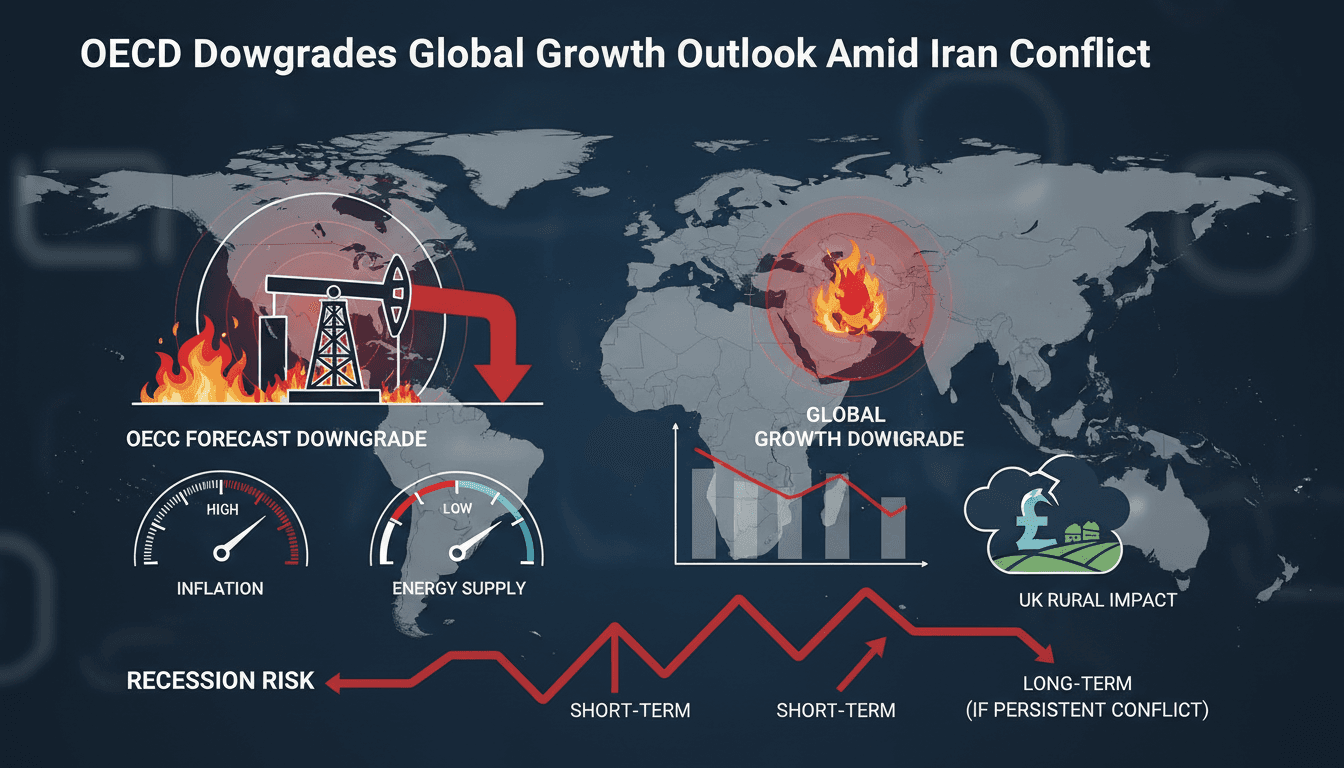
The OECD's downgrade of the global growth forecast signals heightened economic uncertainty, particularly for energy-dependent regions. As the conflict in Iran escalates, energy supplies are threatened, which could lead to increased inflation and economic instability. Rural areas in the UK are especially vulnerable, facing potential diesel shortages that could disrupt local economies. This situation necessitates close monitoring of geopolitical developments and energy markets, as the implications could ripple across global economies. Stakeholders must prepare for potential recessions if the conflict persists, impacting investment and trade.
What happened
The OECD has officially downgraded its global growth outlook due to the economic impacts stemming from the ongoing conflict in Iran. This adjustment reflects concerns over energy supply disruptions and rising inflation, which are expected to stifle growth worldwide. The OECD's revised forecast indicates a modest improvement for the UK, projecting a 0.9% economic growth by 2026, up from a previous estimate of 0.7%.
The conflict's ramifications extend beyond the UK, with warnings of potential recessions globally if the situation continues into 2027. The ongoing U.S.-Iran tensions are significantly affecting energy markets, trade routes, and overall investment activity.
The Context
The OECD's warning comes at a critical time as the conflict in Iran raises alarms about energy security and economic stability. Rural areas in the UK are particularly at risk, facing challenges such as diesel shortages that could hinder transportation and agricultural activities. The OECD's forecast highlights the interconnectedness of global economies, where localized conflicts can have far-reaching effects.
As the situation evolves, stakeholders across various sectors must remain vigilant. The potential for stronger inflation and economic downturns underscores the importance of monitoring geopolitical developments closely. The OECD's insights serve as a crucial reminder of the fragility of global economic growth in the face of conflict.
Takeaway
Looking ahead, the continuation of the Iran conflict could exacerbate economic instability and energy supply issues worldwide. Stakeholders should keep a close eye on developments in the region, as these could significantly impact global energy markets and economic forecasts. Further updates from the OECD will be essential in understanding the evolving landscape and preparing for potential challenges.
As the situation unfolds, it is vital to assess how these geopolitical tensions may influence investment strategies and policy decisions. The interconnected nature of today's economies means that even localized conflicts can have global repercussions.
Global business headlines with AI angles.
"General business outlet that frequently covers AI."
— A47 Editor
OECD Cuts Global Growth Outlook As U.S.-Iran War Weighs On Economy, Energy Markets
The OECD has revised its global growth outlook downward, citing the ongoing U.S.-Iran war as a significant factor impacting the economy, energy markets, and trade routes. The conflict has led to disruptions that are expected to slow economic activity...
International coverage from The Guardian's global desks.
"The Guardian is known for its progressive editorial stance and in-depth analysis."
— A47 Editor
Rural UK ‘particularly at risk’ of diesel shortages if Iran war continues
The Organisation for Economic Co-operation and Development (OECD) has warned that rural areas in the UK are particularly vulnerable to diesel shortages if the ongoing conflict in Iran persists, which could severely impact energy supplies.
Global markets, investing, and macroeconomics from a premier financial newsroom.
"Bloomberg is respected for in-depth financial reporting and data-driven analysis."
— A47 Editor
Global Economy Risks Slump on Prolonged Iran Conflict, OECD Says
The OECD has warned that the ongoing conflict in Iran poses significant risks to the global economy, potentially leading to a slowdown in growth and increased inflation. The organization highlighted that if the conflict persists, global economic grow...