
Wikipedia Bans AI Edits to Articles
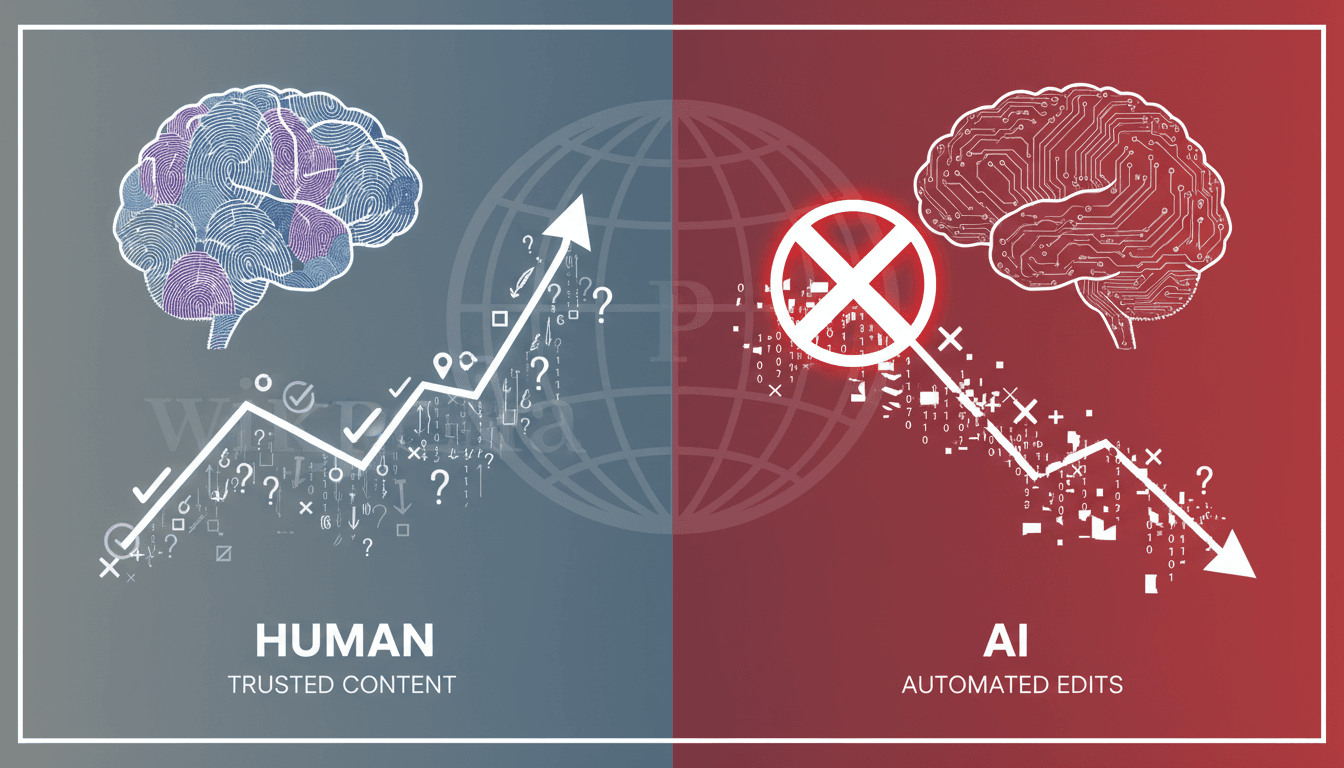
Here's what it means for you.
Wikipedia's decision to prohibit AI from editing its articles underscores a significant commitment to human oversight in content creation. This move may influence other platforms to adopt similar policies, prioritizing the reliability and trustworthiness of information. As AI technology continues to evolve, the implications for content accuracy and integrity will be closely monitored across the digital landscape.
What happened
On June 22, 2026, Wikipedia co-founder Jimmy Wales announced that the platform will not allow artificial intelligence to edit its articles. This decision reflects a growing skepticism regarding the reliability of AI-generated content. Wikipedia's strict stance is highlighted by the fact that the number of AI edits permitted on the platform stands at zero.
The announcement has been reported by multiple sources, including Tech Xplore and Asharq Al-Awsat. The decision aligns with Wikipedia's long-standing commitment to transparency and reliability, values that may be compromised by AI involvement in content editing.
The Context
The decision against AI edits comes amid ongoing debates about the role of artificial intelligence in ensuring information accuracy. Jimmy Wales emphasized the importance of human oversight in content editing, a principle that resonates deeply within Wikipedia's community. This community values the integrity of its content, which has been built on human contributions over the years.
As AI technology advances, concerns about its impact on the reliability of information have intensified. Wikipedia's refusal to integrate AI into its editing process may set a precedent for other information platforms, highlighting the need for human involvement in content creation and curation.
Takeaway
Looking ahead, the refusal to allow AI in article editing may influence how other platforms approach content moderation and editing policies. Potential developments in AI content moderation tools will be closely watched, as will the responses from the Wikipedia community regarding this decision. The emphasis on human oversight may become a defining characteristic of content platforms aiming to maintain trust and reliability.
As the landscape of information sharing evolves, the implications of Wikipedia's decision will likely resonate beyond its own platform, prompting discussions about the future role of AI in content creation.
Pan-Arab news coverage spanning politics, business, sports, and regional affairs.
"Asharq Al-Awsat reflects a broad Arab editorial perspective with strong attention to regional geopolitics."
— A47 Editor
مؤسس «ويكيبيديا» يعارض استعانة الموسوعة بالذكاء الاصطناعي
Jimmy Wales, the co-founder of the online encyclopedia Wikipedia, has stated that the platform opposes the use of artificial intelligence in editing its articles. This position highlights the organization's commitment to human oversight in content cr...
AI/ML research and technology news.
"Sister site to Phys.org focusing on tech research."
— A47 Editor
Wikipedia won't let AI edit articles, cofounder says
Wikipedia co-founder Jimmy Wales announced that the platform will not allow artificial intelligence to edit articles, citing a lack of trust in AI's reliability for content creation. This decision reflects ongoing concerns about the quality of inform...
Regional and international reporting focused on Middle Eastern politics, diplomacy, and economics.
"Asharq Al-Awsat is a Saudi-owned international newspaper reflecting mainstream Gulf political perspectives."
— A47 Editor
Wikipedia Won’t Let AI Edit Articles, Co-founder Says
Wikipedia's co-founder announced that the platform will not allow artificial intelligence (AI) to edit its articles, emphasizing the importance of human oversight in content creation. This decision reflects ongoing concerns about the reliability and ...