
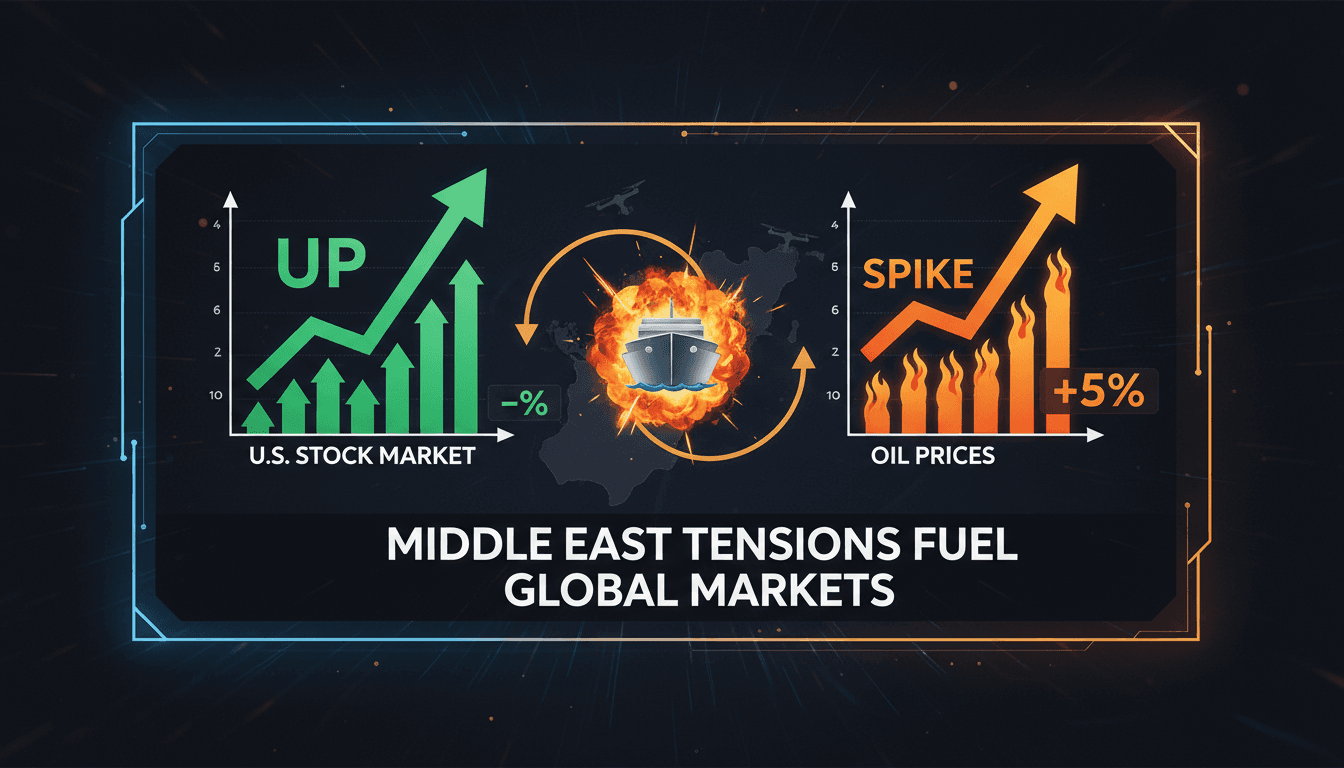
U.S. stock markets rise as oil prices spike amid Middle East tensions
Here's what it means for you.
The recent rise in U.S. stock markets, coupled with a significant spike in oil prices, signals a complex interplay of geopolitical tensions and market reactions. Investors are closely monitoring developments in the Middle East, particularly the renewed military actions between the U.S. and Iran, which could have lasting implications for energy costs and economic stability. As oil prices increase, consumers may soon feel the impact at the gas pump, prompting potential shifts in U.S. energy policy. The ongoing volatility in oil prices suggests that market participants should prepare for fluctuations that could affect broader economic conditions. Understanding these dynamics will be crucial for stakeholders across various sectors.
What happened
U.S. stock markets demonstrated resilience as prices rose amid escalating tensions in the Middle East. Oil prices surged approximately 5% following military strikes involving the U.S. and Iran, particularly after attacks on tankers in the Strait of Hormuz. This increase in oil prices reflects heightened market volatility driven by geopolitical uncertainties.
Despite these tensions, U.S. stocks managed to rise slightly, indicating a mixed response from investors. The situation remains fluid, with ongoing developments likely to influence market sentiment and energy costs in the coming weeks.
The Context
The backdrop of this situation involves renewed military actions between the U.S. and Iran, which have historically impacted global oil supply and prices. The Strait of Hormuz is a critical chokepoint for oil transportation, making any disruptions in this region particularly significant for global markets. Investors are navigating a landscape marked by uncertainty as they assess the implications of these tensions on economic stability.
As oil prices jumped, the broader market reaction has been mixed, reflecting concerns over potential long-term impacts on gas prices in the U.S. and the overall economy. Stakeholders are keenly aware that the evolving geopolitical landscape could lead to shifts in U.S. energy policy as the situation develops.
Takeaway
Looking ahead, market participants should closely monitor developments in U.S.-Iran relations and their potential impact on global oil supply. The ongoing conflict in the Middle East may continue to influence oil prices and market stability, prompting investors to remain vigilant.
As tensions persist, fluctuations in oil prices are likely, which could have broader implications for the economy and consumer behavior. Stakeholders should prepare for potential changes in U.S. energy policy in response to rising gas prices and evolving geopolitical dynamics.
U.S. business news, corporate developments, and economy.
"The Wall Street Journal is respected for deep financial and economic reporting with a center-right editorial perspective."
— A47 Editor
Oil Posts Weekly Gains on Renewed Middle East Skirmishes
Oil futures experienced a weekly increase as military tensions escalated between the U.S. and Iran, particularly following attacks on tankers in the strategically vital Strait of Hormuz. The renewed hostilities have raised concerns over maritime secu...
Right-of-center views on political news.
"The Washington Times is a conservative-leaning newspaper known for its political coverage and advocacy of right-of-center viewpoints."
— A47 Editor
Markets shake off worries about renewed Mideast fighting, though gas prices rise again
U.S. stocks experienced a rise despite escalating tensions in the Middle East, with oil and gas prices also seeing a slight increase as investors reacted to mixed signals from Washington and Tehran.
Stock market news, investing ideas, and trading analysis.
"TheStreet provides market news and retail-investor-focused analysis."
— A47 Editor
As Middle East tensions explode, oil and gas prices reset
Recent tensions in the Middle East have led to a significant increase in oil prices, with crude oil jumping approximately 5% on July 8, raising concerns about the potential impact on U.S. pump prices in the coming weeks. This resurgence in oil prices...
Regional and international reporting focused on Middle Eastern politics, diplomacy, and economics.
"Asharq Al-Awsat is a Saudi-owned international newspaper reflecting mainstream Gulf political perspectives."
— A47 Editor
Global Markets Are Mixed and Oil Prices Rise as Iran and US Launch New Attacks
Recent military escalations have seen the United States launch airstrikes against Iranian targets, particularly in the Strait of Hormuz, following missile attacks attributed to Iran's Revolutionary Guard on commercial vessels. This situation has led ...
Pan-Arab news coverage spanning politics, business, sports, and regional affairs.
"Asharq Al-Awsat reflects a broad Arab editorial perspective with strong attention to regional geopolitics."
— A47 Editor
ارتفاع العقود الآجلة الأميركية رغم تجدد المخاوف بشأن إيران
U.S. stock futures rose slightly on Thursday amid stabilizing global markets and oil prices, despite renewed concerns regarding Iran. This development reflects a cautious optimism in the financial markets as investors navigate geopolitical tensions w...
UAE-based English-language newspaper covering regional politics, economics, and global affairs.
"The National reflects Emirati policy perspectives while maintaining international editorial standards."
— A47 Editor
Manus on Markets: US-Iran tensions spike oil prices
Recent military escalations between the United States and Iran have led to a significant spike in oil prices, driven by U.S. airstrikes on Iranian targets following missile attacks by Iran's Revolutionary Guards on commercial vessels in the Strait of...