
Trump Finalizes Memorandum of Understanding with Iran to End Conflict
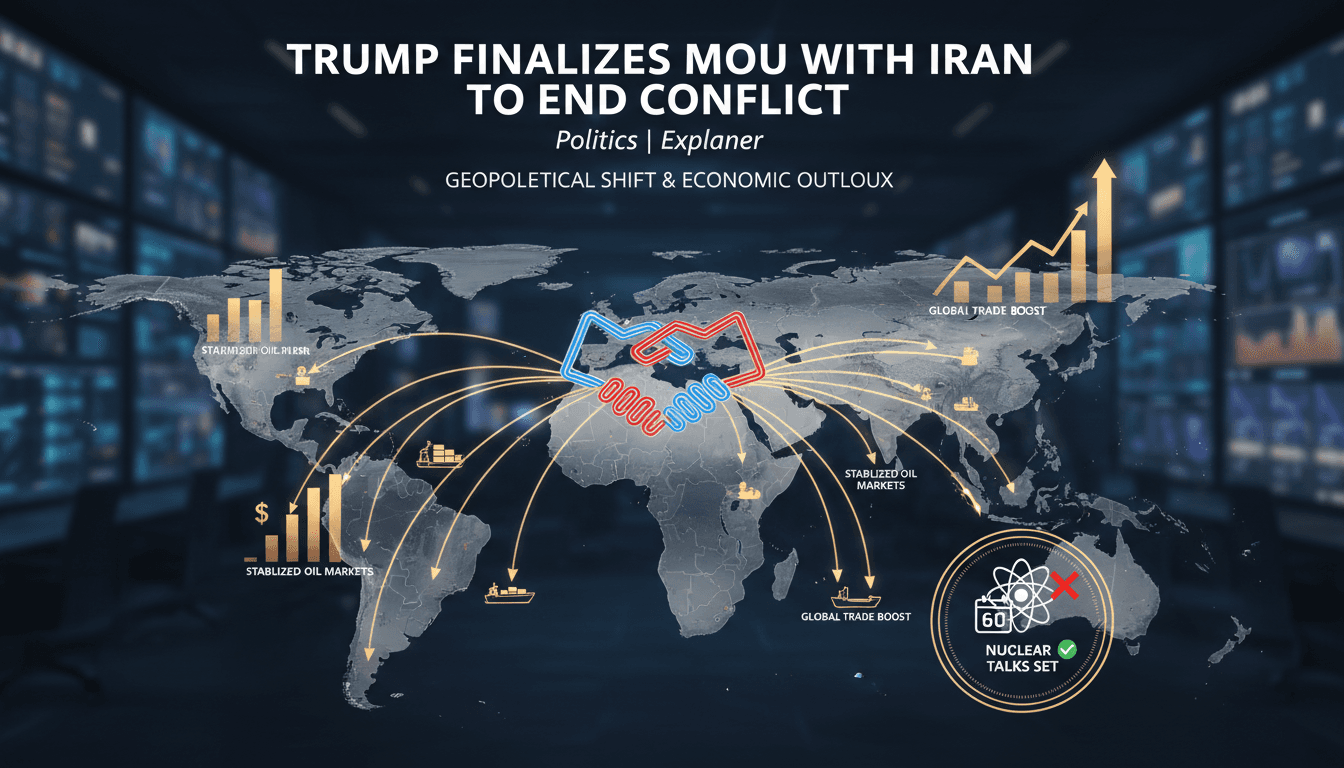
Here's what it means for you.
The new agreement could stabilize oil prices and enhance trade routes, impacting global markets.
Why it matters
This memorandum of understanding represents a pivotal shift in U.S. foreign policy, with potential implications for global oil markets and regional stability.
What happened (in 30 seconds)
- Trump announced a memorandum of understanding with Iran to end the ongoing conflict during the G7 summit on June 16, 2026.
- Key provisions include lifting the U.S. naval blockade and reopening the Strait of Hormuz, crucial for global oil shipping.
- Negotiations on Iran's nuclear program will commence within 60 days, although significant issues remain unresolved.
The context you actually need
- Escalation of conflict: The U.S.-Iran conflict intensified after military operations in February 2026, leading to the death of Iranian Supreme Leader Ayatollah Ali Khamenei.
- Economic repercussions: The ongoing war has severely affected global oil markets, causing price volatility and economic strain.
- Humanitarian crisis: The conflict has resulted in significant humanitarian and economic crises in the region, necessitating a diplomatic resolution.
What's really happening
The announcement of the memorandum of understanding (MOU) marks a significant turning point in U.S.-Iran relations. Following months of negotiations, President Trump has positioned this agreement as a pathway to cease hostilities and foster diplomatic engagement. The MOU aims to lift the U.S. naval blockade, which has been a critical point of contention, and reopen the Strait of Hormuz, a vital shipping route for global oil supplies.
The agreement is not merely a cessation of hostilities; it is a strategic maneuver to stabilize a region that has been fraught with conflict and economic turmoil. The lifting of the blockade is expected to alleviate pressures on global oil prices, which have been volatile due to the ongoing conflict. This stabilization is crucial not only for the U.S. economy but also for global markets that rely heavily on oil imports from the Middle East.
However, the MOU's details remain largely undisclosed, leading to varying interpretations from both sides. The initial 60-day negotiation period regarding Iran's nuclear program is particularly significant, as it indicates a willingness to engage in dialogue over a contentious issue that has long been a source of international tension. Yet, the path forward is fraught with challenges, as both nations have differing perspectives on what constitutes acceptable terms.
The geopolitical landscape is also shifting, with mixed reactions from international stakeholders. While some nations welcome the potential for reduced tensions, others remain skeptical about the agreement's long-term viability. The silence from Israeli Prime Minister Benjamin Netanyahu suggests potential political ramifications, as Israel has historically viewed Iran's nuclear ambitions as a direct threat.
In summary, the MOU represents a complex interplay of diplomacy, economic interests, and regional stability. Its success will depend on the ability of both parties to navigate the intricate web of negotiations and address the underlying issues that have fueled the conflict.
Who feels it first (and how)
- Oil market analysts: They will closely monitor price fluctuations as the Strait of Hormuz reopens.
- Logistics and trade sectors: Companies reliant on shipping routes will benefit from increased stability and reduced costs.
- Middle Eastern economies: Nations like the UAE and Saudi Arabia may see economic boosts from stabilized oil prices and enhanced trade.
What to watch next
- Negotiation outcomes: The results of the 60-day discussions on Iran's nuclear program will be critical in determining the agreement's success.
- Market reactions: Watch for fluctuations in oil prices as the Strait of Hormuz reopens and trade routes stabilize.
- International responses: Monitor how other nations react to the MOU, particularly those with vested interests in Middle Eastern stability.
The MOU has been digitally signed by key officials, and a formal signing ceremony is pending.
Initial negotiations on Iran's nuclear program will commence within 60 days, with potential for further diplomatic engagement.
The long-term viability of the agreement and its acceptance by all stakeholders remains uncertain.
Frequently Asked Questions
- Why it matters?
- This memorandum of understanding represents a pivotal shift in U.S. foreign policy, with potential implications for global oil markets and regional stability.
- What happened (in 30 seconds)?
- Trump announced a memorandum of understanding with Iran to end the ongoing conflict during the G7 summit on June 16, 2026. Key provisions include lifting the U.S. naval blockade and reopening the Strait of Hormuz, crucial for global oil shipping. Negotiations on Iran's nuclear program will commence within 60 days, although significant issues remain unresolved.
- What's really happening?
- The announcement of the memorandum of understanding (MOU) marks a significant turning point in U.S.-Iran relations. Following months of negotiations, President Trump has positioned this agreement as a pathway to cease hostilities and foster diplomatic engagement. The MOU aims to lift the U.S. naval blockade, which has been a critical point of contention, and reopen the Strait of Hormuz, a vital shipping route for global oil supplies. The agreement is not merely a cessation of hostilities; it is
- Who feels it first (and how)?
- Oil market analysts: They will closely monitor price fluctuations as the Strait of Hormuz reopens. Logistics and trade sectors: Companies reliant on shipping routes will benefit from increased stability and reduced costs. Middle Eastern economies: Nations like the UAE and Saudi Arabia may see economic boosts from stabilized oil prices and enhanced trade.
- What to watch next?
- Negotiation outcomes: The results of the 60-day discussions on Iran's nuclear program will be critical in determining the agreement's success. Market reactions: Watch for fluctuations in oil prices as the Strait of Hormuz reopens and trade routes stabilize. International responses: Monitor how other nations react to the MOU, particularly those with vested interests in Middle Eastern stability.
Arabic-language coverage of international news and geopolitics.
"RT Arabic is a Russian state-funded outlet often criticized for promoting Kremlin-aligned narratives."
— A47 Editor
ترامب: وقعنا مذكرة تفاهم مع إيران
U.S. President Donald Trump announced the signing of a memorandum of understanding with Iran, which includes a partial opening of the Strait of Hormuz. Trump emphasized Tehran's assurance of not possessing nuclear weapons.
Arabic-language coverage of political affairs and current events.
"Okaz political coverage typically follows mainstream Saudi framing on national and regional affairs."
— A47 Editor
ترمب: «هرمز» يُفتح الجمعة بالكامل وإيران ملتزمة بعدم امتلاك سلاح نووي
U.S. President Donald Trump announced that the Strait of Hormuz will be fully opened on Friday, reaffirming Iran's commitment to not pursue nuclear weapons. During a meeting with French President Emmanuel Macron, Trump emphasized that the agreement w...
Pan-Arab news coverage spanning politics, business, sports, and regional affairs.
"Asharq Al-Awsat reflects a broad Arab editorial perspective with strong attention to regional geopolitics."
— A47 Editor
ترمب يؤكد فتح «هرمز» الجمعة... وبزشكيان يدافع عن مذكرة التفاهم
During a joint press conference with French President Emmanuel Macron, U.S. President Donald Trump announced that the Strait of Hormuz will be fully opened on Friday, indicating his potential participation in the signing.
Arabic-language political and world news coverage for UAE readers.
"Emarat Al Youm world coverage usually presents international developments through a UAE and Arab audience lens."
— A47 Editor
ترامب: السفن بدأت في التحرك خارج مضيق هرمز ترامب: السفن بدأت في التحرك خارج مضيق هرمز
U.S. President Donald Trump announced on his platform Truth Social that ships have begun to move out of the Strait of Hormuz, a critical waterway for global oil transportation. This statement comes amid ongoing geopolitical tensions in the region, hi...
Arabic-language coverage of Saudi, regional, and international affairs.
"Al Bilad offers mainstream Saudi newspaper coverage across domestic and broader Arab topics."
— A47 Editor
ترامب يعلن انتهاء الحرب وفتح مضيق هرمز ورفع الحصار البحري
U.S. President Donald Trump announced a ceasefire agreement with Iran, declaring that the Strait of Hormuz is now open and that the United States will lift its maritime blockade. The agreement includes Iran's commitment to refrain from acquiring nucl...
Arabic-language political and world news coverage for UAE readers.
"Emarat Al Youm world coverage usually presents international developments through a UAE and Arab audience lens."
— A47 Editor
ترامب يعلن أن مضيق هرمز سيُفتَح مجدداً بعد توقيع الاتفاق مع إيران الجمعة ترامب يعلن أن مضيق هرمز سيُفتَح مجدداً بعد توقيع الاتفاق مع إيران الجمعة
U.S. President Donald Trump announced that the Strait of Hormuz will be reopened following the signing of a peace agreement with Iran on Friday. This declaration marks a significant shift in U.S.-Iran relations and suggests a potential easing of tens...
Arabic-language political and world news coverage for UAE readers.
"Emarat Al Youm world coverage usually presents international developments through a UAE and Arab audience lens."
— A47 Editor
الرئيس الأميركي يعلن اكتمال الاتفاق مع إيران وفتح مضيق هرمز ورفع الحصار البحري الرئيس الأميركي يعلن اكتمال الاتفاق مع إيران وفتح مضيق هرمز ورفع الحصار البحري
U.S. President Donald Trump announced the completion of an agreement with Iran, which allows for the opening of the Strait of Hormuz and the lifting of the U.S. maritime blockade. This development marks a significant shift in U.S.-Iran relations and ...
Arabic-language coverage of international news and geopolitics.
"RT Arabic is a Russian state-funded outlet often criticized for promoting Kremlin-aligned narratives."
— A47 Editor
ترامب يعلن التوصل إلى اتفاق سلام مع إيران والرفع الفوري للحصار البحري وفتح مضيق هرمز بالكامل
U.S. President Donald Trump announced early Monday that the United States and Iran have reached a peace agreement, which includes the immediate lifting of the maritime blockade and the full opening of the Strait of Hormuz. This development marks a si...
Arabic-language reporting on global and regional news.
"BBC Arabic is part of the BBC, generally regarded for editorial standards and broad international coverage."
— A47 Editor
ترامب: توقيع اتفاق مع إيران اليوم يليه فتح مضيق هرمز، وطهران تتحفّظ: موعد التوقيع لم يُحسم بعد
U.S. President Donald Trump announced that an agreement with Iran to end the ongoing conflict is set to be signed on Sunday, which would be followed by the reopening of the Strait of Hormuz. However, Tehran has stated that the date for signing has no...
Arabic-language coverage of international news and geopolitics.
"RT Arabic is a Russian state-funded outlet often criticized for promoting Kremlin-aligned narratives."
— A47 Editor
ترامب يعلن موعد توقيع الاتفاق بين الولايات المتحدة وإيران
On Saturday evening, U.S. President Donald Trump announced that the United States and Iran will sign an agreement on Sunday, June 14, after which the Strait of Hormuz will be opened. This development marks a significant diplomatic step between the tw...