
Iran Restores Partial Internet Access After 88-Day Blackout
Here's what it means for you.
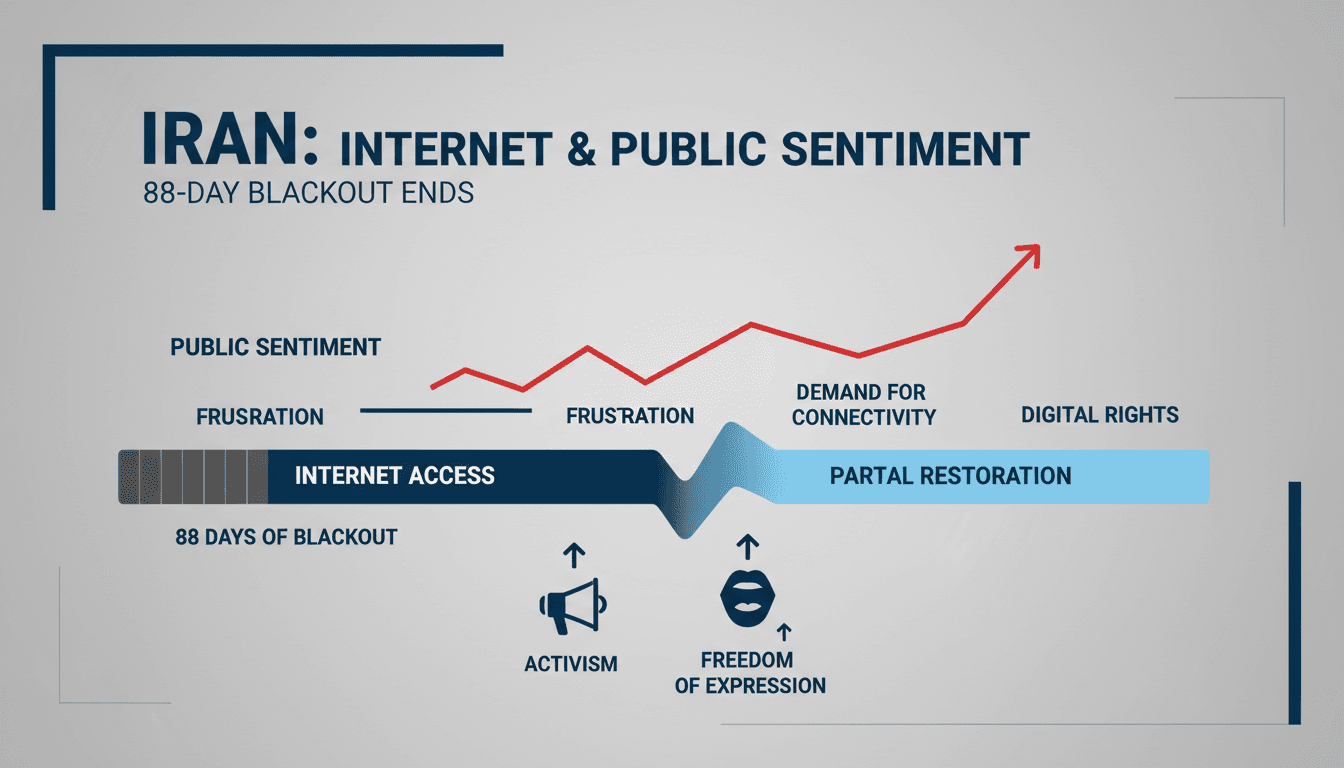
The partial restoration of internet access in Iran signals a critical juncture for digital rights and freedom of expression in the country. As public frustration mounts over the prolonged blackout, there is potential for increased activism demanding full connectivity. Stakeholders, including policymakers and civil society, must now navigate the implications of this limited access on public sentiment and social movements. The situation highlights the delicate balance between government control and the public's desire for digital freedom. As Iranians adapt to the new reality, the demand for unrestricted internet access may shape future policy discussions.
What happened
Iran has partially restored internet access after an 88-day blackout, which significantly impacted communication across the nation. Users have reported that while some online services are back, the connectivity remains slow and unreliable, with major platforms like YouTube and Instagram still facing restrictions. The initial reactions from the public are mixed, with many expressing skepticism and anger rather than relief or celebration.
Despite the return of some connectivity, the experience is far from normal, leaving many Iranians frustrated with the ongoing limitations. The restoration occurred on May 28, 2026, marking a significant moment in the ongoing struggle for digital rights in the country.
The Context
The internet shutdown in Iran lasted for 88 days, a period that severely affected communication and access to information. This blackout was a response to rising public dissent, and its duration underscores the government's control over digital spaces. As connectivity is restored, the public's reaction reveals deep-seated concerns about the government's intentions and the future of digital freedom.
The situation is further complicated by the slow and spotty service reported by users, which continues to hinder effective communication. The partial restoration may not lead to widespread celebration, as many remain wary of the ongoing restrictions imposed on their online activities.
Takeaway
The partial restoration of internet access in Iran may catalyze increased public pressure for full connectivity and freedom of expression. As dissatisfaction with the current limitations grows, it is crucial to monitor the government's response to these sentiments. Potential protests or movements advocating for digital rights could emerge as citizens seek to reclaim their online freedoms.
The evolving situation may lead to a larger discourse on digital rights in Iran, with implications for both domestic policy and international relations. Observers should remain vigilant as the public navigates these challenges and demands change.
24/7 international news from a French perspective in multiple languages.
"France 24 is viewed as a globally focused outlet with balanced coverage and a European perspective."
— A47 Editor
Reconnected? Iranians say only 'drip-feed' internet has returned after three-month shutdown
After nearly three months of a nationwide internet blackout, partial connectivity in Iran was restored on May 26, 2026. While some citizens expressed relief at being able to reconnect with loved ones, many reported ongoing issues with slow internet s...
Regional and international reporting focused on Middle Eastern politics, diplomacy, and economics.
"Asharq Al-Awsat is a Saudi-owned international newspaper reflecting mainstream Gulf political perspectives."
— A47 Editor
Iranians Are Back Online After a Monthslong Shutdown but Still Face Heavy Restrictions
After enduring an internet blackout for 88 days, Iranians have regained online access, marking a significant moment for communication and information flow in the country. This shutdown was a response to escalating political unrest and government crac...
International stories from NPR’s global desk.
"NPR is an American public media organization known for thoughtful reporting and a slightly left-leaning editorial tone."
— A47 Editor
Iranians are back online after a monthslong shutdown but face heavy restrictions
Iranians have begun to regain internet access after a prolonged shutdown that lasted several months, although users report that the service remains slow and unreliable, with significant restrictions on platforms like YouTube and Instagram.
UK and international business news, economics, and corporate coverage.
"The Guardian’s business section covers finance and markets with a progressive editorial tone."
— A47 Editor
‘This isn’t freedom’: anger, anxiety and tears as Iran’s internet flickers back
After an unprecedented 88-day internet blackout, partial connectivity in Iran resumed on May 26, 2026, allowing delayed messages and content to flood social media. However, initial reactions were marked by skepticism and anger rather than celebration...
Tech culture, product news, and critical takes on the tech industry's social impact.
"The Guardian's tech coverage blends mainstream news, critical analysis, and cultural commentary on emerging technologies and digital trends."
— A47 Editor
‘This isn’t freedom’: anger, anxiety and tears as Iran’s internet flickers back
After 88 days of a near-total internet blackout, Iran has seen a partial restoration of connectivity, with messages and images beginning to flow again on social media. However, the initial reactions from users have been marked by skepticism, anxiety,...
International coverage from The Guardian's global desks.
"The Guardian is known for its progressive editorial stance and in-depth analysis."
— A47 Editor
‘This isn’t freedom’: anger, anxiety and tears as Iran’s internet flickers back
After an unprecedented 88-day internet blackout, partial connectivity in Iran resumed on May 26, 2026, allowing delayed messages and content to flood social media. However, initial reactions were marked by skepticism and anger rather than celebration...