
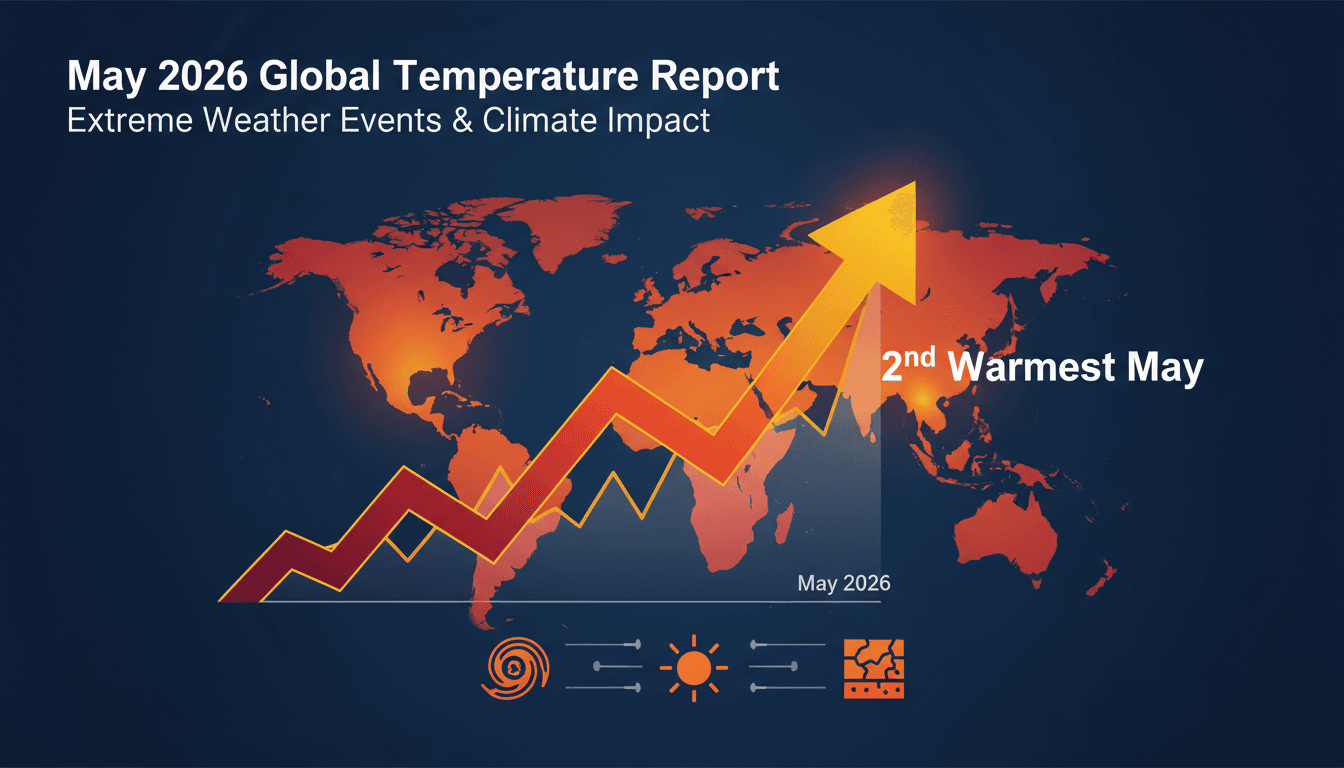
May 2026 recorded as second-warmest May globally
Here's what it means for you.
The record-breaking temperatures in May 2026 signal a critical juncture in climate dynamics, emphasizing the urgent need for comprehensive climate policies. As extreme weather events become more frequent, businesses and governments must adapt to mitigate risks associated with heatwaves and flooding. This situation calls for immediate action to address climate change and its far-reaching impacts on economies and communities. The implications extend beyond immediate weather patterns, affecting agriculture, energy consumption, and public health. Stakeholders across various sectors should prepare for the potential consequences of ongoing climate shifts.
What happened
May 2026 has been recorded as the second-warmest May globally since records began, according to the European Union's Copernicus Climate Change Service. This month saw significant temperature increases across Europe, leading to numerous heat records being broken, particularly in western countries. The data highlights a concerning trend in climate change, as regions grapple with unprecedented heat.
Countries such as France, the UK, Ireland, and Portugal experienced intense heatwaves, marking a rapid shift from previously below-average temperatures. In contrast, parts of Türkiye, Bulgaria, and Moldova faced severe flooding, illustrating the stark variability in weather patterns during this period.
The Context
The climate crisis is increasingly manifesting through extreme weather events, as evidenced by the record temperatures in May 2026. The Copernicus Climate Change Service's findings underscore the urgency of addressing climate change, as regions face both heatwaves and flooding simultaneously. This duality of weather extremes highlights the interconnectedness of climate systems and the need for a coordinated response.
As climate patterns continue to shift, the likelihood of extreme weather events will increase, necessitating proactive measures to mitigate their impacts. The ongoing trend of near-record temperatures in both the atmosphere and oceans further emphasizes the importance of monitoring climate data and implementing effective policies.
Takeaway
The increasing frequency and intensity of heatwaves suggest a need for urgent climate action. Stakeholders should closely monitor upcoming climate reports for further temperature trends and potential policy responses from governments addressing climate change. The situation calls for a collective effort to adapt to and mitigate the impacts of these extreme weather events.
As we move forward, it will be crucial to assess how different regions respond to these challenges and what measures are taken to protect vulnerable communities. The urgency of the climate crisis demands immediate attention and action from all sectors of society.
International news coverage curated for readers in the UAE and Gulf region.
"Emirates 24|7 world coverage presents global developments through a UAE-facing and Gulf-relevant editorial lens."
— A47 Editor
May 2026 second-warmest on record, EU monitor says May 2026 second-warmest on record, EU monitor says
May 2026 has been recorded as the second-warmest May globally, according to the European Union's Copernicus Climate Change Service, which noted a significant shift in temperatures across Europe, leading to one of the most intense early-season heatwav...
Arabic-language sports reporting covering UAE competitions and major international events.
"Emarat Al Youm sports coverage is mainstream and accessible, with strong emphasis on UAE and regional sport."
— A47 Editor
مايو 2026.. العالم يشهد ثاني أكثر الشهور حرّا على الإطلاق مايو 2026.. العالم يشهد ثاني أكثر الشهور حرّا على الإطلاق
The world has recorded May 2026 as the second hottest May on record since data collection began, according to the Climate Observatory of the Union. This significant temperature rise highlights ongoing climate change trends and their impact on global ...
Regional and international reporting focused on Middle Eastern politics, diplomacy, and economics.
"Asharq Al-Awsat is a Saudi-owned international newspaper reflecting mainstream Gulf political perspectives."
— A47 Editor
EU Scientists: May Was World's Second-hottest on Record
EU scientists have reported that May 2026 was the second-hottest May on record globally, highlighting ongoing concerns about rising temperatures and climate change impacts.