
Xcena secures $135 million in Series B funding for AI memory chip development
Here's what it means for you.
Xcena's recent funding round highlights a growing recognition of the importance of memory solutions in AI technology. As AI applications become more complex, addressing memory bottlenecks is crucial for enhancing performance. This investment signals strong confidence from investors in Xcena's innovative approach to AI hardware. The implications of this funding extend beyond Xcena, potentially influencing the broader landscape of AI hardware development. Companies focusing on memory-centric solutions may find new opportunities as the demand for efficient AI processing continues to rise.
What happened
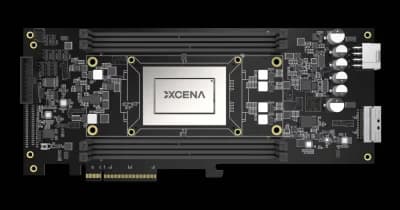
Xcena, a South Korean chip startup, has successfully raised $135 million in a Series B funding round, valuing the company at $570 million. This funding will be directed towards the development of their MX1 memory-centric AI chip, which aims to tackle the memory bottleneck that many believe is hindering AI advancements. The MX1 chip focuses on data orchestration and key-value cache management within memory modules.
The funding round reflects a growing investor interest in hardware solutions that address challenges in AI processing. Xcena's belief that memory, rather than compute power, is the primary bottleneck in AI performance underscores the significance of this investment.
The Context
Xcena is positioning itself at the forefront of AI hardware innovation with its MX1 chip. The startup's focus on memory-centric solutions comes at a time when the demand for efficient AI processing is increasing. The $135 million funding round not only validates Xcena's approach but also highlights the potential for significant advancements in the field.
As AI technology evolves, addressing memory limitations may become a critical focus for hardware innovation. The timing of this funding is particularly relevant, given the rising interest from investors in hardware solutions that can effectively manage the complexities of AI applications.
Takeaway
With the increasing demand for efficient AI processing, Xcena's focus on memory-centric solutions could lead to significant advancements in the field. Observers should monitor developments in memory-centric AI technologies and watch for potential partnerships or collaborations that Xcena may pursue to enhance its chip development.
The implications of this funding round extend beyond Xcena, potentially influencing future AI hardware development as companies seek to overcome memory limitations in their products.
Curated tech headlines including AI stories.
"Influential aggregator surfacing the day’s top tech/AI links."
— A47 Editor
Xcena, whose MX1 chip performs data orchestration and KV cache management directly within memory modules, raised a $135M Series B at a $570M valuation (Kate Park/TechCrunch)
Xcena, a South Korean startup, has successfully raised $135 million in a Series B funding round, achieving a valuation of $570 million. The company focuses on its MX1 chip, which performs data orchestration and key-value cache management directly wit...
Research, news, and analysis on blockchain startups, DeFi, and regulations.
"Crypto Briefing provides research, news, and analysis on blockchain startups, DeFi, and crypto regulations with investor-focused coverage."
— A47 Editor
Xcena raises $135M to develop memory-centric AI chip MX1
Xcena has successfully raised $135 million to develop its innovative memory-centric AI chip, MX1, which aims to enhance data processing efficiency in the artificial intelligence sector. This funding marks a significant step in the company's efforts t...
Startup news with frequent AI coverage.
"Covers launches, funding, and product updates in AI."
— A47 Editor
This chip startup just raised $135M on a bet that AI’s biggest bottleneck isn’t compute — it’s memory
South Korean chip startup XCENA has successfully raised $135 million, positioning itself to address what it identifies as the primary bottleneck in artificial intelligence (AI) development: memory rather than compute power. This funding will enable X...