
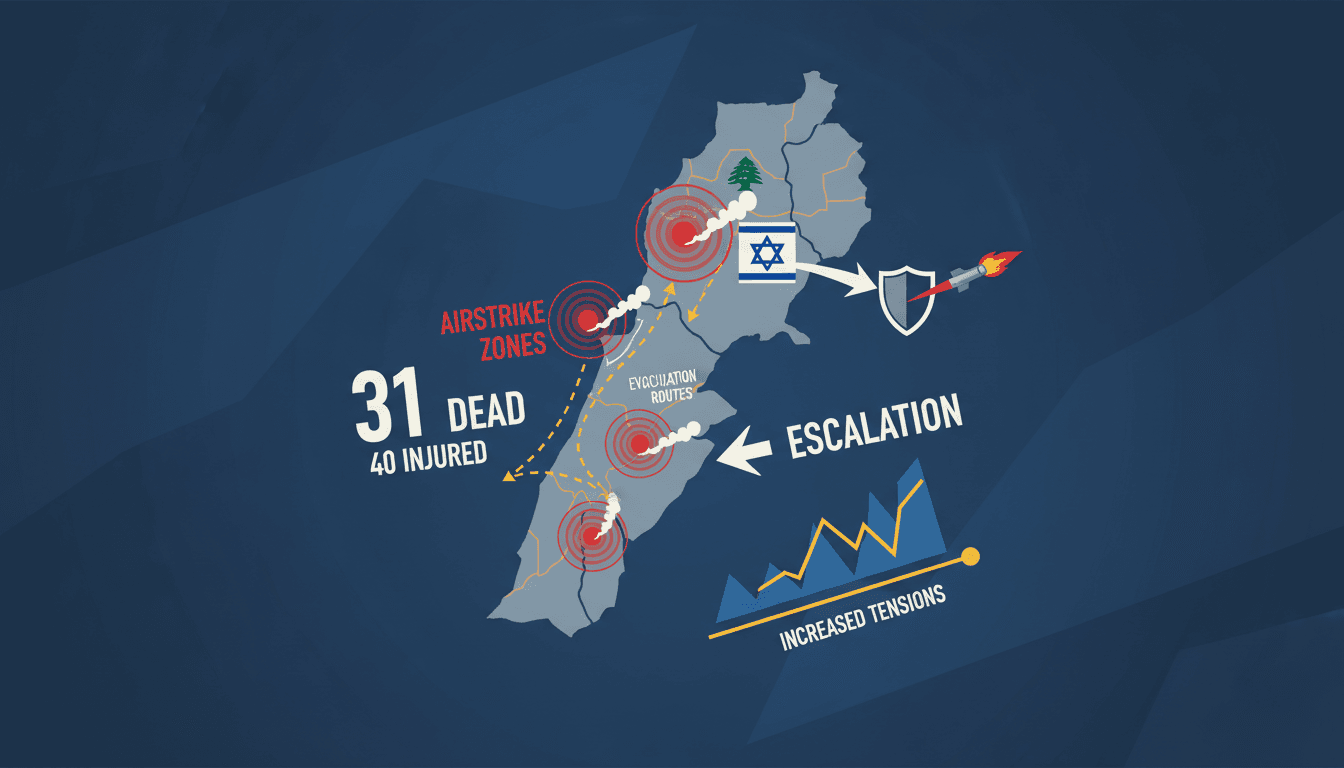
Israeli airstrikes in southern Lebanon result in 31 casualties and heightened tensions
Here's what it means for you.
The recent Israeli airstrikes in southern Lebanon have significant implications for regional stability and security. With 31 casualties reported, the escalation of violence raises concerns about humanitarian crises and potential military engagements. Stakeholders, including international observers, will need to monitor the situation closely as both sides prepare for further confrontations. The ongoing conflict underscores the fragility of peace in the region, impacting not only local populations but also broader geopolitical dynamics. As military operations intensify, the potential for civilian casualties and humanitarian needs will likely increase, prompting calls for international intervention.
What happened
Israeli airstrikes in southern Lebanon have resulted in the deaths of 31 individuals and injuries to 40 others. This surge in violence has led to military warnings and evacuations in the affected areas. The strikes were part of Israel's intensified operations targeting Hezbollah, reflecting a significant escalation in hostilities.
The Lebanese military reported that one of the casualties was a soldier killed during the airstrikes, highlighting the human toll of the conflict. In response to the attacks, Israeli forces issued evacuation orders for residents in the region, indicating a potential for further military actions.
The Context
The backdrop of this conflict involves ongoing tensions between Israel and Hezbollah, with the Israeli military increasing operations in southern Lebanon. The recent airstrikes targeted cities such as Nabatieh and Tyre, causing widespread destruction and complicating humanitarian efforts. The Lebanese army has faced challenges in retrieving the body of the fallen soldier due to ongoing threats from Israeli forces.
This escalation comes at a time when both sides are preparing for military meetings to address the ongoing hostilities. The situation remains volatile, with the potential for further confrontations as both Israel and Lebanon navigate their complex relationship.
Takeaway
The ongoing military actions suggest a potential for further escalation in the Israel-Lebanon conflict. Observers should monitor developments from the upcoming military meeting scheduled between Lebanon and Israel, as it may influence future engagements. Additionally, the humanitarian implications of the conflict are significant, with rising casualties likely to attract international attention.
As both sides continue to prepare for potential confrontations, the situation remains precarious. The international community may need to intervene as the humanitarian crisis deepens and civilian populations bear the brunt of the violence.
Pan-Arab news coverage spanning politics, business, sports, and regional affairs.
"Asharq Al-Awsat reflects a broad Arab editorial perspective with strong attention to regional geopolitics."
— A47 Editor
الاجتماع العسكري «اللبناني - الإسرائيلي» بموعده لتبادل الطروحات دون الحسم
The Israeli strikes targeting the cities of Nabatieh and Tyre, described as the most intense and widespread in weeks, are at the forefront of the agenda for the first military meeting between Lebanon and Israel. This meeting is set to discuss proposa...
Arabic-language coverage of political affairs and current events.
"Okaz political coverage typically follows mainstream Saudi framing on national and regional affairs."
— A47 Editor
مقتل جندي لبناني.. وإسرائيل تنذر النبطية وصور
The Lebanese Army announced the death of one of its soldiers due to an Israeli airstrike described as 'hostile' in the western Bekaa region. The soldier was killed near the Qaroun Lake dam, and efforts to retrieve his body were hampered by ongoing se...
Arabic-language coverage of political affairs and current events.
"Okaz political coverage typically follows mainstream Saudi framing on national and regional affairs."
— A47 Editor
إسرائيل تُجدّد تحذيراتها لسكان النبطية في لبنان
The Israeli army has renewed its warnings to the residents of Nabatieh, Lebanon, threatening to take strong action within the city. Israeli airstrikes targeted the towns of Shuqra and Baraqit in the Nabatieh governorate, resulting in the destruction ...