
ECB Signals Shift to More Measured Interest Rate Adjustments Amid Economic Resilience
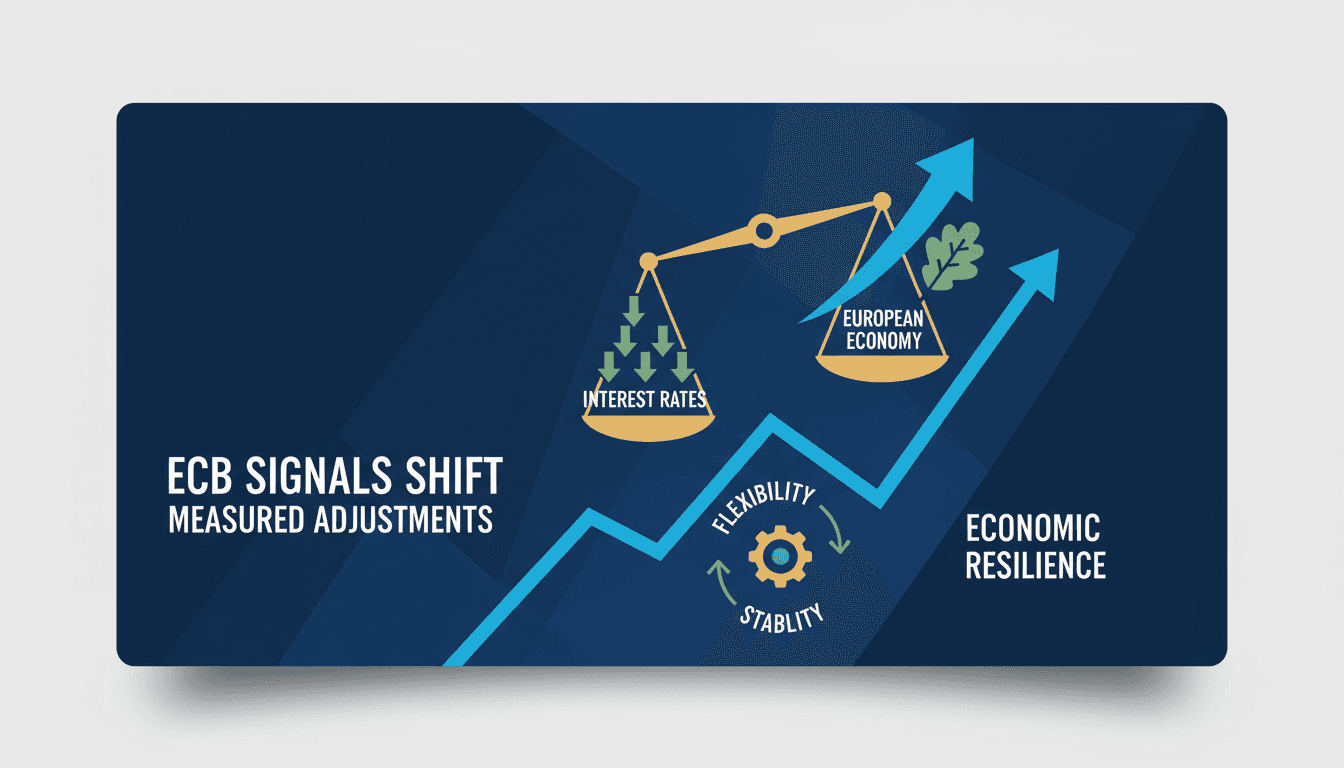
Here's what it means for you.
The European Central Bank's (ECB) recent shift towards a more measured approach to interest rate adjustments signals a potential stabilization in the European economic landscape. As the ECB acknowledges improved economic resilience, market participants may anticipate a less aggressive stance on inflation management. This could lead to a more predictable monetary policy environment, benefiting both businesses and consumers. Investors should closely monitor upcoming ECB meetings for any indications of rate changes, as these decisions will have significant implications for financial markets. A cautious approach to interest rate hikes may foster greater confidence in the European economy, encouraging investment and spending.
What happened
Christine Lagarde, President of the European Central Bank, announced that the institution now has greater flexibility in adjusting interest rates due to Europe's enhanced economic resilience. This marks a notable shift from the aggressive rate hikes implemented during the 2022-23 period, which were aimed at combating inflation. Lagarde indicated that the ECB does not need to respond to inflation with the same intensity as in previous years, suggesting a potential modest increase in rates.
The ECB's new stance reflects a strengthened financial framework and progress on the green transition, both of which contribute to a more stable economic environment. Lagarde's comments highlight a significant change in the ECB's monetary policy strategy, moving towards a more cautious approach.
The Context
Europe's financial framework has seen considerable improvements, reducing its vulnerability to external economic shocks. This resilience is further bolstered by advancements in green initiatives, which are contributing to overall economic stability. Lagarde's remarks suggest a departure from the aggressive monetary policies of the past, particularly those seen in 2022-23, when the ECB was compelled to raise rates sharply to address inflationary pressures.
The timing of this announcement is crucial, as it comes at a moment when many economies are grappling with the aftereffects of the pandemic and geopolitical tensions. Stakeholders across various sectors will be keenly observing how these developments influence the ECB's future decisions and the broader economic landscape in Europe.
Takeaway
Looking ahead, the ECB's more cautious approach to interest rate hikes may lead to a more stable economic environment in Europe. Investors and policymakers alike should keep an eye on upcoming ECB meetings for potential rate changes and economic indicators that may influence Lagarde's future statements. The evolving economic landscape suggests that the ECB is adapting its strategies to better align with current conditions.
As Europe continues to strengthen its economic foundations, the implications of this shift in monetary policy could be far-reaching, impacting everything from consumer spending to investment strategies. Observers will be particularly interested in how these changes affect inflation and overall economic growth in the coming months.
Macro commentary, policy analysis, growth/inflation themes, and global outlooks.
"Contextual macro coverage that complements day-to-day market headlines."
— A47 Editor
Europe’s economic resilience gives ECB greater room to move rates, Lagarde says
European Central Bank (ECB) President Christine Lagarde stated that Europe's economic resilience provides the ECB with increased flexibility to adjust interest rates. This statement comes amid ongoing discussions about inflation and economic stabilit...
Editor-curated FT homepage stories spanning markets, business, world, and opinion.
"The Financial Times is a globally respected business publication with a centrist/center-left tone and strong markets focus."
— A47 Editor
ECB does not need to fight inflation with ‘same force’ as in 2022-23, Lagarde says
European Central Bank (ECB) President Christine Lagarde indicated that the bank does not need to combat inflation with the same intensity as in 2022-2023, suggesting a potential modest increase in interest rates. This statement reflects a shift in th...
Global markets, investing, and macroeconomics from a premier financial newsroom.
"Bloomberg is respected for in-depth financial reporting and data-driven analysis."
— A47 Editor
Lagarde Says Europe Is Getting More Resilient to Economic Shocks
Christine Lagarde, President of the European Central Bank, stated that Europe is becoming more resilient to economic shocks due to improvements in its financial framework and advancements in the green transition. This assertion reflects a positive ou...