
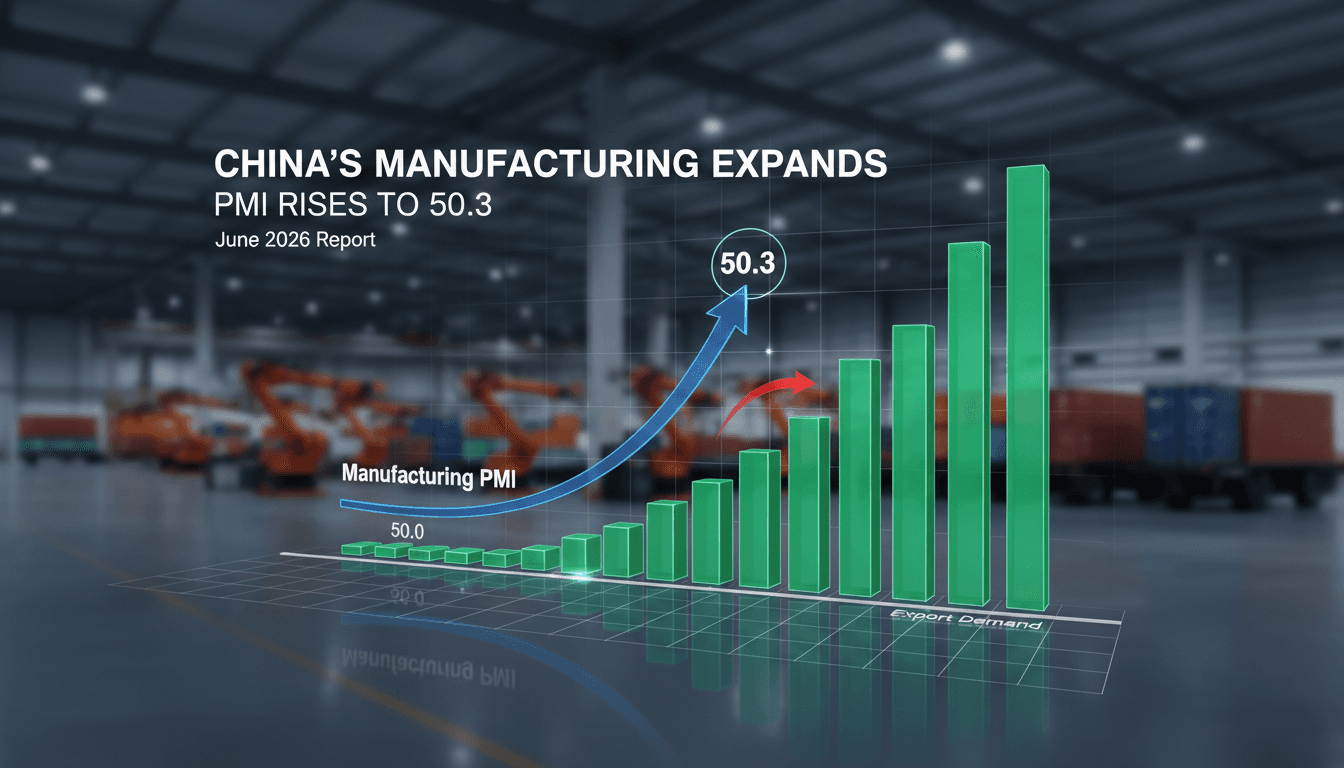
China's manufacturing sector expands as PMI rises to 50.3
Here's what it means for you.
The recent increase in China's manufacturing Purchasing Managers' Index (PMI) to 50.3 signals a pivotal moment for the economy, indicating a return to growth. This expansion, primarily driven by strong export demand, suggests that global markets remain receptive to Chinese goods, particularly in the context of advancements in artificial intelligence. However, the persistent weakness in domestic consumption raises questions about the sustainability of this growth trajectory. As businesses and policymakers assess these developments, the reliance on exports may necessitate strategic shifts to bolster domestic demand. Stakeholders should remain vigilant about the implications of these trends on overall economic stability.
What happened
In June 2026, China's manufacturing PMI rose to 50.3, marking a significant expansion in the sector. This increase indicates a rebound in manufacturing activity, driven largely by robust overseas demand. The PMI figure, which is above the neutral mark of 50, reflects a positive shift in the manufacturing landscape.
Despite this growth, domestic consumption remains weak, highlighting a potential vulnerability in the economy. The ongoing reliance on exports could pose challenges for sustained economic recovery.
The Context
The rise in China's manufacturing PMI is a response to strong global demand for Chinese products, particularly in light of the ongoing advancements in artificial intelligence. This trend is crucial as it underscores the importance of international markets for China's economic health. However, the persistent weakness in domestic consumption suggests that the economy may not be as resilient as the PMI figures imply.
Understanding the dynamics of both export and domestic markets is essential for stakeholders, as they navigate the complexities of China's economic landscape. The timing of this expansion is particularly relevant, given the global economic climate and the shifting patterns of trade.
Takeaway
While the expansion of China's manufacturing sector is a positive indicator for economic recovery, the heavy reliance on exports raises concerns about long-term sustainability. Observers should monitor trends in global demand for Chinese exports, as well as any shifts in domestic consumption patterns that may emerge. These factors will be critical in determining the future trajectory of China's economy.
As the situation evolves, stakeholders must remain aware of the potential risks associated with an export-driven growth model. The balance between fostering international demand and strengthening domestic consumption will be vital for ensuring a stable economic outlook.
Macro commentary, policy analysis, growth/inflation themes, and global outlooks.
"Contextual macro coverage that complements day-to-day market headlines."
— A47 Editor
China factory activity returns to expansion riding AI global boom
China's factory activity has returned to expansion, buoyed by a global boom in artificial intelligence (AI), signaling a positive shift in the manufacturing sector. This resurgence follows a period of mixed performance, with recent reports indicating...
Social/economic commentary and analysis relevant to business and markets.
"WSJ blends data-driven economic insight with commentary on policy and society."
— A47 Editor
China’s Manufacturing Activity Expands, Buoyed by Exports
China's manufacturing activity has expanded, driven by strong overseas demand for its goods, despite a slowdown in domestic consumption. This growth indicates resilience in the manufacturing sector, as reported by The Wall Street Journal.
Global political, business, and cultural coverage from WSJ international desks.
"The Wall Street Journal offers extensive international reporting with a reputation for financial insight and a center-right editorial stance."
— A47 Editor
China’s Manufacturing Activity Expands, Buoyed by Exports
China's manufacturing activity has expanded, driven by strong overseas demand for its goods, despite a slowdown in domestic consumption. This growth indicates resilience in the manufacturing sector, as reported by The Wall Street Journal.
Macro commentary, policy analysis, growth/inflation themes, and global outlooks.
"Contextual macro coverage that complements day-to-day market headlines."
— A47 Editor
China’s June factory activity rises to 50.3
China's factory activity rose to 50.3 in June, indicating a return to modest growth after a mixed performance in previous months characterized by declining retail sales and investment. This uptick suggests some resilience in the manufacturing sector ...