
AI Agents Begin Performing Financial Transactions in Banking Sector
Here's what it means for you.
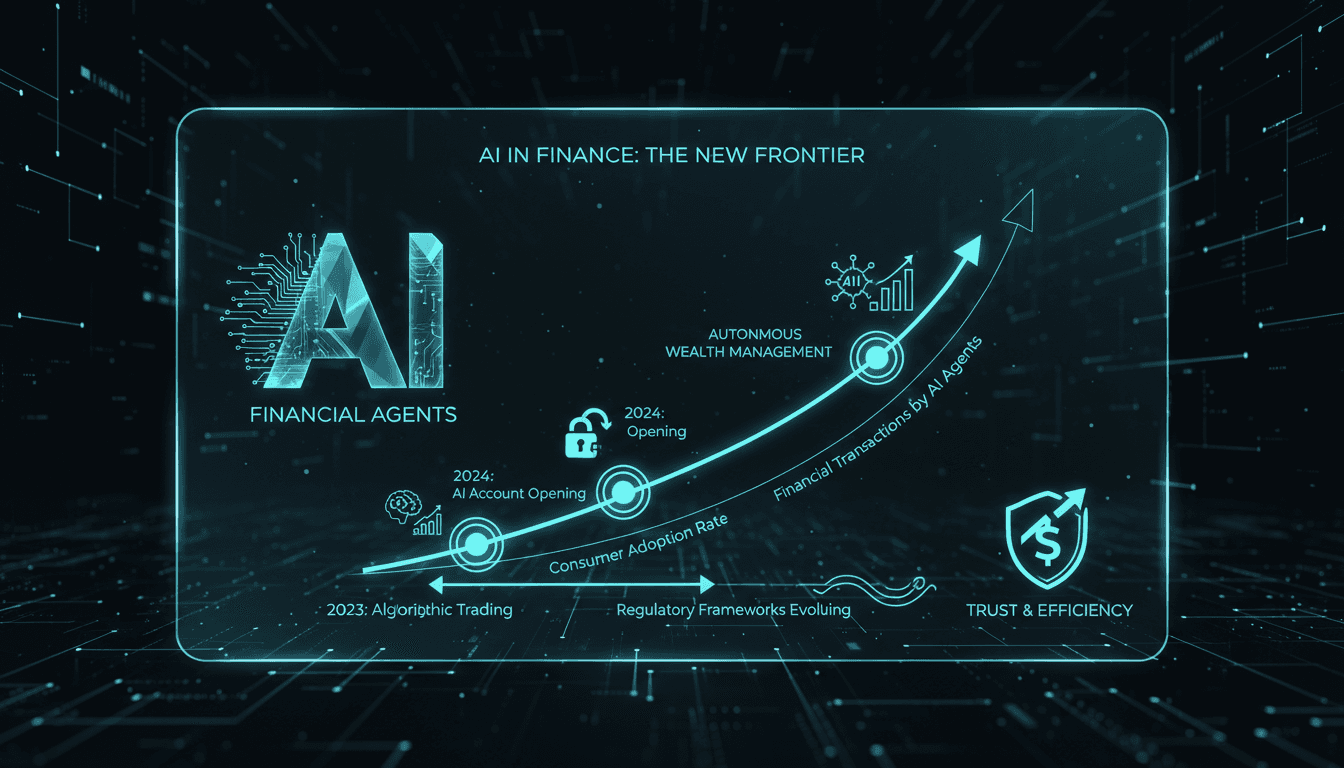
The integration of AI agents into financial services signifies a pivotal shift in how banking transactions are conducted. As companies like Robinhood lead this transformation, the reliance on AI for tasks such as opening bank accounts and executing trades is expected to reshape consumer interactions with financial institutions. This evolution raises important questions about consumer trust and the regulatory landscape surrounding automated financial transactions. The implications extend beyond mere convenience; they touch on the fundamental relationship between consumers and their financial service providers. As AI continues to evolve, its role in finance will likely expand, necessitating a careful examination of the associated risks and benefits.
What happened
AI agents have reached a new milestone, now capable of opening bank accounts and conducting financial transactions on behalf of users. This advancement marks a significant step towards fully automated financial transactions, a development that could revolutionize the banking industry. Companies like Robinhood are at the forefront of this movement, integrating AI technology to enhance user experience and streamline processes.
The ability of AI agents to manage financial tasks reduces the need for human intervention, potentially transforming the landscape of personal finance. As these technologies become mainstream, they promise to change how consumers engage with their finances.
The Context
The rise of AI in financial services is driven by a growing confidence in technology's ability to manage complex transactions. Stakeholders, including tech providers and financial institutions, are betting on consumer trust in AI to handle their finances. This shift is not just about efficiency; it also raises critical discussions about the future of banking and the regulatory frameworks that will govern these automated systems.
As AI agents take on roles traditionally held by humans, the implications for consumer trust and regulatory oversight become increasingly significant. The timeline of this development indicates a rapid evolution, with companies beginning to accommodate AI-led transactions as early as May 2026.
Takeaway
Looking ahead, the future of finance is poised for a greater reliance on AI, which could enhance efficiency and accessibility for consumers. However, this transition will require addressing the challenges of consumer trust and regulatory responses to AI in banking. Monitoring consumer adoption rates of AI-driven financial services will be crucial, as will observing how regulators respond to these emerging technologies.
As AI continues to evolve, its integration into financial services will likely expand, prompting ongoing discussions about the implications for both consumers and the industry at large.
Industry news and analysis for the global AI community.
"A business-first look at AI adoption, policy, and ecosystem trends."
— A47 Editor
Prompt: Robinhood Wants AI Agents to Trade, Spend on Your Behalf
Robinhood has launched a new feature that allows users to create separate accounts for AI agents, enabling these agents to autonomously trade stocks and manage spending through virtual credit cards. This innovation marks a significant advancement in ...
Stock market news, investing ideas, and trading analysis.
"TheStreet provides market news and retail-investor-focused analysis."
— A47 Editor
AI agents can now open bank accounts and move your money
AI agents have advanced to the point where they can now open bank accounts and facilitate money transfers, streamlining a traditionally bureaucratic process that often involved extensive human interaction. This development marks a significant shift i...
Global business headlines with AI angles.
"General business outlet that frequently covers AI."
— A47 Editor
Will Shoppers Trust AI Agents With Their Wallets? Some Companies Are Betting They Will
Companies are increasingly integrating artificial intelligence (AI) into commerce, with a focus on AI agents managing transactions, raising questions about consumer trust in these technologies.