
Russia Faces Severe Fuel Shortages Amid Intensified Ukrainian Drone Strikes
Here's what it means for you.
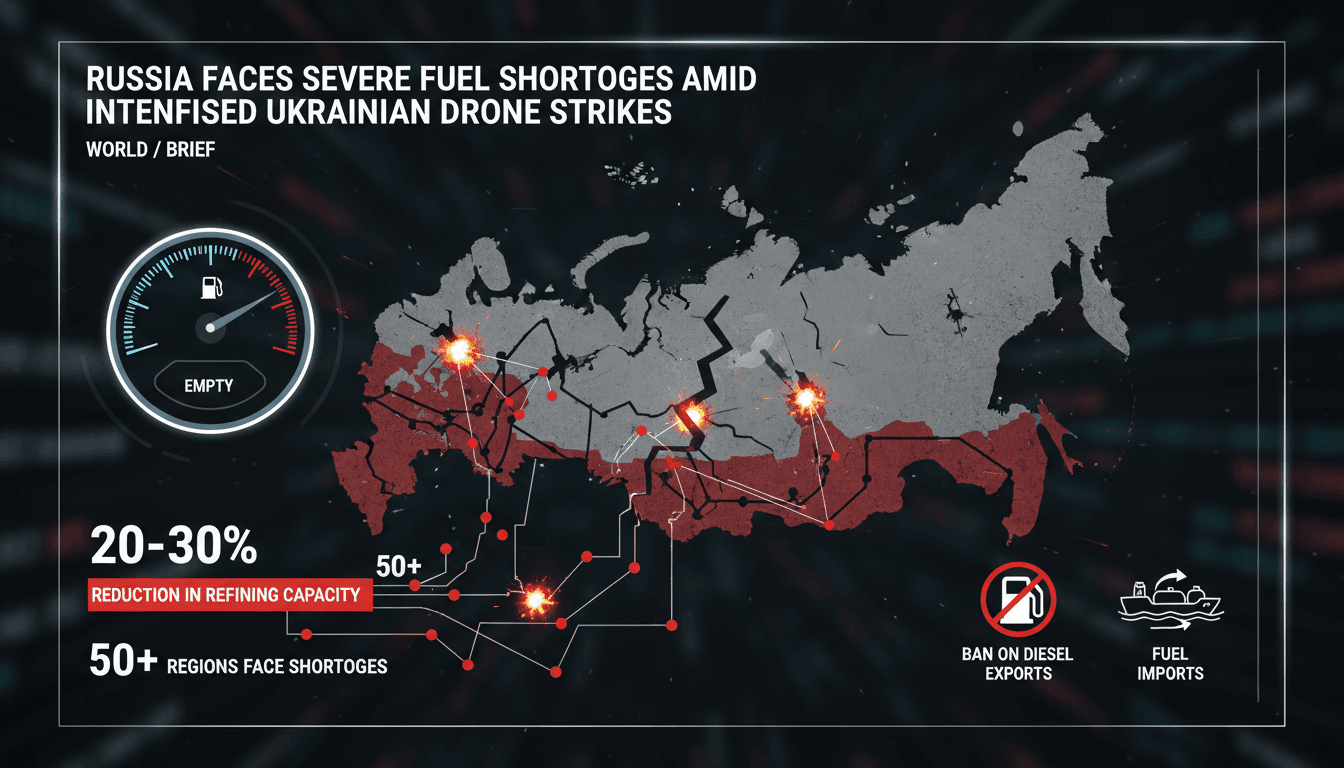
The ongoing conflict between Russia and Ukraine has escalated, leading to significant fuel shortages in Russia that could impact various sectors. As over 50 regions face supply disruptions, the Kremlin may need to implement drastic measures, including a potential ban on diesel exports. This situation could have broader implications for energy markets and international relations, particularly if Russia resorts to importing fuel to stabilize its energy sector. The ramifications of these shortages extend beyond immediate fuel availability, potentially affecting transportation, agriculture, and other critical industries reliant on diesel. Stakeholders should monitor developments closely, as the situation may evolve rapidly in response to ongoing drone strikes and government actions.
What happened
Ukrainian drone strikes have severely impacted Russian fuel supplies, leading to significant shortages across more than 50 regions. The immediate cause of this crisis is a reduction in Russia's refining capacity by 20-30%, which has prompted the government to consider drastic measures. Reports indicate that the Kremlin is contemplating a ban on diesel exports to prevent further domestic shortages.
As the situation unfolds, fuel rationing and supply disruptions are becoming increasingly common, affecting daily life and economic activities in many areas. The ongoing conflict has created a precarious environment for Russia's energy sector, which is now facing unprecedented challenges.
The Context
The backdrop of this crisis is the ongoing conflict between Russia and Ukraine, which has intensified in recent months. Ukraine's drone attacks have targeted key infrastructure, significantly disrupting Russian oil production and exports. Over two-thirds of Russian regions are currently experiencing fuel rationing, highlighting the widespread impact of these strikes.
The Kremlin's efforts to shield its citizens from the consequences of the war are increasingly challenged as fuel shortages become more pronounced. This situation not only threatens domestic stability but also raises questions about Russia's ability to maintain its energy exports in the face of ongoing military actions.
Takeaway
As the conflict continues, the energy crisis in Russia may deepen, leading to further economic challenges and potential shifts in energy policy. The possibility of Russia importing fuel to address shortages could signal a significant change in its approach to energy management. Stakeholders should remain vigilant for further developments in Ukraine's drone campaign and the Kremlin's response to these challenges.
The situation underscores the vulnerability of Russia's energy sector amidst the ongoing war, and the potential for further destabilization cannot be overlooked. Observers should watch for any announcements regarding export bans or changes in fuel import strategies as the crisis evolves.
Global markets, investing, and macroeconomics from a premier financial newsroom.
"Bloomberg is respected for in-depth financial reporting and data-driven analysis."
— A47 Editor
Russia Considers Diesel-Export Ban on Ukraine Refinery Attacks
Russia is contemplating a ban on diesel exports in response to intensified Ukrainian attacks on its oil refineries, which have significantly disrupted domestic fuel supplies. This decision comes amid reports of severe fuel shortages across over 50 re...
Global markets, investing, and macroeconomics from a premier financial newsroom.
"Bloomberg is respected for in-depth financial reporting and data-driven analysis."
— A47 Editor
Russia’s Gasoline Crunch Spreads After Refinery Attacks
Russia is experiencing a significant gasoline shortage, with at least two-thirds of its regions implementing fuel rationing or facing supply disruptions due to ongoing Ukrainian drone attacks on oil refineries. These strikes have severely impacted Ru...
Global business headlines with AI angles.
"General business outlet that frequently covers AI."
— A47 Editor
Russia Reportedly Considering Importing Fuel As Ukrainian Offensive Cripples Energy Sector
Russia is reportedly considering importing fuel as Ukrainian strikes continue to severely impact its energy sector, highlighting the ongoing military conflict between the two nations. The situation has escalated with Ukraine's recent drone attacks ta...
Business and tech news excluding paywalled content.
"High-volume business/tech outlet with frequent AI coverage."
— A47 Editor
Inside Ukraine's secret drone campaign destroying sites deep in Russia
Ukraine has intensified its drone campaign, successfully targeting key oil refineries deep within Russia, which has disrupted a significant portion of Russian oil exports. This marks a notable escalation in Ukraine's military strategy, demonstrating ...
Global markets, investing, and macroeconomics from a premier financial newsroom.
"Bloomberg is respected for in-depth financial reporting and data-driven analysis."
— A47 Editor
Fuel Shortages in Russia Amid Ukraine Drone Attacks
Over 50 regions in Russia are facing severe fuel shortages due to long-range sanctions and targeted Ukrainian drone strikes on oil refineries and ports, which have reduced Russia's refining capacity by 20-30%. This situation has escalated following U...
Global political, business, and cultural coverage from WSJ international desks.
"The Wall Street Journal offers extensive international reporting with a reputation for financial insight and a center-right editorial stance."
— A47 Editor
Russia Faces Spreading Fuel Shortages After Ukrainian Drones Pummel Refineries
Russia is experiencing significant fuel shortages as Ukrainian drone attacks intensify, particularly targeting oil refineries. The recent strikes have led to long lines at gas stations, complicating the Kremlin's efforts to manage the fallout from th...