
U.S. manufacturing activity reaches four-year high in May
Here's what it means for you.
The recent surge in U.S. manufacturing activity signals a robust recovery in the sector, which could have positive implications for economic growth. A purchasing managers index (PMI) of 54 indicates that demand and production conditions are improving, surpassing analyst expectations. This expansion may lead to increased investment and job creation, benefiting various stakeholders in the economy. However, rising supply constraints could pose challenges to sustaining this growth. Businesses and policymakers will need to monitor these developments closely to ensure that the momentum in manufacturing does not falter.
What happened
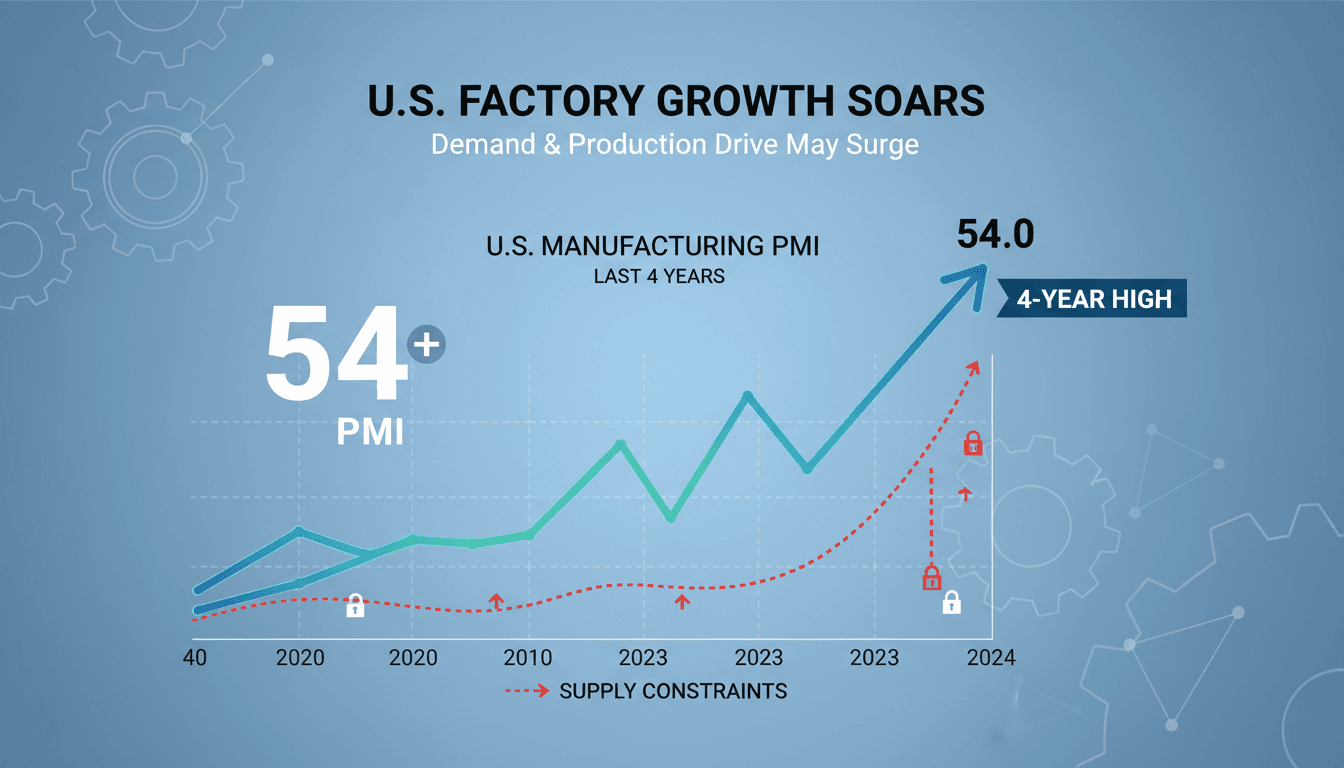
In May, U.S. factory activity expanded significantly, reaching its highest level in four years. The Institute for Supply Management reported a purchasing managers index (PMI) of 54, indicating sectoral expansion. This reading is the highest since May 2022 and reflects stronger-than-expected growth in the manufacturing sector, as analysts had anticipated a lower PMI of 53.2.
The increase in manufacturing activity is attributed to stronger demand and improved production conditions. Readings above 50 on the PMI scale signify expansion, and the current figure suggests a positive trajectory for the sector.
The Context
The manufacturing sector plays a crucial role in the U.S. economy, influencing job creation and overall economic health. The recent PMI reading of 54 highlights a rebound in demand and production capabilities, which is essential for long-term growth. However, the report also indicates that supply constraints are increasing alongside this growth, raising concerns about the sustainability of the expansion.
Stakeholders, including manufacturers, investors, and policymakers, must remain vigilant as they navigate these dynamics. The timing of this growth is particularly significant, as it comes amid ongoing discussions about economic recovery and resilience in the face of global challenges.
Takeaway
The strong manufacturing growth suggests a positive outlook for the U.S. economy, but stakeholders should be cautious about rising supply constraints that may hinder continued progress. Future PMI readings will be critical to monitor for trends in manufacturing growth and overall economic health. Additionally, developments regarding supply chain constraints will be essential to watch, as they could impact production capabilities moving forward.
As the manufacturing sector continues to expand, it will be important for businesses and policymakers to address potential challenges proactively to maintain momentum.
Global business headlines with AI angles.
"General business outlet that frequently covers AI."
— A47 Editor
US Manufacturing Climbs To Four-Year High In May As Factory Demand Strengthens
US manufacturing activity reached its highest level in four years in May, driven by increased demand and improved production conditions across the sector. This growth indicates a robust recovery in the manufacturing landscape, reflecting positive tre...
Macro commentary, policy analysis, growth/inflation themes, and global outlooks.
"Contextual macro coverage that complements day-to-day market headlines."
— A47 Editor
US manufacturing activity at four-year high, supply constraints growing
US manufacturing activity has reached a four-year high, indicating a significant rebound in the sector, although supply constraints are becoming increasingly apparent. This surge reflects a robust demand for manufactured goods, suggesting a positive ...
Key macro releases (CPI, jobs, PMIs), surprise indexes, and market implications.
"Great for data-print awareness and instant read-through to rates and risk assets."
— A47 Editor
U.S. manufacturing sector activity expands at faster pace in May
U.S. manufacturing sector activity expanded at a faster pace in May, indicating a positive trend in economic performance. This growth reflects improvements in key areas such as shipments, new orders, and employment, contributing to a more robust manu...
Social/economic commentary and analysis relevant to business and markets.
"WSJ blends data-driven economic insight with commentary on policy and society."
— A47 Editor
U.S. Factory Activity Expands in May
U.S. factory activity expanded in May, with the Institute for Supply Management's purchasing managers index reaching 54, the highest level since May 2022, surpassing analysts' expectations of 53.2. This indicates a positive trend in the manufacturing...