
Publishers and Scott Turow Sue Meta for Copyright Infringement in AI Training
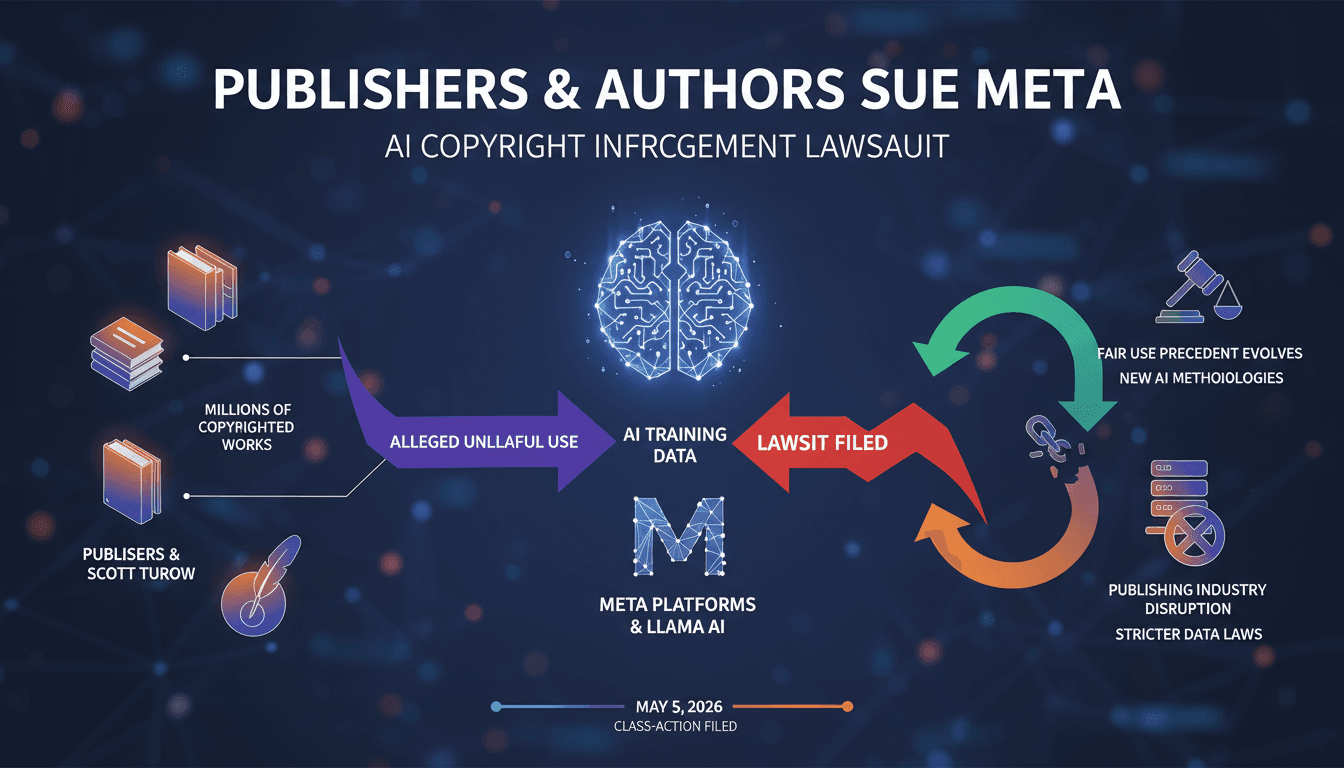
Why it matters
This case highlights the ongoing tension between copyright protections and the rapid advancement of AI technologies.
What happened (in 30 seconds)
- On May 5, 2026, five major publishers and author Scott Turow filed a class-action lawsuit against Meta and Mark Zuckerberg for alleged copyright infringement.
- The lawsuit claims that Meta used millions of copyrighted works from piracy sites to train its Llama AI models, threatening the market for original content.
- Meta has vowed to contest the claims, asserting that its practices fall under fair use protections.
The context you actually need
- Escalating legal challenges: This lawsuit is part of a broader trend where AI companies face scrutiny over their data sourcing practices, with previous cases involving other authors and companies.
- Fair use debate: The core issue revolves around whether using copyrighted material for AI training constitutes transformative fair use or infringement, especially when sourced from unauthorized repositories.
- Financial stakes: The outcome could set significant precedents for the tech industry, impacting how AI models are developed and the financial viability of content creators.
What's really happening
The lawsuit against Meta Platforms Inc. and CEO Mark Zuckerberg is a significant escalation in the ongoing battle over copyright and AI training practices. The plaintiffs—five major publishers and author Scott Turow—allege that Meta systematically pirated millions of copyrighted books and journal articles from various piracy sites, including Anna’s Archive, Library Genesis, and Sci-Hub, to train its Llama AI models. This claim is not just about the unauthorized use of content; it raises fundamental questions about the future of intellectual property in the age of artificial intelligence.
Meta's Llama models, developed starting in 2023, are designed to generate human-like text, summaries, and even mimic the style of established authors. The lawsuit cites specific examples, such as N.K. Jemisin's "The Fifth Season," arguing that the outputs from Llama threaten the market by producing competing content that could undermine original works. The plaintiffs assert that this practice not only infringes on copyright but also dilutes the value of creative works by providing free alternatives that could displace traditional publishing.
In response, Meta has defended its practices by invoking fair use protections, a legal doctrine that allows limited use of copyrighted material without permission under certain circumstances. The company plans to contest the lawsuit aggressively, citing previous court rulings that have partially favored its stance on fair use. However, the legal landscape is shifting, as seen in recent cases where courts have allowed claims to proceed, particularly regarding distribution aspects of AI-generated content.
The implications of this lawsuit extend beyond the immediate parties involved. If the publishers succeed, it could lead to stricter regulations on how AI companies source training data, potentially increasing costs and limiting the availability of data for AI development. Conversely, a ruling in favor of Meta could embolden tech companies to continue their current practices, raising concerns among content creators about the future of their intellectual property rights.
As the lawsuit unfolds, it will likely intensify the debate over the balance between innovation in AI and the protection of creative works. The outcome could set a precedent that influences not only the publishing industry but also the broader tech landscape, affecting how AI technologies evolve and how content creators are compensated for their work.
Who feels it first (and how)
- Publishers and authors: They face potential revenue losses and market displacement from AI-generated content.
- Tech companies: They may need to reassess their data sourcing strategies and face increased legal scrutiny.
- Consumers: They could see changes in the availability and quality of content as the market adjusts to new legal standards.
What to watch next
- Court rulings: Keep an eye on the progress of this lawsuit and any preliminary rulings that could set the tone for future cases.
- Industry responses: Monitor how other tech companies react to this lawsuit, particularly regarding their own data sourcing practices.
- Legislative changes: Watch for potential shifts in copyright laws or regulations that could arise from the outcomes of this case.
The lawsuit has been filed, and Meta plans to contest it on fair use grounds.
The case will draw significant media attention and could influence public opinion on AI and copyright issues.
The ultimate outcome of the lawsuit and its long-term implications for the publishing and tech industries remain uncertain.
Frequently Asked Questions
- Why it matters?
- This case highlights the ongoing tension between copyright protections and the rapid advancement of AI technologies.
- What happened (in 30 seconds)?
- On May 5, 2026, five major publishers and author Scott Turow filed a class-action lawsuit against Meta and Mark Zuckerberg for alleged copyright infringement. The lawsuit claims that Meta used millions of copyrighted works from piracy sites to train its Llama AI models, threatening the market for original content. Meta has vowed to contest the claims, asserting that its practices fall under fair use protections.
- What's really happening?
- The lawsuit against Meta Platforms Inc. and CEO Mark Zuckerberg is a significant escalation in the ongoing battle over copyright and AI training practices. The plaintiffs—five major publishers and author Scott Turow—allege that Meta systematically pirated millions of copyrighted books and journal articles from various piracy sites, including Anna’s Archive, Library Genesis, and Sci-Hub, to train its Llama AI models. This claim is not just about the unauthorized use of content; it raises fundamen
- Who feels it first (and how)?
- Publishers and authors: They face potential revenue losses and market displacement from AI-generated content. Tech companies: They may need to reassess their data sourcing strategies and face increased legal scrutiny. Consumers: They could see changes in the availability and quality of content as the market adjusts to new legal standards.
- What to watch next?
- Court rulings: Keep an eye on the progress of this lawsuit and any preliminary rulings that could set the tone for future cases. Industry responses: Monitor how other tech companies react to this lawsuit, particularly regarding their own data sourcing practices. Legislative changes: Watch for potential shifts in copyright laws or regulations that could arise from the outcomes of this case.
Capitol Hill news, legislation, and policy insight.
"The Hill specializes in U.S. politics and policy, with a focus on Capitol Hill developments and a reputation for insider reporting."
— A47 Editor
Meta sued for allegedly using copyrighted work to train AI
Meta is facing a lawsuit for allegedly using copyrighted works to train its artificial intelligence systems, raising concerns about the ethical implications of utilizing creators' content without permission. This legal challenge highlights the ongoin...
Latest tech news, product reviews, and analysis for consumers and professionals.
"CNET delivers accessible and detailed technology reporting, including trusted product reviews and how-to guides."
— A47 Editor
Even More Authors, Publishers Sue Meta Over Copyright in AI Training: What's Different Now
A new wave of lawsuits has emerged as authors and publishers have filed a suit against Meta, challenging the company's use of copyrighted material for AI training, marking a shift from previous legal strategies that focused solely on authors. This la...
Top international stories selected by The Guardian editors.
"The Guardian is known for its progressive editorial stance and in-depth analysis."
— A47 Editor
Major publishers sue Meta for copyright infringement over AI training
Five major publishers, including Hachette and Macmillan, have filed a lawsuit against Meta Platforms in Manhattan federal court, claiming that the company unlawfully used millions of their works to train its Llama AI models without permission. The la...
News and features on AI from The Guardian.
"Progressive-leaning international outlet with critical AI coverage."
— A47 Editor
Major publishers sue Meta for copyright infringement over AI training
Five major publishers, including Hachette, Macmillan, Elsevier, Cengage, and McGraw Hill, along with author Scott Turow, have filed a class-action lawsuit against Meta Platforms in Manhattan federal court, alleging that the company illegally used mil...
Tech culture, product news, and critical takes on the tech industry's social impact.
"The Guardian's tech coverage blends mainstream news, critical analysis, and cultural commentary on emerging technologies and digital trends."
— A47 Editor
Major publishers sue Meta for copyright infringement over AI training
Five major publishers, including Hachette, Macmillan, and Elsevier, have filed a class-action lawsuit against Meta Platforms in Manhattan federal court, alleging that the company unlawfully used their copyrighted works to train its Llama AI models wi...
Tech news, reviews, and analysis of consumer electronics, science, art, and culture.
"The Verge is a technology-focused media outlet known for in-depth reporting, product reviews, and coverage of the intersection between technology and culture."
— A47 Editor
Book publishers sue Meta over AI’s ‘word-for-word’ copying
Meta is facing a class action lawsuit from five major book publishers and an author, alleging that the company engaged in extensive copyright infringement while training its Llama AI models. The lawsuit claims that Meta's practices constitute one of ...
Consumer tech and culture with frequent AI coverage.
"Influential tech outlet covering AI products and policy."
— A47 Editor
Book publishers sue Meta over AI’s ‘word-for-word’ copying
Meta is facing a class action lawsuit from five major book publishers and an author, alleging that the company engaged in extensive copyright infringement while training its Llama AI models. The lawsuit claims that Meta's practices constitute one of ...
Regional and international reporting focused on Middle Eastern politics, diplomacy, and economics.
"Asharq Al-Awsat is a Saudi-owned international newspaper reflecting mainstream Gulf political perspectives."
— A47 Editor
Major Publishers Sue Meta for Copyright Infringement Over AI Training
Major publishers have initiated a lawsuit against Meta, alleging copyright infringement related to the use of their content for training artificial intelligence systems. This legal action highlights ongoing tensions between content creators and tech ...
Market-moving headlines impacting equities, bonds, and related risk assets.
"Real-time catalysts and volatility drivers across indices and sectors."
— A47 Editor
Major publishers sue Meta for copyright infringement over AI training
Major publishers have initiated a lawsuit against Meta, alleging copyright infringement related to the training of artificial intelligence systems. This legal action underscores the ongoing tensions between content creators and tech companies over th...