
U.S. and Iran escalate military tensions amid public fears of prolonged conflict
Here's what it means for you.
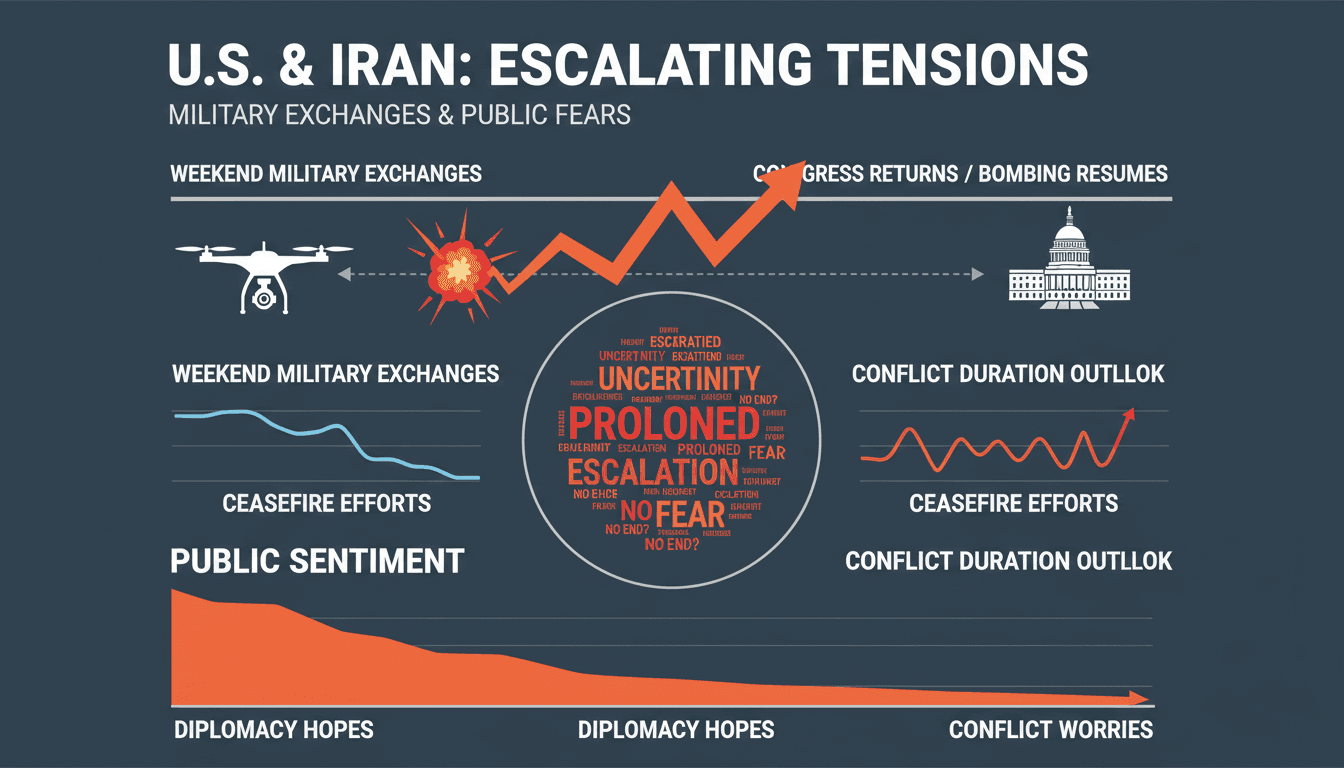
The recent military exchanges between the U.S. and Iran signal a troubling escalation that could have significant implications for global stability and economic markets. As Congress returns to address the situation, the potential for new military engagements raises concerns about the impact on oil prices and international relations. Public sentiment reflects a growing anxiety, with many Americans fearing a drawn-out conflict that could strain resources and diplomatic efforts. The situation demands close attention from policymakers and stakeholders, as the likelihood of a diplomatic resolution diminishes. With military actions intensifying, the ramifications could extend beyond the immediate region, affecting global security dynamics.
What happened
Over the weekend, the U.S. and Iran engaged in military exchanges that complicated ongoing ceasefire efforts. This escalation coincided with the resumption of U.S. bombing operations in Iran, marking a significant increase in hostilities. The exchanges of fire have raised alarms about the potential for further conflict in the already volatile region.
As military actions escalate, the situation in the Strait of Hormuz remains a critical flashpoint for U.S.-Iran relations. The recent developments have drawn attention to the precarious balance of power in the area, with both nations on high alert.
The Context
The backdrop of these military tensions includes the return of Congress from recess, where pressing deadlines related to the conflict are on the agenda. A significant majority of Americans, approximately 80%, believe that the conflict with Iran will persist for an extended period, reflecting widespread public concern. This sentiment underscores the urgency for lawmakers to address the escalating situation.
The ongoing conflict has reached a critical juncture, with military actions intensifying and public sentiment reflecting a grim outlook on the prospects for peace. As Congress reconvenes, the pressure mounts to find a resolution, but the path forward appears increasingly uncertain.
Takeaway
As military actions escalate, the likelihood of a diplomatic resolution seems to diminish. Observers should watch for potential congressional actions regarding military engagement in Iran, as lawmakers grapple with the implications of continued hostilities. Further developments in U.S.-Iran military exchanges will be crucial in shaping the future of this conflict.
The outlook remains bleak, with public sentiment leaning towards a prolonged conflict. Urgent diplomatic efforts will be necessary to navigate this complex situation and mitigate the risks of further escalation.
Global political, business, and cultural coverage from WSJ international desks.
"The Wall Street Journal offers extensive international reporting with a reputation for financial insight and a center-right editorial stance."
— A47 Editor
The U.S. and Iran Face Dwindling Options to End the War
The ongoing conflict between the U.S. and Iran has reached a critical juncture as military actions escalate, with the U.S. conducting airstrikes against Iranian targets and Iran retaliating, marking a significant breakdown of the ceasefire. This situ...
Global business headlines with AI angles.
"General business outlet that frequently covers AI."
— A47 Editor
U.S. Has Resumed Bombing Iran. Most Americans Don't See An End In Sight To Conflict
The United States has resumed military operations against Iran, with a recent poll indicating that four out of five Americans believe the conflict will persist for an extended period despite previous ceasefire attempts. This escalation follows a seri...
International stories from NPR’s global desk.
"NPR is an American public media organization known for thoughtful reporting and a slightly left-leaning editorial tone."
— A47 Editor
The U.S.-Iran ceasefire grows more distant. And, Congress faces a consequential week
The United States and Iran have engaged in a series of military exchanges over the weekend, with the U.S. launching airstrikes against Iranian targets and Iran retaliating by attacking U.S. facilities in Gulf states. This escalation follows a breakdo...