
WHO Reports Significant Decrease in Suspected Ebola Cases in Central Africa
Here's what it means for you.
The World Health Organization's recent report indicates a significant decline in suspected Ebola cases, which is a positive development for public health in Central Africa. This reduction suggests that extensive testing and monitoring efforts are effectively containing the outbreak. However, the presence of confirmed cases in the region underscores the need for continued vigilance and proactive measures to prevent further spread. Health authorities and policymakers must remain alert as they navigate the complexities of managing infectious diseases. The situation highlights the importance of robust health infrastructure and rapid response capabilities in mitigating outbreaks.
What happened
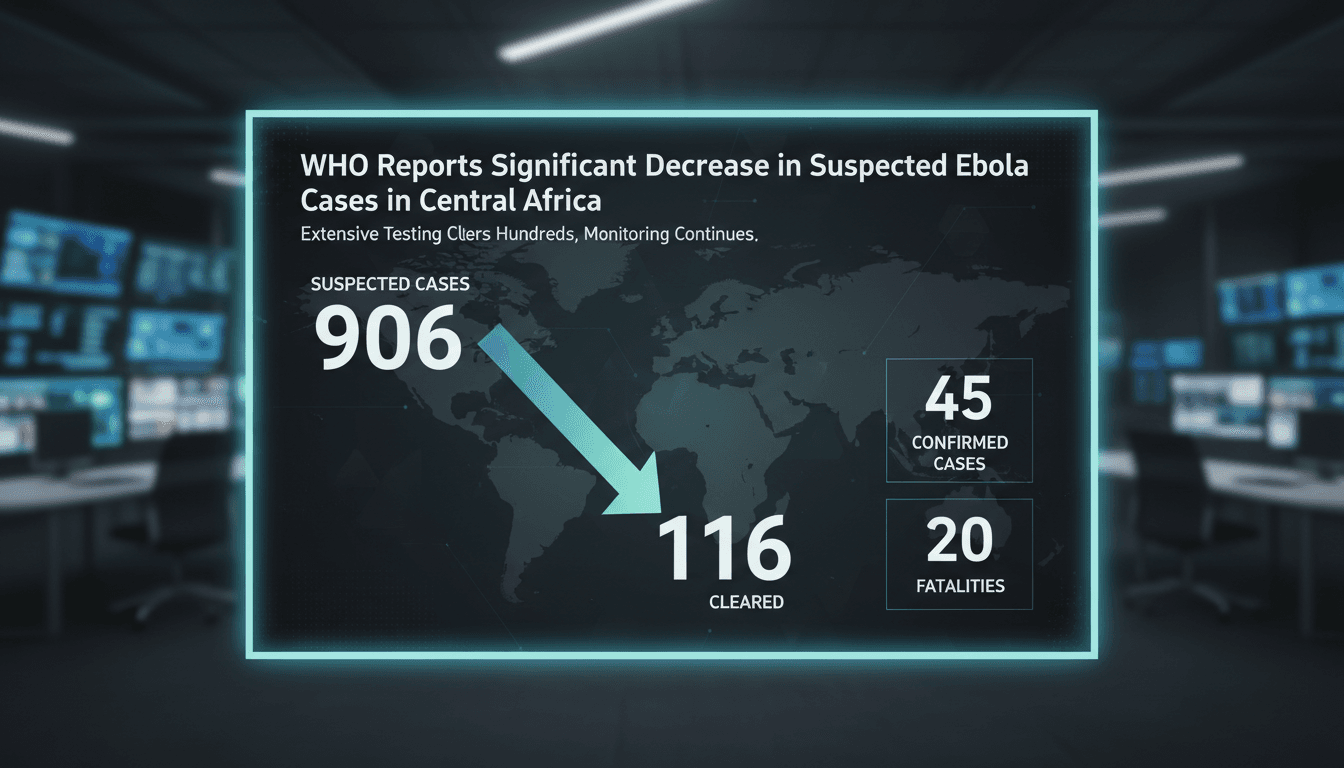
The World Health Organization has reported a dramatic drop in suspected Ebola cases in Central Africa, decreasing from 906 to 116. This significant reduction is attributed to extensive testing that has cleared many cases from the list. In the Democratic Republic of Congo, there are currently 321 confirmed cases of Ebola, with 48 fatalities reported. Uganda has also reported nine confirmed cases, including one death.
This decline in suspected cases reflects the effectiveness of health interventions and the importance of timely testing. The WHO's findings provide a clearer picture of the outbreak's status, allowing health officials to focus their resources more effectively.
The Context
The decrease in suspected Ebola cases is a crucial development in the ongoing efforts to control the outbreak in Central Africa. The WHO's report comes amid a backdrop of heightened surveillance and testing, which have been essential in identifying and managing cases. The confirmed cases in DR Congo and Uganda highlight the ongoing risks associated with the virus, necessitating continued monitoring.
Health authorities in the region are working tirelessly to ensure that the outbreak does not escalate. The collaboration between local and international health organizations is vital in addressing the challenges posed by Ebola and ensuring public safety.
Takeaway
Looking ahead, continued monitoring and testing will be crucial to prevent further spread of Ebola in Central Africa. Health officials will need to remain vigilant as they track confirmed cases and fatalities in DR Congo and Uganda. The WHO's ongoing response and containment strategies will play a significant role in managing the situation.
As the situation evolves, updates on confirmed cases and health interventions will be essential for understanding the trajectory of the outbreak. Stakeholders must prioritize resources and strategies to maintain control over the virus and protect public health.
Pan-Arab news coverage spanning politics, business, sports, and regional affairs.
"Asharq Al-Awsat reflects a broad Arab editorial perspective with strong attention to regional geopolitics."
— A47 Editor
«الصحة العالمية» ترصد انخفاضاً حاداً بحالات «إيبولا» المشتبه فيها
The World Health Organization has reported a significant decrease in suspected cases of Ebola in Central Africa, dropping from 900 previously recorded cases to 116. This sharp decline indicates a positive trend in the management and containment of th...
Pan-Arab news coverage spanning politics, business, sports, and regional affairs.
"Asharq Al-Awsat reflects a broad Arab editorial perspective with strong attention to regional geopolitics."
— A47 Editor
«منظمة الصحة»: انخفاض حاد في حالات إيبولا المشتبه فيها
The World Health Organization has reported a significant decrease in suspected cases of Ebola virus in Central Africa, with numbers dropping from 900 previously recorded cases to just 116. This decline indicates a positive trend in controlling the ou...
24/7 international news from a French perspective in multiple languages.
"France 24 is viewed as a globally focused outlet with balanced coverage and a European perspective."
— A47 Editor
WHO reports dramatic drop in suspected Ebola cases from over 900 to 116
The World Health Organization (WHO) reported a significant decrease in suspected Ebola cases in the Democratic Republic of Congo (DR Congo) and Uganda, dropping from 906 to 116. This reduction follows extensive testing that has cleared many cases fro...