
Microsoft's carbon emissions rise by 25% amid data center expansion
Here's what it means for you.
Microsoft's recent surge in carbon emissions signals a critical challenge for the tech giant as it strives to balance growth with sustainability. The 25% increase in emissions raises questions about the effectiveness of its current strategies to meet its ambitious climate goals. As demand for AI continues to escalate, stakeholders will be closely monitoring Microsoft's ability to innovate in sustainable technology solutions. This situation underscores the broader implications for the tech industry, where rapid expansion often conflicts with environmental commitments. Companies may need to rethink their operational models to align with sustainability objectives while meeting market demands.
What happened
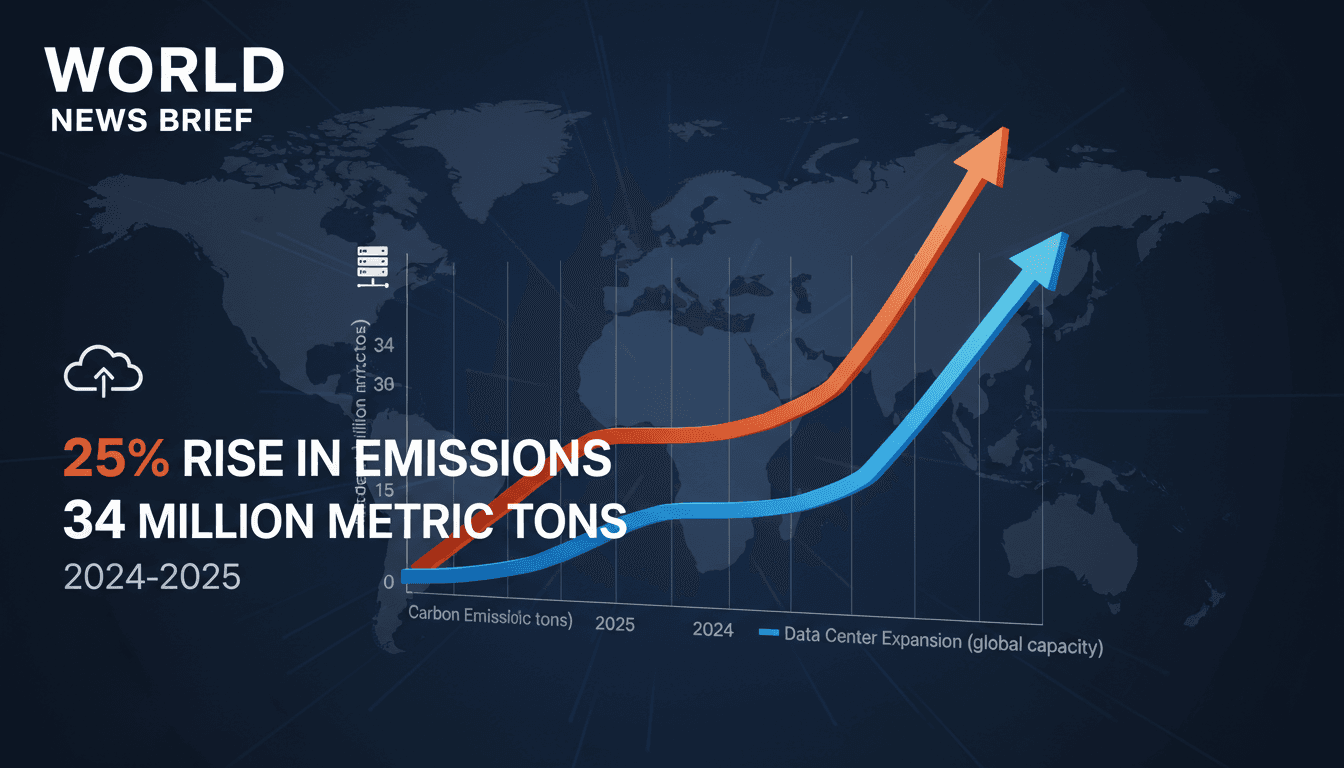
In 2025, Microsoft reported a significant 25% increase in its carbon emissions, totaling 34 million metric tons. This rise is primarily attributed to the company's aggressive expansion of data centers to accommodate the growing demand for artificial intelligence services. The increase has raised concerns about Microsoft's ability to fulfill its pledge to become carbon negative by 2030.
The surge in emissions highlights the environmental impact of Microsoft's operations as it scales up to meet market needs. As the demand for AI continues to grow, the company faces mounting pressure to reconcile its operational expansion with its sustainability commitments.
The Context
Microsoft has committed to becoming carbon negative by 2030, a goal set six years ago that now appears increasingly challenging. The recent increase in emissions is closely linked to the rapid growth of its data centers, which are essential for supporting AI technologies. However, sustainability solutions have reportedly not scaled fast enough to meet the rising demand, complicating Microsoft's efforts.
This situation is significant not only for Microsoft but also for the tech industry at large, as it reflects the ongoing tension between technological advancement and environmental responsibility. Stakeholders, including investors and policymakers, will be watching closely to see how Microsoft navigates these challenges.
Takeaway
Looking ahead, Microsoft must accelerate its sustainability efforts to align with its climate commitments while managing operational growth. The effectiveness of its strategies will be crucial in determining its future environmental impact and corporate responsibility. Observers should monitor Microsoft's progress toward its 2030 carbon negative goal and the industry's response to the increasing demand for sustainable technology solutions.
As the landscape evolves, the balance between innovation and sustainability will be a key focus for Microsoft and its competitors.
Consumer tech and culture with frequent AI coverage.
"Influential tech outlet covering AI products and policy."
— A47 Editor
Microsoft’s carbon emissions went up 25 percent last year
Microsoft reported a 25 percent increase in carbon emissions for the year 2025, totaling 34 million metric tons, as highlighted in its 2026 sustainability report. This rise is attributed to the company's expansion efforts and occurred without impleme...
Tech news, reviews, and analysis of consumer electronics, science, art, and culture.
"The Verge is a technology-focused media outlet known for in-depth reporting, product reviews, and coverage of the intersection between technology and culture."
— A47 Editor
Microsoft’s carbon emissions went up 25 percent last year
Microsoft reported a 25 percent increase in carbon emissions for the year 2025, totaling 34 million metric tons, as highlighted in its 2026 sustainability report. This rise is attributed to the company's expansion efforts and occurred without impleme...
Business, investment, entrepreneurship, leadership, and innovation.
"Forbes is known for its coverage of business leaders, market trends, and entrepreneurial ventures with a pro-business editorial stance."
— A47 Editor
Microsoft’s AI Buildout Sent Carbon Emissions Up 25% Last Year
Microsoft reported a 25% increase in carbon emissions last year, attributing this rise to the expanding demand for artificial intelligence (AI) solutions, which are not being matched by sufficient sustainability measures. The company emphasized that ...
Corporate leadership, finance, technology, and market trends.
"Fortune covers financial trends, leadership, and innovation with a pragmatic editorial approach."
— A47 Editor
Microsoft’s emissions surged 25% in 2025 during data center boom
Microsoft reported a 25% surge in carbon emissions in 2025, coinciding with a significant expansion of its data centers driven by increasing demand for artificial intelligence solutions. This rise in emissions raises concerns about the company's abil...