
IMF Projects 4.5% GDP Growth for Saudi Arabia Amid Regional Conflicts
Here's what it means for you.
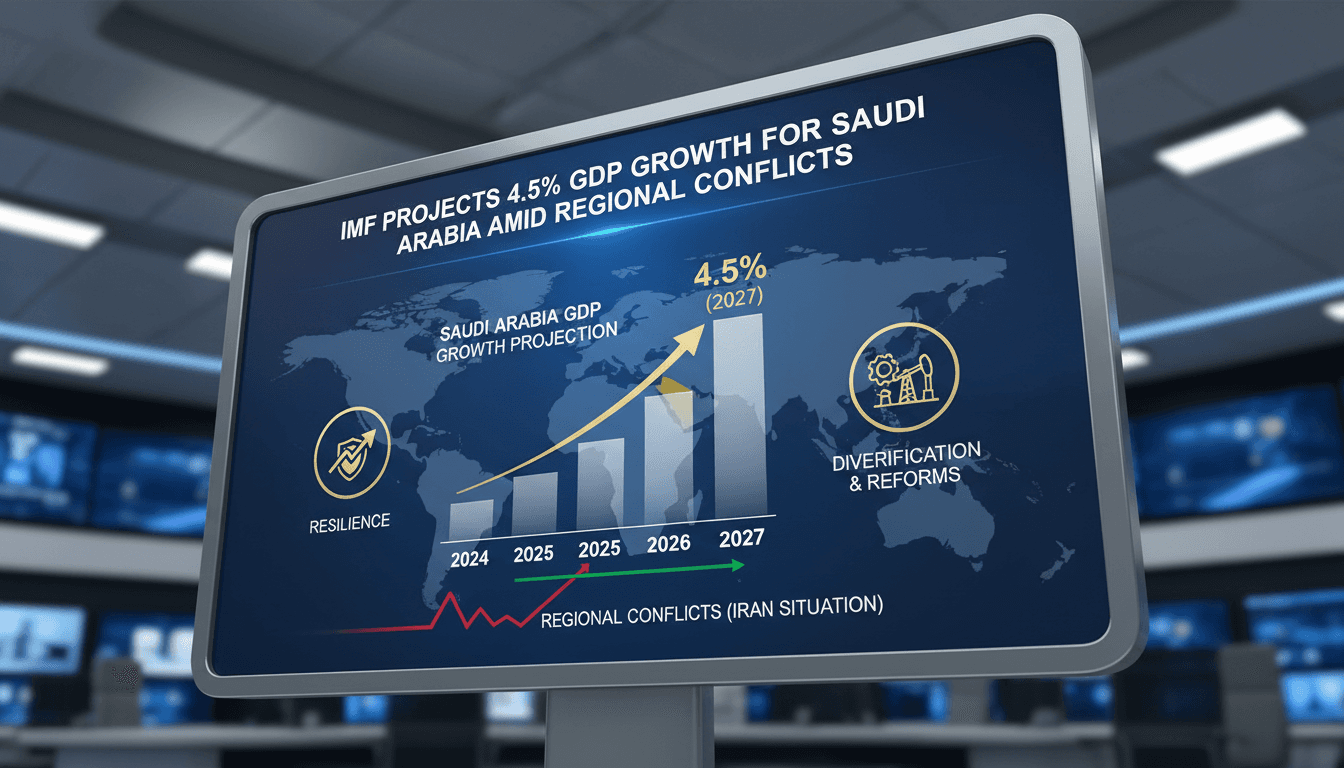
The International Monetary Fund's (IMF) projection of a 4.5% GDP growth for Saudi Arabia in 2027 signals a robust economic outlook despite regional tensions. This forecast reflects the Kingdom's strong structural fundamentals and ongoing reforms aimed at diversification. For investors and policymakers, this resilience indicates potential stability in the Saudi market, even amid geopolitical uncertainties. As Saudi Arabia continues to navigate challenges, its proactive measures to mitigate risks, particularly in relation to the Iranian conflict, will be crucial. Stakeholders should monitor the implementation of Vision 2030 reforms, which are designed to further enhance economic diversification and sustainability.
What happened
The International Monetary Fund recently concluded its Article IV consultation, affirming the resilience of the Saudi economy. The IMF's assessment highlights the Kingdom's ability to adapt to regional crises, particularly the ongoing Iranian conflict. As a result, the IMF has adjusted its GDP growth forecasts, projecting a growth rate of 4.5% for 2027.
This positive outlook is underpinned by Saudi Arabia's strong structural fundamentals and diversified infrastructure. The Kingdom's proactive measures have effectively mitigated the impact of disruptions in maritime traffic, particularly in the Strait of Hormuz, which is vital for oil exports.
The Context
Saudi Arabia's economy is characterized by its robust structural fundamentals and a diversified oil and logistics infrastructure. The IMF's revised growth forecasts reflect a broader trend of economic resilience, with GDP growth recorded at 4.5% in 2025, driven by non-oil activity and strong domestic demand. Inflation remains low, below 2%, further supporting economic stability.
The ongoing Iranian conflict poses challenges for regional economies, but Saudi Arabia has managed to remain among the least affected due to alternative export routes. The timing of the IMF's consultation and subsequent forecasts is critical, as it aligns with the Kingdom's ongoing efforts to implement economic reforms and diversify its economy.
Takeaway
Looking ahead, Saudi Arabia's commitment to economic reforms and diversification is expected to bolster its growth trajectory in the coming years. Stakeholders should closely monitor the impact of the Iranian conflict on regional economies, as well as the implementation of Vision 2030 reforms. These developments will be pivotal in determining the Kingdom's ability to sustain its growth momentum amid ongoing uncertainties.
As the situation evolves, the effectiveness of Saudi Arabia's strategic measures will be crucial in maintaining economic stability and resilience. Observing these factors will provide valuable insights into the future of the Saudi economy.
Arabic-language coverage of Saudi, regional, and international affairs.
"Al Bilad offers mainstream Saudi newspaper coverage across domestic and broader Arab topics."
— A47 Editor
صندوق النقد: الاقتصاد السعودي متين والقطاع المصرفي قوي
The International Monetary Fund (IMF) experts confirmed the resilience of the Saudi economy and the strength of its banking sector following the conclusion of the 2026 Article IV consultations, projecting a 4.5% growth rate for the economy in 2025 an...
English-language reporting on Saudi politics, policy, and society.
"Saudi Gazette reflects mainstream Saudi institutional perspectives."
— A47 Editor
IMF praises Saudi economy’s resilience and ability to adapt swiftly to crises
The International Monetary Fund (IMF) has praised the resilience of the Saudi economy, highlighting its ability to adapt swiftly to ongoing crises, particularly in the context of the Middle East conflict. The IMF's Article IV consultation noted proac...
English-language reporting focused on Saudi Arabia and regional affairs.
"Saudi Gazette provides English-language coverage that often aligns with mainstream Saudi news priorities."
— A47 Editor
IMF praises Saudi economy’s resilience and ability to adapt swiftly to crises
The International Monetary Fund (IMF) has praised the resilience of the Saudi economy, highlighting its ability to adapt swiftly to ongoing crises, particularly in the context of the Middle East conflict. The IMF's Article IV consultation noted proac...
Sports reporting with a focus on Saudi and regional competitions.
"Okaz sports coverage is broad and audience-friendly, with strong attention to Saudi teams and leagues."
— A47 Editor
«النقد الدولي»: السعودية تواصل النمو وترسخ متانة اقتصادها
The International Monetary Fund (IMF) has reported that the Saudi economy continues to show strong performance, supported by robust economic fundamentals and a diversified production and logistics base. The country's GDP is projected to grow by 4.5% ...
Pan-Arab news coverage spanning politics, business, sports, and regional affairs.
"Asharq Al-Awsat reflects a broad Arab editorial perspective with strong attention to regional geopolitics."
— A47 Editor
صندوق النقد: اقتصاد السعودية يحصِّن استقراره الكلي بمرونة هيكلية ضد الأزمات
Experts from the International Monetary Fund (IMF) concluded their Article IV consultation mission, stating that the Saudi economy has demonstrated high resilience and robustness in facing the repercussions of ongoing conflicts in the Middle East.
UAE-based English-language newspaper covering regional politics, economics, and global affairs.
"The National reflects Emirati policy perspectives while maintaining international editorial standards."
— A47 Editor
IMF says prolonged Iran war could weigh on Saudi Arabia's medium-term outlook
The International Monetary Fund (IMF) has warned that a prolonged war in Iran could negatively impact Saudi Arabia's medium-term economic outlook, highlighting concerns over regional stability.