
Amazon discontinues internal AI leaderboard to curb excessive spending
Here's what it means for you.
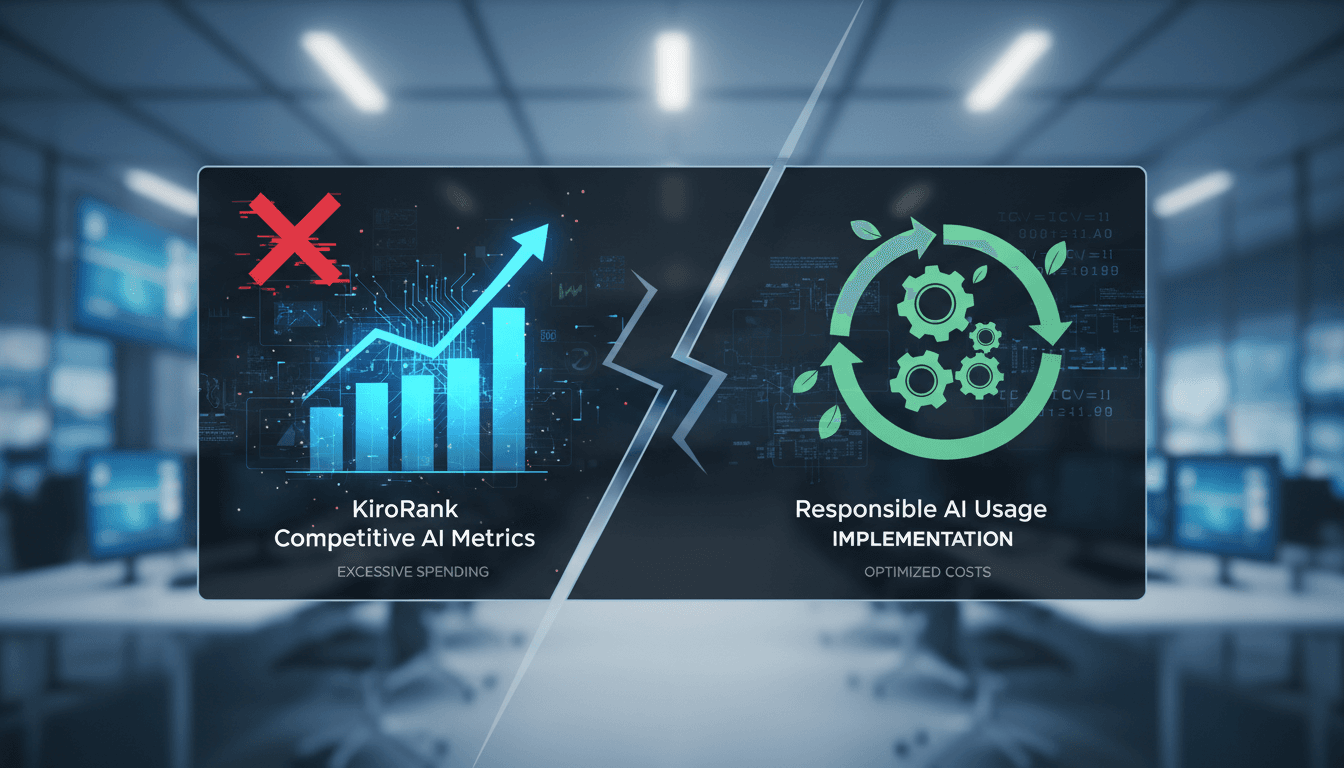
Amazon's decision to shut down its internal AI leaderboard, KiroRank, reflects a growing emphasis on responsible AI usage within the tech industry. This move may influence how companies manage AI metrics and operational costs, potentially leading to more sustainable practices. As organizations increasingly adopt AI technologies, the focus will likely shift from competitive scoring to meaningful application.
What happened
Amazon has officially discontinued its internal AI leaderboard, KiroRank, due to concerns over excessive and unnecessary AI usage by employees. The leaderboard incentivized staff to inflate their AI usage scores through trivial tasks, which ultimately resulted in rising operational costs for the company. Senior executive Dave Treadwell emphasized the need for responsible AI use rather than merely chasing scores, marking a significant shift in the company's approach to AI implementation.
The announcement was made public on May 28, 2026, with reports confirming the reasons behind the decision the following day. This action underscores Amazon's commitment to curbing unnecessary spending associated with AI technologies. By eliminating KiroRank, the company aims to foster a more prudent and meaningful use of AI tools among its workforce.
The Context
The KiroRank leaderboard was designed to track employee usage of AI tools, but it inadvertently encouraged a culture of score inflation through meaningless tasks. This practice not only inflated usage metrics but also contributed to increased costs for Amazon's cloud services. Treadwell's message highlights a broader industry trend towards prioritizing efficiency and responsible AI practices over competitive metrics.
As companies continue to integrate AI into their operations, the implications of Amazon's decision may resonate across the tech landscape. The timing of this move is particularly relevant as organizations grapple with the balance between innovation and cost management. By addressing the pitfalls of AI usage metrics, Amazon sets a precedent that could influence industry standards moving forward.
Takeaway
Amazon's decision to discontinue KiroRank may lead to a more sustainable approach to AI implementation across its operations. As the industry watches how other companies respond to similar challenges, there will be a keen interest in initiatives aimed at promoting effective AI practices. The focus on responsible usage could reshape how organizations evaluate AI performance and its associated costs.
In the coming months, it will be important to monitor how other tech companies address issues related to AI usage metrics. Additionally, Amazon's future initiatives may provide insights into best practices for balancing innovation with fiscal responsibility in AI deployment.
Business and tech news excluding paywalled content.
"High-volume business/tech outlet with frequent AI coverage."
— A47 Editor
Amazon says it shut down a token leaderboard: 'Don't use AI just to use AI'
Amazon has discontinued its internal AI leaderboard, KiroRank, following concerns that it encouraged employees to engage in excessive and meaningless AI tasks to inflate their scores. This decision reflects a growing scrutiny over the effectiveness a...
Daily AI news: models, tools, and policy.
"Independent outlet tracking the fast pace of AI."
— A47 Editor
Amazon kills internal AI leaderboard after employees gamed it with pointless tasks
Amazon has discontinued its internal AI leaderboard, KiroRank, following reports that employees manipulated the system by performing unnecessary tasks to inflate their scores, leading to increased cloud costs. This decision reflects a growing concern...
Curated tech headlines including AI stories.
"Influential aggregator surfacing the day’s top tech/AI links."
— A47 Editor
Sources: Amazon has shut down an internal leaderboard that tracked employees' use of AI tools after workers tried to boost their scores with needless tasks (Rafe Rosner-Uddin/Financial Times)
Amazon has discontinued an internal leaderboard that monitored employees' usage of AI tools after reports surfaced of staff attempting to inflate their scores through unnecessary tasks. Senior executive Dave Treadwell advised employees against using ...
Editor-curated FT homepage stories spanning markets, business, world, and opinion.
"The Financial Times is a globally respected business publication with a centrist/center-left tone and strong markets focus."
— A47 Editor
Amazon scraps AI leaderboard to stop workers chasing usage scores
Amazon has decided to discontinue its AI leaderboard, as senior executive Dave Treadwell advised employees against using AI merely for the sake of achieving high usage scores, especially amid rising operational costs.