
UN Warns of Record-High Global Temperatures by 2030
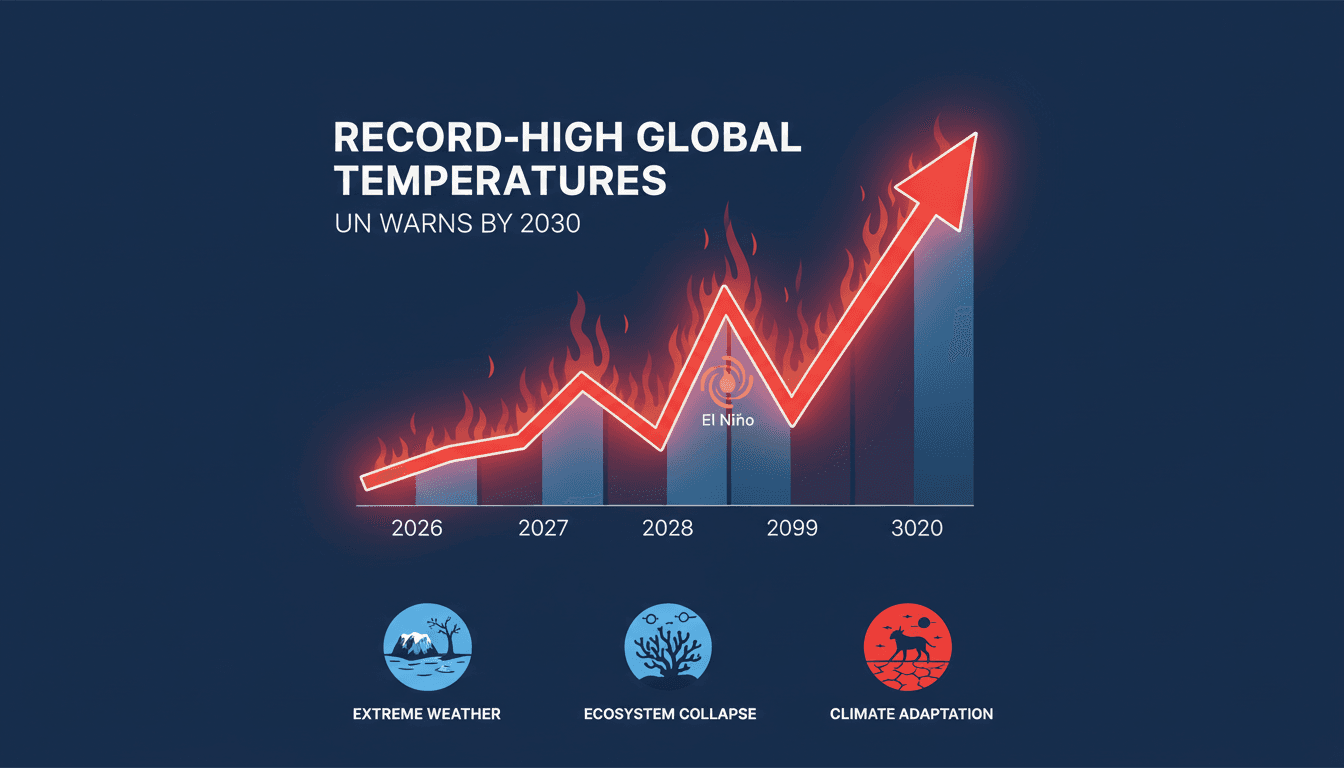
Here's what it means for you.
The UN's warning signals a critical juncture for global climate policy, emphasizing the urgent need for immediate action to combat climate change. Businesses and governments must prepare for the economic and social impacts of increasingly extreme weather events. As the likelihood of surpassing the 1.5°C threshold rises, stakeholders across sectors should prioritize sustainability initiatives and climate resilience strategies.
What happened
The UN's World Meteorological Organization has issued a stark warning that global temperatures are projected to remain at or near record levels from 2026 to 2030. This alarming forecast is driven by the anticipated El Niño event, which is expected to exacerbate heat levels starting as early as 2027. The organization has indicated a 75% chance that the average temperature during this period will exceed pre-industrial levels by more than 1.5°C.
This warning comes amid a heatwave currently affecting Western Europe, highlighting the immediate relevance of the UN's findings. The trend of rising temperatures is expected to continue beyond 2030, raising concerns about the long-term implications for ecosystems and human health.
The Context
The 11 hottest years on record have all occurred since 2015, underscoring the accelerating pace of climate change. The anticipated El Niño event later this year is expected to further increase global temperatures, compounding the already alarming trends. As nations grapple with the consequences of climate change, the need for coordinated global action has never been more pressing.
The implications of these rising temperatures are profound, affecting weather patterns, ecosystems, and public health. Stakeholders, including governments, businesses, and communities, must recognize the urgency of the situation and take proactive measures to mitigate the impacts of climate change.
Takeaway
As climate change intensifies, the world must prepare for increasingly extreme weather events and their consequences. Monitoring the impact of the upcoming El Niño on global temperatures will be crucial in understanding the trajectory of climate change. Additionally, updates on climate policies and international agreements aimed at mitigating climate change will be essential for stakeholders looking to navigate this evolving landscape.
The outlook remains grim, necessitating immediate and sustained global efforts to reduce greenhouse gas emissions and adapt to changing environmental conditions. The time for action is now, as the potential for record-breaking heat looms on the horizon.
Global news coverage with extensive reporting on Middle Eastern conflicts and geopolitics.
"Al Jazeera is a Qatar-based broadcaster known for wide regional coverage and alternative perspectives."
— A47 Editor
Hottest year on record almost certain to occur by end of 2030, UN warns
The United Nations has warned that the world is almost certain to experience its hottest year on record by the end of 2030, coinciding with a significant heatwave currently affecting Western Europe, where temperatures have reached unusually high leve...
Comprehensive coverage of Middle Eastern and global issues.
"Al Jazeera is a prominent voice from the Global South, especially the Middle East, with an emphasis on underreported stories."
— A47 Editor
Hottest year on record almost certain to occur by end of 2030, UN warns
The United Nations has warned that the world is almost certain to experience its hottest year on record by the end of 2030, coinciding with a significant heatwave currently affecting Western Europe, where temperatures have reached unusually high leve...
Regional coverage and analysis focused on politics, diplomacy, and business across the Middle East.
"Al-Monitor is known for analytical reporting on Middle East politics and policy developments."
— A47 Editor
Temperatures likely to remain at record levels in 2026-2030: UN
The United Nations has warned that global average temperatures are expected to remain at or near record levels from 2026 to 2030, with the World Meteorological Organization indicating a 75 percent chance that the five-year mean temperature will excee...
24/7 international news from a French perspective in multiple languages.
"France 24 is viewed as a globally focused outlet with balanced coverage and a European perspective."
— A47 Editor
Global temperatures likely to remain at record levels in 2026-2030, UN says
The United Nations has issued a warning indicating that global average temperatures are expected to remain at or near record levels during the period from 2026 to 2030, with a 75% likelihood that temperatures will exceed pre-industrial levels by more...
Top international stories selected by The Guardian editors.
"The Guardian is known for its progressive editorial stance and in-depth analysis."
— A47 Editor
World almost certain to endure record hot year by 2030, UN warns
The UN's World Meteorological Organization has warned that the world is almost certain to experience a record hot year by 2030, with the potential for the global temperature record to be broken as early as 2027 due to an impending El Niño event.