
Attack on Qatari LNG tanker escalates tensions in Strait of Hormuz
Here's what it means for you.
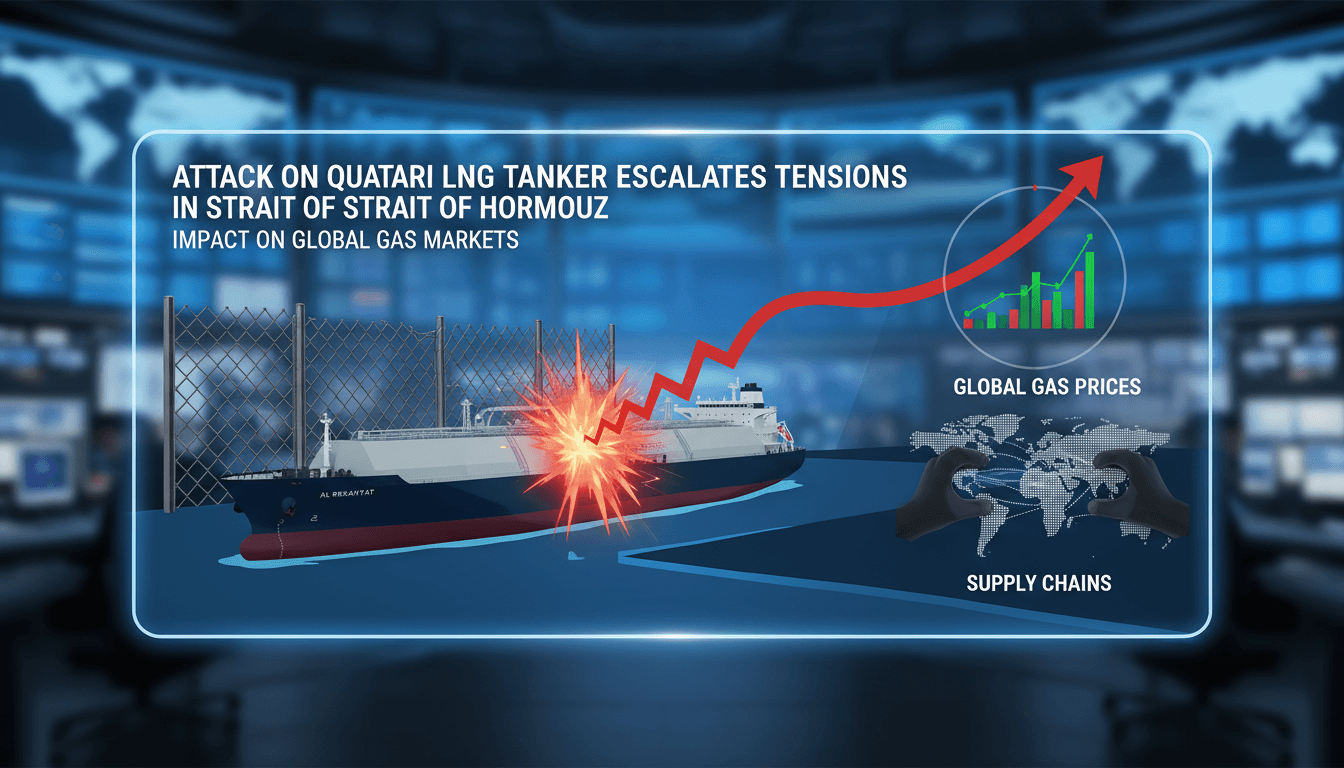
The recent attack on the Qatari LNG tanker Al Rekayyat has raised significant concerns regarding maritime security in the Strait of Hormuz, a vital corridor for global energy supplies. With the U.S. revoking a waiver for Iranian oil sales, the potential for further disruptions in energy exports is heightened. Stakeholders in the energy sector should brace for volatility in gas prices as the situation develops. This incident not only threatens the immediate safety of maritime operations but also casts a shadow over the stability of global gas markets. The implications for Qatar's LNG exports could be profound, affecting supply chains and pricing structures worldwide.
What happened
The Qatari LNG tanker Al Rekayyat was struck by a projectile near the Strait of Hormuz, prompting alarms about its safety and the broader implications for global gas markets. Following the attack, the tanker has been reported as stationary and is currently awaiting salvage operations due to a fire in its engine room. This incident underscores the fragility of maritime security in a region critical to energy supplies.
The attack occurred on July 7, 2026, and has raised concerns about the potential for further escalations in maritime tensions. The vessel is at risk of exploding, which adds to the urgency of the situation.
The Context
The U.S. decision to revoke a waiver for Iranian oil sales comes amid a backdrop of increasing maritime attacks in the region. This escalation in hostilities has significant implications for both Qatari and Saudi shipping, as the Strait of Hormuz is a crucial passage for energy exports. The attack on the Al Rekayyat highlights the precarious nature of security in this vital corridor.
As tensions rise, the potential for military escalation in the region looms large. The geopolitical landscape is shifting, and stakeholders must navigate these complexities to mitigate risks associated with energy supply disruptions.
Takeaway
The ongoing maritime tensions in the Strait of Hormuz could lead to further disruptions in energy exports, impacting global LNG prices and supply chains. Stakeholders in the energy sector should closely monitor developments, as the situation remains fluid and could escalate further. The implications of this incident extend beyond immediate safety concerns, potentially reshaping market dynamics in the coming weeks.
As the situation unfolds, it will be crucial to observe the responses from regional powers and the international community, particularly regarding military presence and diplomatic efforts aimed at de-escalation.
Regional coverage and analysis focused on politics, diplomacy, and business across the Middle East.
"Al-Monitor is known for analytical reporting on Middle East politics and policy developments."
— A47 Editor
Damaged Qatari LNG tanker awaits salvage after strike near Hormuz
The Qatari LNG tanker Al Rekayyat is currently stationary near the Strait of Hormuz, awaiting salvage operations after being struck by a projectile, which resulted in a fire onboard. The incident occurred overnight on July 6, 2026, raising concerns a...
Editor-curated FT homepage stories spanning markets, business, world, and opinion.
"The Financial Times is a globally respected business publication with a centrist/center-left tone and strong markets focus."
— A47 Editor
US revokes waiver allowing Iranian oil sales after tanker strikes in Strait of Hormuz
The United States has revoked a waiver that allowed Iranian oil sales following recent strikes on tankers in the Strait of Hormuz, including incidents involving Qatari and Saudi vessels near the Omani coast. This escalation in maritime attacks has ra...
Global markets, investing, and macroeconomics from a premier financial newsroom.
"Bloomberg is respected for in-depth financial reporting and data-driven analysis."
— A47 Editor
LNG Tanker Attack Threatens Qatar’s Efforts to Revive Hormuz Exports
A projectile struck the Al Rekayyat gas carrier near the Omani coast while it was exiting the Strait of Hormuz, raising alarms in the global gas market. This incident occurred amidst ongoing geopolitical tensions in the region, which have already aff...