
Israel plans to expand control over Gaza to 70%
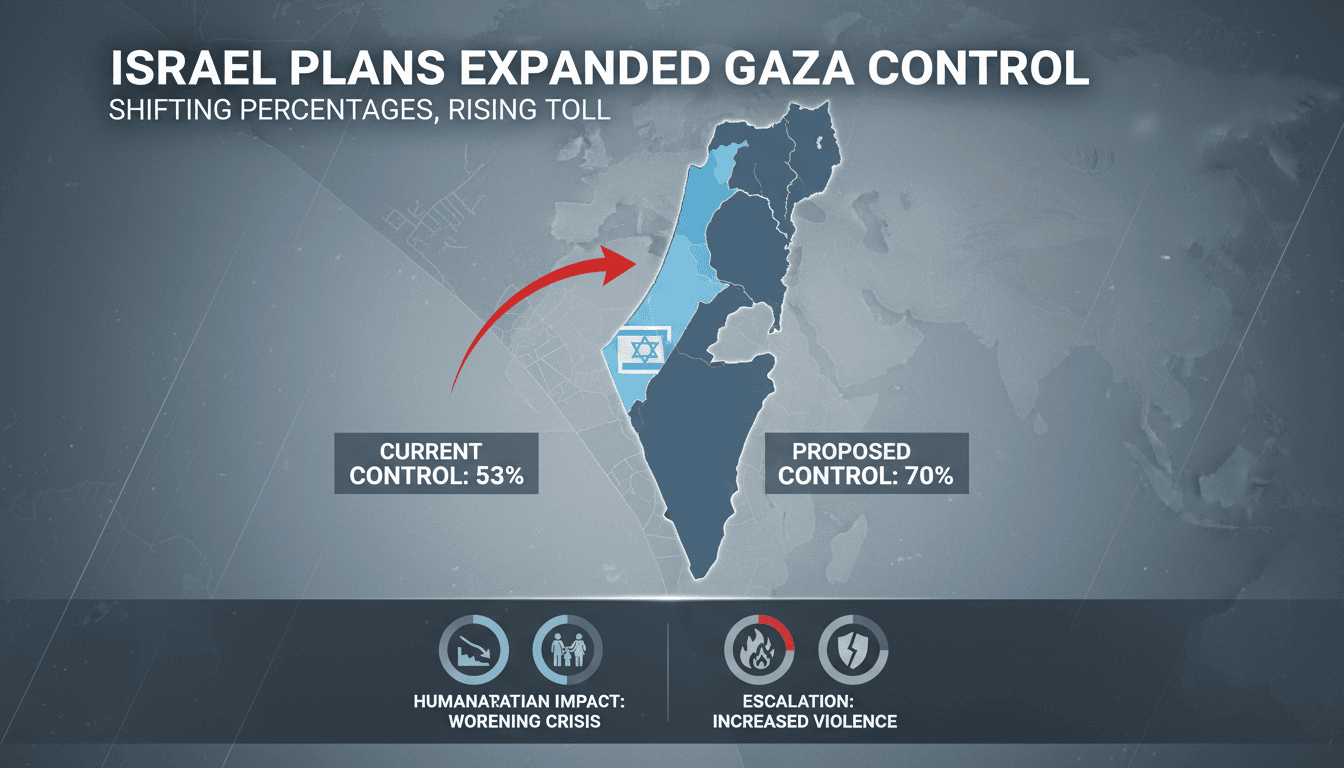
Here's what it means for you.
The recent decision by Israeli Prime Minister Benjamin Netanyahu to increase control over Gaza has significant implications for regional stability and humanitarian conditions. As Israel aims to expand its territory from 53% to 70%, the potential for escalated violence and humanitarian crises looms large. Stakeholders, including international observers and humanitarian organizations, are closely monitoring the situation, as it could lead to increased tensions and conflict in the region. The expansion of control is not only a military maneuver but also a response to internal political pressures within Israel. This move could further complicate diplomatic efforts aimed at achieving a lasting peace in the area.
What happened
Israeli Prime Minister Benjamin Netanyahu has ordered the military to increase Israel's control over Gaza from 53% to 70%. This announcement was made on May 29, 2026, and has already drawn strong condemnation from Hamas, which views the expansion as a dangerous escalation and a violation of existing agreements. The decision comes amid ongoing internal political pressures in Israel, suggesting a complex backdrop to the military strategy.
The new control percentage represents a significant shift that could impact the lives of over 2 million residents in Gaza. As the situation develops, the international community is expressing concerns about the potential for worsening humanitarian conditions in the region.
The Context
The current ceasefire agreement, established in October 2025, allowed Israel to maintain control over 53% of Gaza. The recent announcement to expand this control has raised alarms among Palestinian residents and international observers alike. Hamas has accused Israel of ethnic cleansing and forced displacement, framing the expansion as a direct threat to the Palestinian population.
International reactions have been mixed, with European states voicing concerns about the humanitarian implications of this decision. The timing of Netanyahu's announcement suggests that it may be influenced by internal political dynamics, further complicating the already fragile situation in the region.
Takeaway
As tensions rise, the potential for renewed violence is significant, with both Israel and Hamas accusing each other of ceasefire violations. The international community's response will be crucial in determining the next steps in this ongoing conflict. Observers should monitor diplomatic reactions and any potential escalations in military actions from both sides.
The humanitarian situation in Gaza remains precarious, and further military actions could exacerbate the crisis. Stakeholders must remain vigilant as developments unfold in the coming weeks.
English-language reporting on Saudi politics, policy, and society.
"Saudi Gazette reflects mainstream Saudi institutional perspectives."
— A47 Editor
Hamas denounces Netanyahu’s plan to expand control in Gaza
Hamas condemned Israeli Prime Minister Benjamin Netanyahu's announcement to expand Israel's control over 70% of the Gaza Strip, labeling it a dangerous escalation and a violation of agreements. Hamas officials expressed alarm over the ongoing violenc...
RT is a Russian state-funded network covering global events from a Russian perspective.
"RT is widely criticized for promoting pro-Kremlin narratives and is considered by many to be a state propaganda outlet."
— A47 Editor
Netanyahu orders expansion of Gaza occupation
Israeli Prime Minister Benjamin Netanyahu has ordered the military to expand its control over the Gaza Strip to 70%, a significant escalation in the ongoing conflict that threatens to undermine a fragile ceasefire established in October. This directi...
Regional coverage and analysis focused on politics, diplomacy, and business across the Middle East.
"Al-Monitor is known for analytical reporting on Middle East politics and policy developments."
— A47 Editor
Hamas calls Netanyahu's plan to expand control in Gaza a dangerous escalation
Hamas has condemned Israeli Prime Minister Benjamin Netanyahu's announcement to expand military control over the Gaza Strip from 53% to 70%, labeling it a dangerous escalation amid ongoing conflict. This decision follows a two-year military campaign ...
Regional and international reporting focused on Middle Eastern politics, diplomacy, and economics.
"Asharq Al-Awsat is a Saudi-owned international newspaper reflecting mainstream Gulf political perspectives."
— A47 Editor
Hamas Calls Netanyahu’s Plan to Expand Control in Gaza a Dangerous Escalation
Hamas has condemned Israeli Prime Minister Benjamin Netanyahu's directive to expand military control over the Gaza Strip from 53% to 70%, labeling it a dangerous escalation amid ongoing conflict. This decision follows a two-year military campaign tha...
UAE-based newspaper covering Gulf politics, society, and international developments.
"Gulf News is one of the UAE’s most prominent English-language publications."
— A47 Editor
Israel PM says orders army to take control of 70 percent of Gaza Strip
Israeli Prime Minister Benjamin Netanyahu has ordered the military to take control of 70% of the Gaza Strip, marking a significant escalation in the ongoing conflict that has already caused extensive devastation in the region. This directive follows ...
A curated Gulf News feed featuring major stories across news, business, opinion, and lifestyle.
"Gulf News is a major UAE newspaper whose featured stories feed reflects a broad editorial mix shaped for a Gulf audience."
— A47 Editor
Israel PM says orders army to take control of 70 percent of Gaza Strip
Israeli Prime Minister Benjamin Netanyahu has ordered the military to take control of 70% of the Gaza Strip, marking a significant escalation in the ongoing conflict that has already caused extensive devastation in the region. This directive follows ...