
Nasdaq Index Drops 4% Amid Rising Treasury Yields and Strong Jobs Report
Here's what it means for you.
The recent 4% drop in the Nasdaq index signals heightened volatility in the technology sector, driven by economic indicators that suggest rising borrowing costs. Investors should be particularly vigilant as these conditions may affect market stability and consumer spending in the near future. The implications of sustained high Treasury yields could lead to a cautious approach in investment strategies moving forward.
What happened
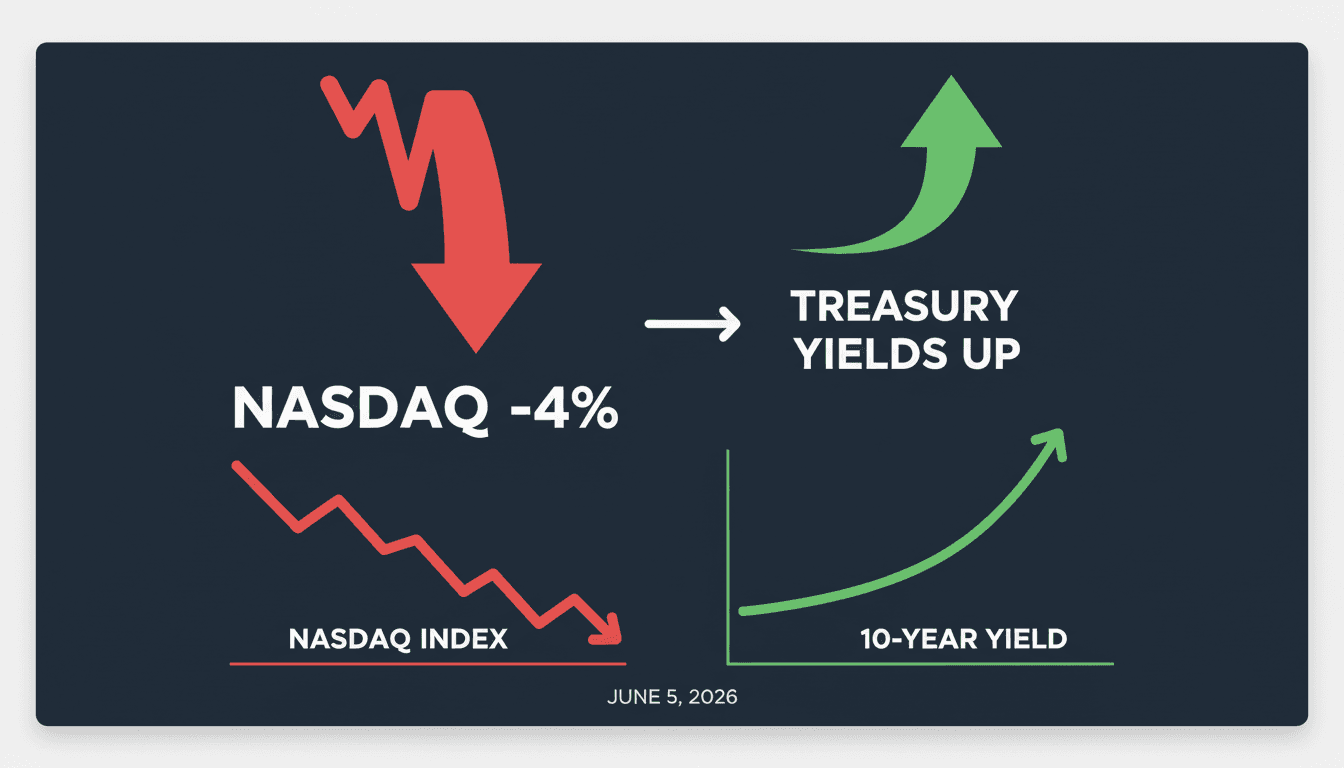
On June 5, 2026, the Nasdaq index experienced a significant decline of 4%, marking its steepest drop in eight months. This downturn was primarily triggered by a stronger-than-expected U.S. jobs report, which led to rising Treasury yields. The sell-off was particularly pronounced in technology stocks, including chip and memory manufacturers, raising concerns about the broader economic impact of elevated borrowing costs.
The increase in Treasury yields has heightened expectations of potential Federal Reserve rate hikes, further contributing to the market's volatility. As investors reacted to these economic signals, the tech sector faced increased scrutiny regarding its resilience amid changing financial conditions.
The Context
The U.S. jobs report released on the same day exceeded expectations, prompting a rise in Treasury yields that rattled investors. This environment of rising borrowing costs is anticipated to persist into the next year, creating a challenging landscape for both households and businesses. The Nasdaq's decline reflects the sensitivity of the market to economic indicators and the Federal Reserve's monetary policy decisions.
As the market grapples with these developments, stakeholders are closely monitoring the implications for consumer behavior and overall economic stability. The timing of this sell-off coincides with a critical period for the Federal Reserve, which is expected to address interest rates in upcoming meetings.
Takeaway
Looking ahead, investors should keep a close eye on the Federal Reserve's upcoming meetings and any economic data releases that could further influence market sentiment. The potential for continued elevated borrowing costs may shape investment strategies and consumer spending patterns in the months to come. As the market adjusts to these new realities, understanding the interplay between economic indicators and monetary policy will be crucial for navigating future volatility.
Editor-curated FT homepage stories spanning markets, business, world, and opinion.
"The Financial Times is a globally respected business publication with a centrist/center-left tone and strong markets focus."
— A47 Editor
Nasdaq tumbles 4% as shares in chip and memory groups sink
The Nasdaq composite index fell by 4% on June 5, 2026, marking its sharpest decline in nearly eight months, primarily driven by a selloff in technology stocks, particularly in the chip and memory sectors. This downturn coincides with rising expectati...
Market-moving headlines impacting equities, bonds, and related risk assets.
"Real-time catalysts and volatility drivers across indices and sectors."
— A47 Editor
Nasdaq craters 4% as chip rally careens to a halt, May jobs data boosts yields
The Nasdaq composite index experienced a significant decline of 4% as a rally in chip stocks came to an abrupt halt, coinciding with the release of May jobs data that contributed to rising yields. This downturn reflects a shift in market sentiment fo...
Corporate finance news, M&A, deals, and executive interviews.
"Finance Monthly serves a professional readership with corporate finance coverage."
— A47 Editor
Nasdaq Sell-Off Deepens as Borrowing Costs Threaten Households
The Nasdaq composite index experienced its sharpest decline in nearly eight months, plummeting 4% on June 5, 2026, amid rising concerns over borrowing costs and their impact on households. This downturn reflects a broader sell-off in technology stock...