
Astronomers potentially confirm first exomoon discovery 72 light-years from Earth
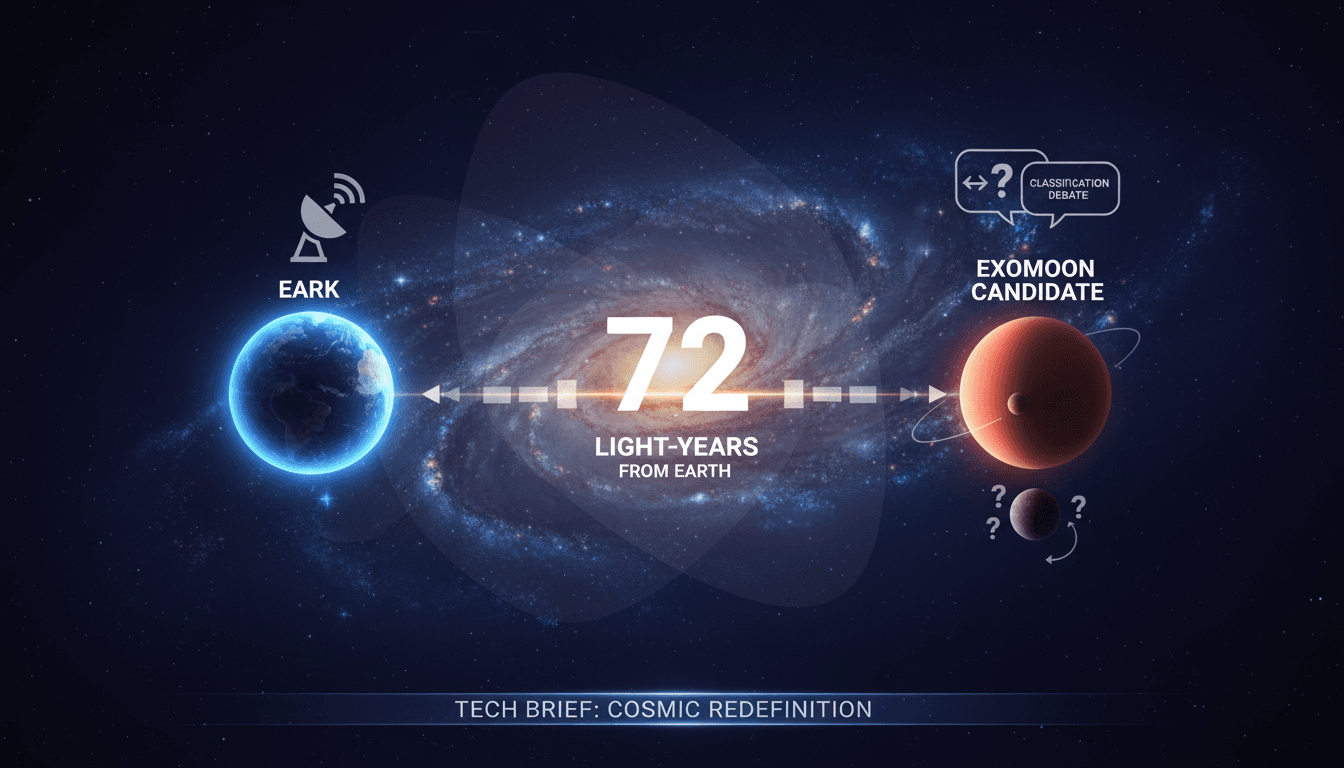
Here's what it means for you.
The potential discovery of the first exomoon could significantly impact our understanding of celestial classifications and the nature of planetary systems. As astronomers refine their observational technologies, this finding may prompt a reevaluation of what constitutes a moon versus other celestial bodies. The implications extend beyond academic interest, potentially influencing future research directions and funding in the field of astronomy. This discovery also raises questions about the existence of similar bodies in other solar systems, which could enhance our search for extraterrestrial life. As the scientific community engages in this debate, the outcomes may reshape educational narratives and public interest in space exploration.
What happened
Astronomers have potentially identified the first confirmed exomoon outside our solar system, located approximately 72 light-years from Earth. This finding has sparked discussions about the object's classification, as it raises questions about whether it is indeed a moon or something entirely different. The discovery was reported by multiple sources, including Popular Science and Space.com, highlighting its significance in the field.
The object is being referred to as a "super weird" potential exomoon, emphasizing its unusual characteristics. Initial reports of this potential exomoon emerged on July 22, 2026, followed by further analyses the next day. As the investigation continues, astronomers are eager to uncover more about this intriguing celestial body.
The Context
The discovery of the potential exomoon comes at a time when advancements in observational technology are allowing astronomers to explore the cosmos in unprecedented detail. The object’s location, 72 light-years away, places it within a realm that is increasingly accessible to modern telescopes. Ongoing debates about celestial classifications underscore the complexities of astronomy and the evolving nature of our understanding of the universe.
This finding could redefine our understanding of planetary systems beyond our own, challenging existing definitions of moons and other celestial bodies. As researchers delve deeper into the characteristics of this object, the implications for the broader field of astronomy could be profound. The scientific community is closely monitoring these developments, as they may lead to significant shifts in how we perceive the cosmos.
Takeaway
Further research will be necessary to confirm the nature of this object and its implications for astronomy. Upcoming studies will focus on the characteristics and classification of the potential exomoon, which could provide insights into the formation of moons in other solar systems. The ongoing investigation may also have potential implications for the search for extraterrestrial life, as understanding these celestial bodies could inform our knowledge of habitable environments.
As astronomers continue to study this intriguing object, the findings could lead to groundbreaking insights into the complexities of celestial formations. The debate surrounding its classification highlights the need for continued exploration and discussion within the scientific community.
Tech startup news, programming trends, and discussions shared by the developer community.
"Hacker News is a community-driven source highlighting influential tech discussions, startup launches, and programming insights."
— A47 Editor
Astronomers may have found the first exomoon
Astronomers may have discovered the first exomoon, a significant finding that could enhance understanding of celestial bodies beyond our solar system. This potential exomoon discovery adds a new dimension to the ongoing exploration of extraterrestria...
News in science and technology, with a focus on consumer and innovation stories.
"Popular Science simplifies complex scientific topics for general audiences and celebrates innovation."
— A47 Editor
‘Super weird’ object may be space’s first confirmed exomoon
A recently identified object located approximately 72 light-years from Earth may represent the first confirmed exomoon, a significant discovery in the field of astronomy. This finding suggests the existence of a satellite orbiting a planet outside ou...
Space science news, astronomy updates, and spaceflight developments.
"Space.com delivers space science news, astronomy updates, and spaceflight developments with engaging coverage."
— A47 Editor
Astronomers may have discovered the 1st moon outside of our solar system — or is it something weirder?
Astronomers may have discovered the first exomoon outside of our solar system, a finding that could redefine our understanding of celestial bodies. However, there is speculation that the observed object might not be a moon but rather something that c...