
Microsoft shifts AI strategy towards specialized models
What happened
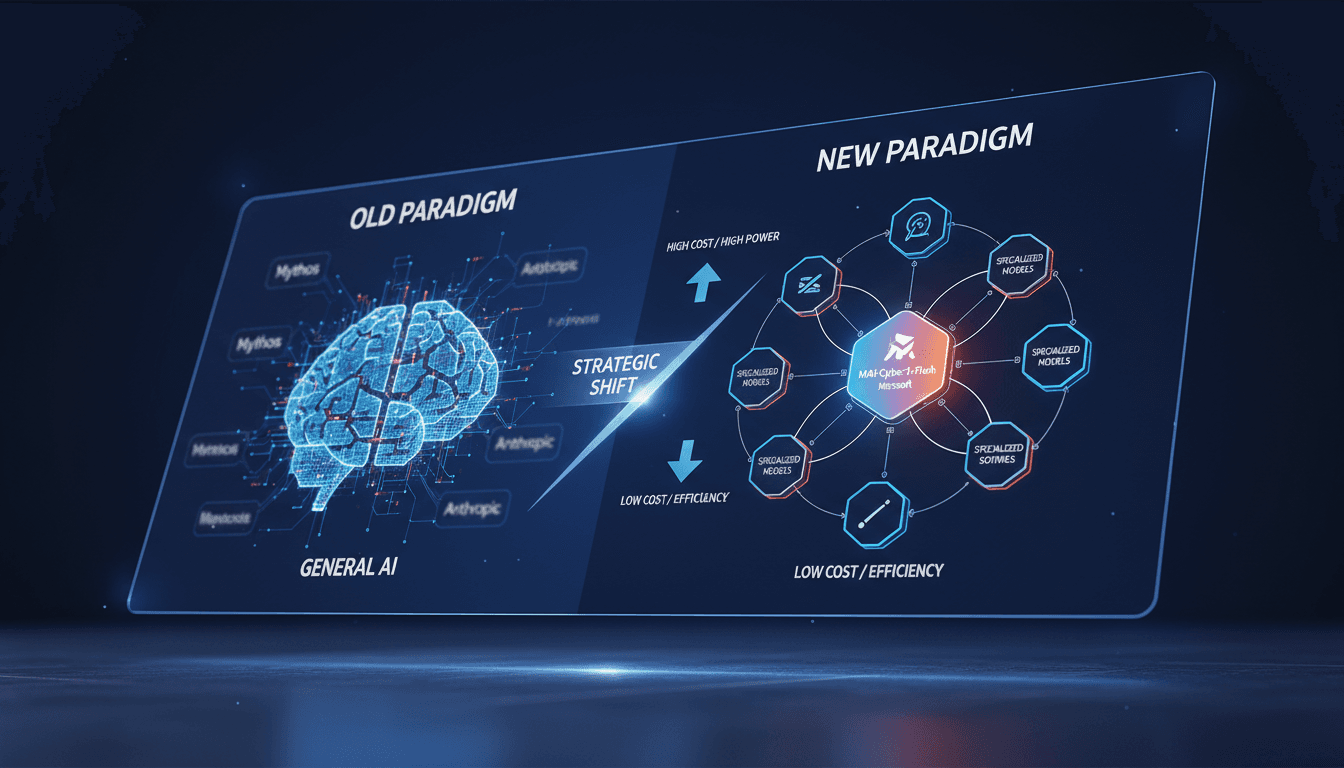
Microsoft has announced a strategic shift to prioritize the development of smaller, specialized AI models over larger, general-purpose alternatives. This decision is underscored by the performance of its MAI-Cyber-1-Flash model, which has proven to be more cost-effective than competitors like Anthropic's Mythos. The company aims to leverage this approach to enhance its competitive edge in the AI market.
The announcement follows a report of $3.2 billion in earnings from Microsoft's investment in Anthropic, highlighting the financial stakes involved in this competitive landscape. By focusing on specialized models, Microsoft is positioning itself as a formidable competitor to established players such as OpenAI and Anthropic.
The Context
Microsoft's MAI-Cyber-1-Flash model has outperformed competitors in specific benchmarks, showcasing its potential in the AI sector. The company's recent fiscal report revealed mixed results from its investments in AI labs, indicating both challenges and opportunities in this rapidly evolving field. As the competition intensifies, Microsoft is increasingly emphasizing the importance of orchestration software to manage AI capabilities effectively.
This strategic pivot comes at a time when the AI industry is witnessing a shift towards more efficient and specialized solutions. By focusing on smaller models, Microsoft aims to address the growing demand for cost-effective AI technologies that can deliver high performance without the overhead associated with larger models.
Takeaway
Microsoft's focus on specialized AI models may significantly reshape its competitive strategy in the AI market. As the company continues to innovate, stakeholders should monitor developments in its orchestration software for managing these models. Additionally, responses from competitors like OpenAI and Anthropic will be crucial in determining the broader implications of this strategic shift.
The emphasis on orchestration software suggests a future where managing AI capabilities becomes as important as the models themselves. This could lead to new standards in how AI technologies are developed and deployed across various industries.
Daily AI news: models, tools, and policy.
"Independent outlet tracking the fast pace of AI."
— A47 Editor
Microsoft AI bets on cheap specialist models instead of chasing the frontier
Microsoft AI is focusing on developing cost-effective specialist models, such as MAI-Cyber-1-Flash, which reportedly outperforms competitors like Anthropic's Mythos while being less expensive. This shift, articulated by AI CEO Mustafa Suleyman, indic...
Startup news with frequent AI coverage.
"Covers launches, funding, and product updates in AI."
— A47 Editor
Microsoft is openly competing with OpenAI, Anthropic more than ever
Microsoft has intensified its competition with OpenAI and Anthropic by showcasing its own AI models and a new cybersecurity solution, MAI-Cyber-1-Flash, during a recent presentation to Wall Street. This move is part of Microsoft's strategy to enhance...
Startup news with frequent AI coverage.
"Covers launches, funding, and product updates in AI."
— A47 Editor
Microsoft logs $3.2B from Anthropic investment, but OpenAI was a mixed bag
Microsoft reported a $3.2 billion gain from its investment in Anthropic, while its partnership with OpenAI yielded mixed results, as revealed in the company's fourth-quarter earnings for fiscal 2026. This financial update highlights the contrasting p...