
EU mandates labeling for AI-generated content starting August 2026
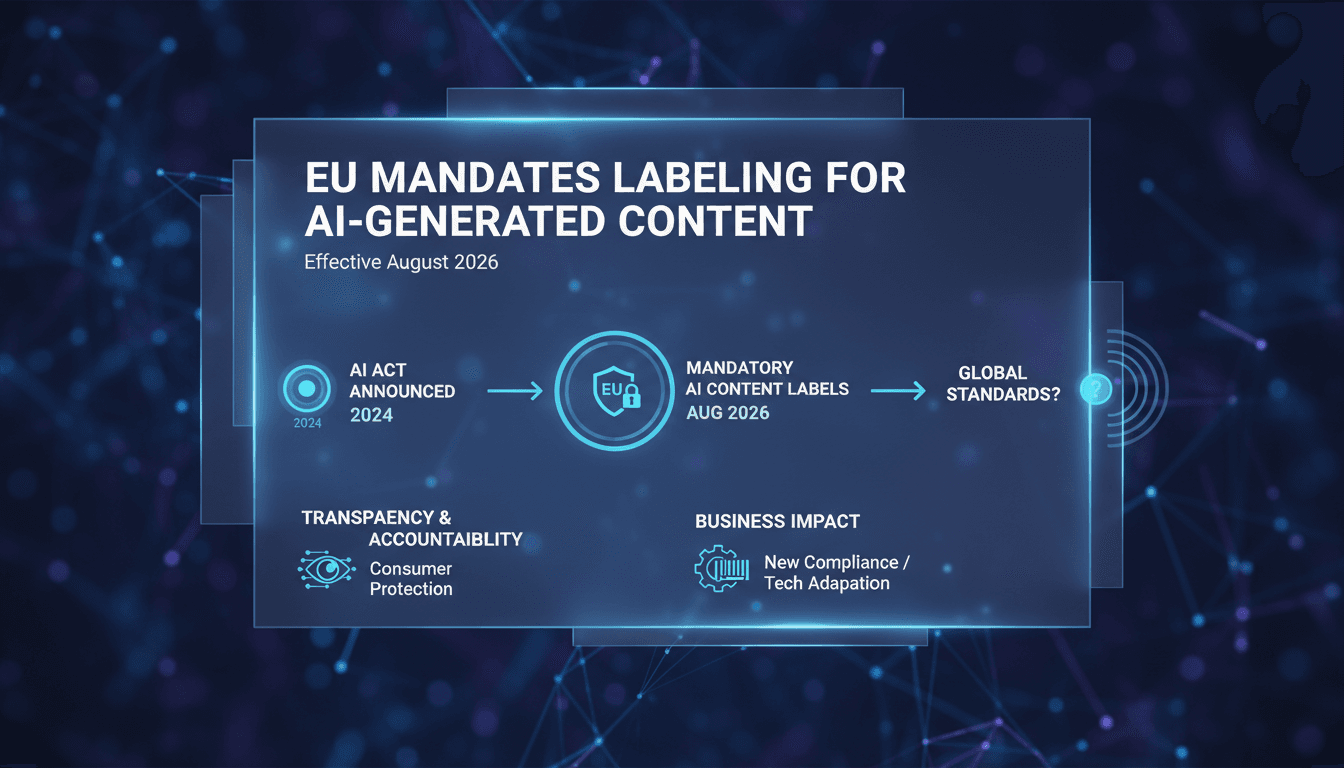
What happened
The European Union has announced that starting August 2, 2026, companies will be required to label any content that is generated or significantly altered by artificial intelligence. This regulation is part of the EU's phased rollout of its AI Act, which aims to improve transparency and accountability in AI technologies. The labeling requirement will encompass various types of content, including text, images, audio, and video.
Companies will have until December 2026 to comply with these regulations for existing systems. This initiative reflects the EU's commitment to regulating AI content and ensuring that consumers are informed about the nature of the content they encounter.
The Context
The introduction of labeling requirements is a significant step in the EU's broader strategy to regulate artificial intelligence. By mandating disclosure of AI-generated content, the EU aims to mitigate risks associated with misinformation and enhance consumer awareness. This regulatory framework is particularly relevant in an era where AI technologies are rapidly evolving and becoming more integrated into everyday life.
Stakeholders, including tech companies and content creators, will need to navigate these new rules carefully. The timing of this initiative aligns with growing concerns about the ethical implications of AI and the need for accountability in its deployment. As the EU leads the way, other regions may look to these regulations as a model for their own governance frameworks.
Takeaway
The implementation of labeling rules for AI-generated content may set a precedent for similar regulations in other jurisdictions. As companies adapt to these requirements, it will be crucial to monitor their responses and any potential legal challenges that may arise from the tech industry. The EU's approach could influence global standards for AI governance and consumer protection, shaping the future landscape of AI technologies.
In the coming years, stakeholders should keep an eye on how these regulations impact content creation and consumer trust in AI. The evolving nature of AI technologies will likely prompt further discussions on accountability and transparency in the digital space.
Tech news and guides occasionally covering AI.
"Independent tech blog with practical tips and news."
— A47 Editor
EU AI Content Labeling Rules Take Effect August 2, With December Deadline for Existing Systems
The European Union's new transparency rules regarding AI-generated content will take effect on August 2, requiring companies to label AI-generated or AI-altered materials, including chatbots, images, audio, and video. A December deadline has been set...
Tech news, hardware, and AI tools coverage.
"PC/tech site increasingly covering AI hardware and apps."
— A47 Editor
EU will require companies to label AI-generated content starting Sunday
Starting Sunday, the European Union will mandate that companies label content generated or significantly altered by artificial intelligence, as part of a phased rollout of its broader AI legislation aimed at enhancing transparency. This initial step ...
Photography news including AI tools and ethics.
"Covers AI’s impact on imaging and creative workflows."
— A47 Editor
EU to Require Labels on Realistic AI Images From Sunday
Starting Sunday, the European Union will mandate that all AI-generated content, particularly images that mimic real people or events, must be labeled accordingly. This requirement is part of the EU's ongoing implementation of the AI Act, aimed at enh...
UAE-based newspaper covering Gulf politics, society, and international developments.
"Gulf News is one of the UAE’s most prominent English-language publications."
— A47 Editor
Made by AI? EU tells firms to stick a label on it from August 2, 2026
Starting August 2, 2026, the European Union will mandate that companies label content generated by artificial intelligence, a regulation aimed at enhancing transparency in digital media. This initiative reflects the EU's proactive stance in managing ...
A curated Gulf News feed featuring major stories across news, business, opinion, and lifestyle.
"Gulf News is a major UAE newspaper whose featured stories feed reflects a broad editorial mix shaped for a Gulf audience."
— A47 Editor
Made by AI? EU tells firms to stick a label on it from August 2, 2026
Starting August 2, 2026, the European Union will mandate that companies label content generated by artificial intelligence, a regulation aimed at enhancing transparency in digital media. This initiative reflects the EU's proactive stance in managing ...