
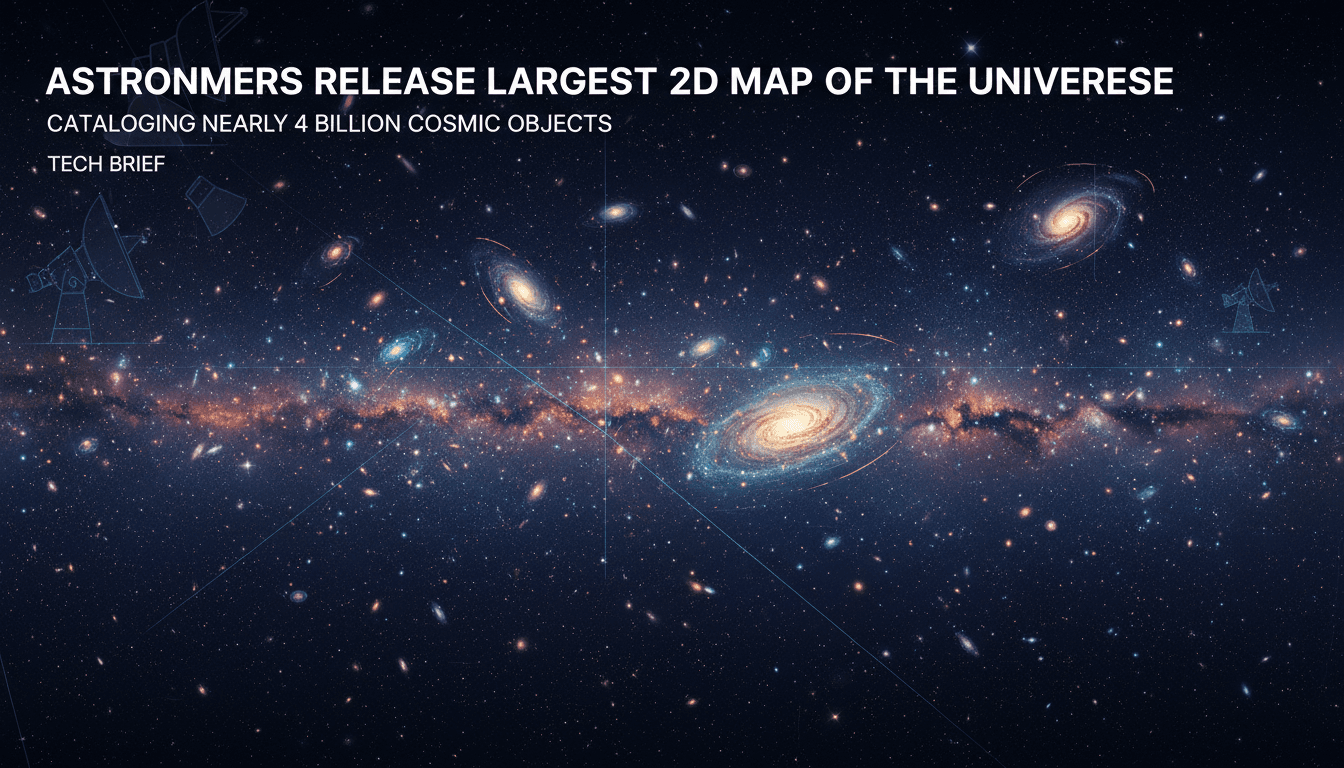
Astronomers release largest 2D map of the universe cataloging nearly 4 billion cosmic objects
Here's what it means for you.
The unveiling of the largest 2D map of the universe represents a monumental leap in astronomical research, with implications for both scientific inquiry and technological advancement. By cataloging nearly 4 billion cosmic objects, this map will serve as a vital resource for future telescope missions, enhancing our understanding of the cosmos. The collaborative effort behind this project underscores the importance of shared knowledge and resources in the scientific community. This map not only showcases the vastness of the universe but also highlights the advancements in observational technology that have made such a comprehensive catalog possible. As researchers delve into the data, we can expect significant discoveries that may reshape our understanding of cosmic phenomena.
What happened
Astronomers have unveiled the largest 2D map of the universe, which includes nearly 4 billion cosmic objects. This extensive map, created over 13 years, covers 75% of the observable sky and consists of 5.6 trillion pixels. The project represents a significant milestone in astronomical research, providing a detailed guide for future observations.
The map was officially unveiled on August 11, 2026, marking the culmination of years of collaborative efforts among various scientific institutions. This groundbreaking achievement is expected to enhance our understanding of the universe and guide future explorations in astronomy.
The Context
The creation of this celestial map involved a long-term commitment from astronomers and researchers, taking 13 years to complete. The collaboration among different scientific institutions highlights the importance of teamwork in advancing our knowledge of the universe. By covering 75% of the observable sky, the map provides a comprehensive view that was previously unattainable.
This project is not just a technical achievement; it represents a significant advancement in the field of astronomy. The vast number of cosmic objects cataloged emphasizes the scale of the universe and the ongoing quest to understand its complexities. As astronomers continue to analyze this data, it will serve as a crucial tool for guiding future telescope missions both on Earth and in space.
Takeaway
As astronomers begin to explore the extensive data provided by this new map, it is anticipated that new discoveries will emerge, leading to a deeper understanding of cosmic phenomena. The map will not only aid in current research but also pave the way for future telescope missions that can utilize this wealth of information.
The implications of this map extend beyond mere cataloging; it is expected to inspire innovative approaches to studying the universe. Researchers will be able to identify patterns and anomalies that could lead to significant breakthroughs in our understanding of the cosmos.
Pan-Arab news coverage spanning politics, business, sports, and regional affairs.
"Asharq Al-Awsat reflects a broad Arab editorial perspective with strong attention to regional geopolitics."
— A47 Editor
أكبر خريطة للكون تضمّ 4 مليارات جرم سماوي
Astronomers have recently released the largest two-dimensional map of the universe, showcasing an impressive 4 billion celestial objects. The creation of this map took 13 years and covers 75% of the sky, providing a comprehensive view of the cosmos.
Scientific discoveries, health, technology, and natural phenomena.
"Live Science reports on scientific discoveries, health, technology, and natural phenomena with a popular science tone."
— A47 Editor
Astronomers drop one of the largest-ever maps of the universe, charting 4 billion objects
Astronomers have released one of the largest maps of the universe, cataloging approximately 4 billion cosmic objects. This extensive celestial map not only serves as a comprehensive catalog but also acts as a guide for other telescopes on Earth and i...
Space science news, astronomy updates, and spaceflight developments.
"Space.com delivers space science news, astronomy updates, and spaceflight developments with engaging coverage."
— A47 Editor
Scientists create largest 2D map of the universe with 5.6 trillion pixels and nearly 4 billion cosmic objects
Scientists have created the largest 2D map of the universe, comprising 5.6 trillion pixels and nearly 4 billion cosmic objects, marking a significant advancement in astronomical research. This monumental effort enhances our understanding of the unive...