
James Webb Space Telescope discovers water near Sagittarius A* and observes merging black holes
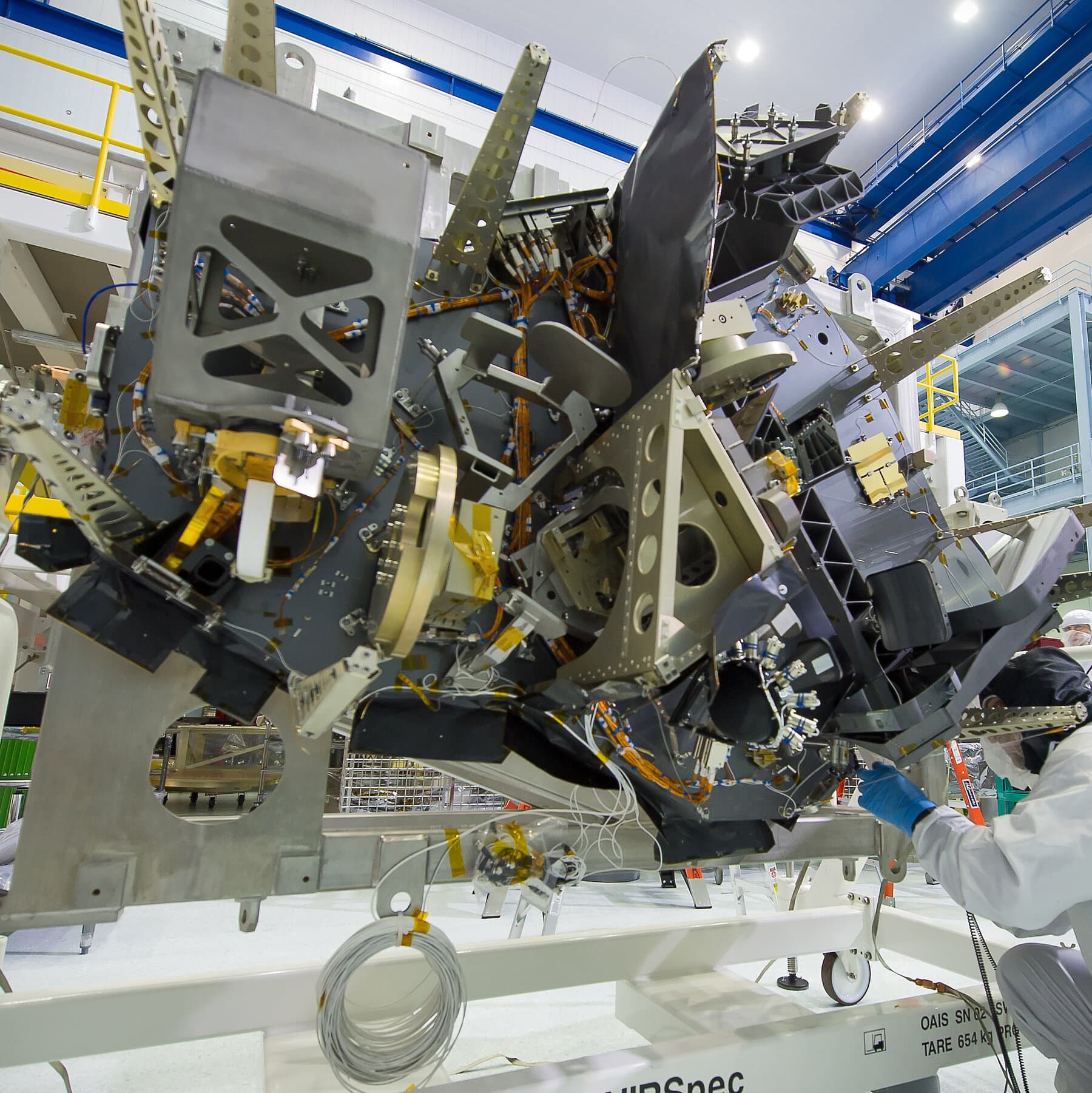
Here's what it means for you.
The recent discoveries made by the James Webb Space Telescope (JWST) have profound implications for our understanding of the universe. The identification of water near Sagittarius A* suggests that even in extreme cosmic environments, conditions may exist that could support life. Furthermore, the observation of merging supermassive black holes opens new avenues for research into gravitational waves and galaxy evolution. These findings not only enhance our scientific knowledge but also highlight the capabilities of advanced observational technologies. As we continue to explore these cosmic phenomena, the potential for groundbreaking insights into the nature of matter and life in the universe becomes increasingly tangible.
What happened
The James Webb Space Telescope has made significant discoveries by identifying water and cosmic dust near Sagittarius A*. In addition, it has captured images of two supermassive black holes that are on the verge of merging. This remarkable observation sheds light on the extreme conditions surrounding black holes and the survival of water in such environments.
The telescope's advanced instruments allow for detailed analysis of light and gases in these regions, providing unprecedented insights into the behavior of matter under extreme gravitational forces. The merging of these black holes represents a rare cosmic event that could enhance our understanding of gravitational waves and the evolution of galaxies.
The Context
Sagittarius A* is the supermassive black hole located at the center of the Milky Way, making it a focal point for astronomical research. The James Webb Space Telescope, with its near-infrared spectrograph, is uniquely equipped to analyze the complex environments surrounding black holes. The timing of these discoveries is crucial, as they coincide with a growing interest in understanding the fundamental nature of black holes and their role in galaxy formation.
The implications of these findings extend beyond mere observation; they challenge existing theories and encourage further exploration into the conditions necessary for life in the universe. As researchers delve deeper into these cosmic phenomena, the potential for new discoveries continues to expand.
Takeaway
The findings from the James Webb Space Telescope could lead to transformative insights into the behavior of matter in extreme gravitational fields. Future studies will likely focus on the implications of water's survival near black holes and the ongoing observations of the merging black holes. These investigations may reveal critical information about the conditions that could support life beyond Earth.
As research progresses, the potential to reshape our understanding of black holes and galaxy formation remains significant. The scientific community is poised to explore these revelations further, paving the way for new theories and discoveries in astrophysics.
Space science news, astronomy updates, and spaceflight developments.
"Space.com delivers space science news, astronomy updates, and spaceflight developments with engaging coverage."
— A47 Editor
Water can survive surprisingly close to the Milky Way's supermassive black hole, James Webb Space Telescope finds
Recent observations from the James Webb Space Telescope (JWST) have revealed that water and cosmic dust can endure in the extreme conditions near Sagittarius A*, the supermassive black hole at the center of the Milky Way. This finding challenges prev...
Space exploration, astronomy, and astrophysics.
"The New York Times is a globally recognized newspaper offering authoritative reporting with a center-left editorial stance."
— A47 Editor
Telescope Spots Two Black Holes on the Cusp of Merging
The James Webb Space Telescope has captured new images revealing a galaxy containing three supermassive black holes, with two appearing to be on the verge of merging. This observation was facilitated by the telescope's near-infrared spectrograph, whi...
Space exploration, astronomy, and astrophysics.
"The New York Times is a globally recognized newspaper offering authoritative reporting with a center-left editorial stance."
— A47 Editor
Telescope Spots Two Black Holes on the Cusp of Merging
The James Webb Space Telescope has captured new images revealing a galaxy containing three supermassive black holes, with two appearing to be on the verge of merging. This observation was made possible through the telescope's near-infrared spectrogra...