
Pew Research Survey Reveals 50% of Americans Concerned About AI in Daily Life
Here's what it means for you.
As AI tools become more prevalent, understanding public sentiment can guide your professional strategies and technology adoption.
Why it matters
Growing unease about AI's role in daily life could reshape market dynamics and regulatory landscapes.
What happened (in 30 seconds)
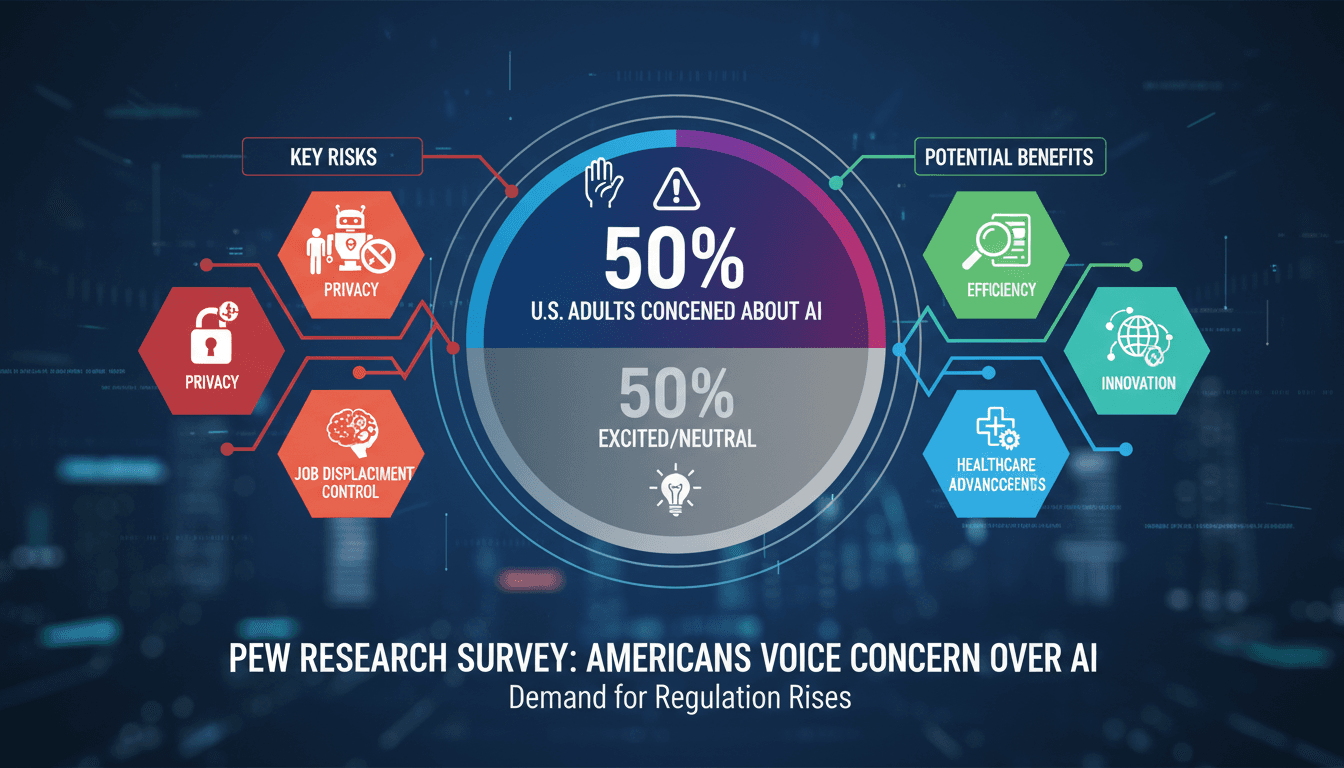
- 50% of U.S. adults report feeling more concerned than excited about AI's integration into daily life, according to a Pew Research survey.
- 57% rate societal risks of AI as high, while only 25% see high benefits, reflecting a significant shift in public perception since 2021.
- Calls for regulatory oversight are intensifying, with two-thirds of Americans worried about insufficient government regulation of AI technologies.
The context you actually need
- Public concern has risen from 37% in 2021 to 50% in 2025, indicating a growing wariness about AI's societal impacts.
- Geopolitical factors and rapid AI deployment are fueling debates on regulation, particularly in the U.S. and EU.
- High-profile discussions among industry leaders about AI risks are contributing to the public's anxiety, especially regarding job displacement and privacy.
What's really happening
The Pew Research Center's survey results reveal a significant shift in American attitudes toward artificial intelligence, with half of U.S. adults expressing more concern than excitement about its integration into daily life. This marks a 13-percentage-point increase in net concern since 2021, reflecting a broader trend of rising anxiety surrounding AI technologies.
The survey, conducted in June 2025, highlights that while only 10% of respondents feel excited about AI, a substantial 57% perceive high societal risks associated with its use. This sentiment is compounded by fears of job displacement, privacy violations, and a perceived loss of human control over technology. The data suggests that as AI tools become more embedded in both consumer and professional environments, public apprehension is growing, outpacing enthusiasm for the potential benefits these technologies may offer.
The context of this rising concern is critical. Since 2021, the rapid deployment of generative AI tools has coincided with ongoing regulatory debates in the U.S. and EU, where policymakers grapple with how to manage the implications of AI on society. High-profile discussions among tech leaders about the risks of AI have further fueled public anxiety, as many Americans feel unprepared for the changes these technologies bring.
Moreover, the survey results have amplified calls for greater regulatory oversight, with two-thirds of Americans expressing more concern about insufficient government regulation than overregulation. This indicates a desire for a framework that ensures AI technologies are developed and deployed responsibly, balancing innovation with public safety.
Market responses to these concerns are already visible, with tech firms investing in AI transparency features to address public fears. The media is also increasingly covering public sentiment on AI, reflecting a growing awareness of the societal implications of these technologies. As the conversation around AI continues to evolve, it is clear that understanding and addressing public concerns will be crucial for both tech companies and policymakers.
Who feels it first (and how)
- Tech professionals: Increased scrutiny on AI tools may lead to changes in development practices and job roles.
- Consumers: Heightened awareness of privacy and job security issues could influence purchasing decisions and technology adoption.
- Regulators: Pressure to implement new regulations will likely increase, impacting how AI technologies are governed.
- Expatriate professionals in Dubai: Global trends in AI adoption may indirectly affect job markets and privacy concerns in the region.
What to watch next
- Regulatory developments: Monitor new legislation or guidelines regarding AI use, as these will shape the landscape for technology companies and users alike.
- Public sentiment shifts: Keep an eye on future surveys to gauge whether concerns about AI are increasing or stabilizing, which could influence market strategies.
- Investment in AI transparency: Watch for tech firms enhancing transparency features, as this could signal a shift in how companies approach consumer trust.
50% of U.S. adults are more concerned than excited about AI.
Regulatory frameworks will evolve in response to public concern.
The long-term impact of AI on job markets and privacy remains uncertain.
Frequently Asked Questions
- Why it matters?
- Growing unease about AI's role in daily life could reshape market dynamics and regulatory landscapes.
- What happened (in 30 seconds)?
- 50% of U.S. adults report feeling more concerned than excited about AI's integration into daily life, according to a Pew Research survey. 57% rate societal risks of AI as high, while only 25% see high benefits, reflecting a significant shift in public perception since 2021. Calls for regulatory oversight are intensifying, with two-thirds of Americans worried about insufficient government regulation of AI technologies.
- What's really happening?
- The Pew Research Center's survey results reveal a significant shift in American attitudes toward artificial intelligence, with half of U.S. adults expressing more concern than excitement about its integration into daily life. This marks a 13-percentage-point increase in net concern since 2021, reflecting a broader trend of rising anxiety surrounding AI technologies. The survey, conducted in June 2025, highlights that while only 10% of respondents feel excited about AI, a substantial 57% percei
- Who feels it first (and how)?
- Tech professionals: Increased scrutiny on AI tools may lead to changes in development practices and job roles. Consumers: Heightened awareness of privacy and job security issues could influence purchasing decisions and technology adoption. Regulators: Pressure to implement new regulations will likely increase, impacting how AI technologies are governed. Expatriate professionals in Dubai: Global trends in AI adoption may indirectly affect job markets and privacy concerns in the region.
- What to watch next?
- Regulatory developments: Monitor new legislation or guidelines regarding AI use, as these will shape the landscape for technology companies and users alike. Public sentiment shifts: Keep an eye on future surveys to gauge whether concerns about AI are increasing or stabilizing, which could influence market strategies. Investment in AI transparency: Watch for tech firms enhancing transparency features, as this could signal a shift in how companies approach consumer trust.
Consumer tech news, reviews, and buying guides for gadgets and electronics.
"TechRadar is known for comprehensive buying advice, hardware reviews, and consumer tech news targeted at mainstream audiences."
— A47 Editor
Over half of Americans are concerned about AI in daily life — with tech leaders and AI gurus desperately trying to calm the number one fear
A recent survey reveals that over half of Americans express concern about the impact of artificial intelligence (AI) on their daily lives, particularly fearing job displacement within the next two decades. Tech leaders and AI experts are attempting t...
Capitol Hill news, legislation, and policy insight.
"The Hill specializes in U.S. politics and policy, with a focus on Capitol Hill developments and a reputation for insider reporting."
— A47 Editor
Majority 'more concerned than excited' about increased AI use in daily life: Survey
A recent Pew Research survey indicates that 52 percent of Americans are more concerned than excited about the increasing use of artificial intelligence (AI) in daily life, marking a significant rise in apprehension since the survey's inception.
Global business headlines with AI angles.
"General business outlet that frequently covers AI."
— A47 Editor
Young Americans' AI Anxiety Keeps Growing. Unlike Older Adults, Their Concern Hasn't Leveled Off.
A recent survey indicates that a majority of U.S. adults under 30 are now more concerned than excited about the impact of artificial intelligence (AI) in their daily lives, marking a significant shift in sentiment among younger Americans.