
China's humanoid robot industry showcases commercial advancements at World Robot Conference
Here's what it means for you.
As humanoid robots gain traction in China, expect similar innovations to influence logistics and service sectors globally, including in Dubai.
Why it matters
The rapid advancement of humanoid robots in China signals a shift towards automation that could redefine operational efficiency across industries worldwide.
What happened (in 30 seconds)
- The World Robot Conference opened in Beijing on August 19, 2026, showcasing over 2,000 exhibits and 150 new products from more than 300 Chinese robot makers.
- Unitree Robotics completed a highly successful IPO, with shares rising nearly sixfold, reflecting strong market enthusiasm.
- Chinese humanoid robot shipments quadrupled to 19,100 units in the first half of 2026, indicating a significant leap in production and deployment capabilities.
The context you actually need
- U.S.-China rivalry: The conference occurs amid escalating technological competition, with robotics identified as a strategic sector for both nations.
- Investor interest: The surge in robotics parallels the earlier boom in China's electric vehicle industry, attracting significant investment and innovation.
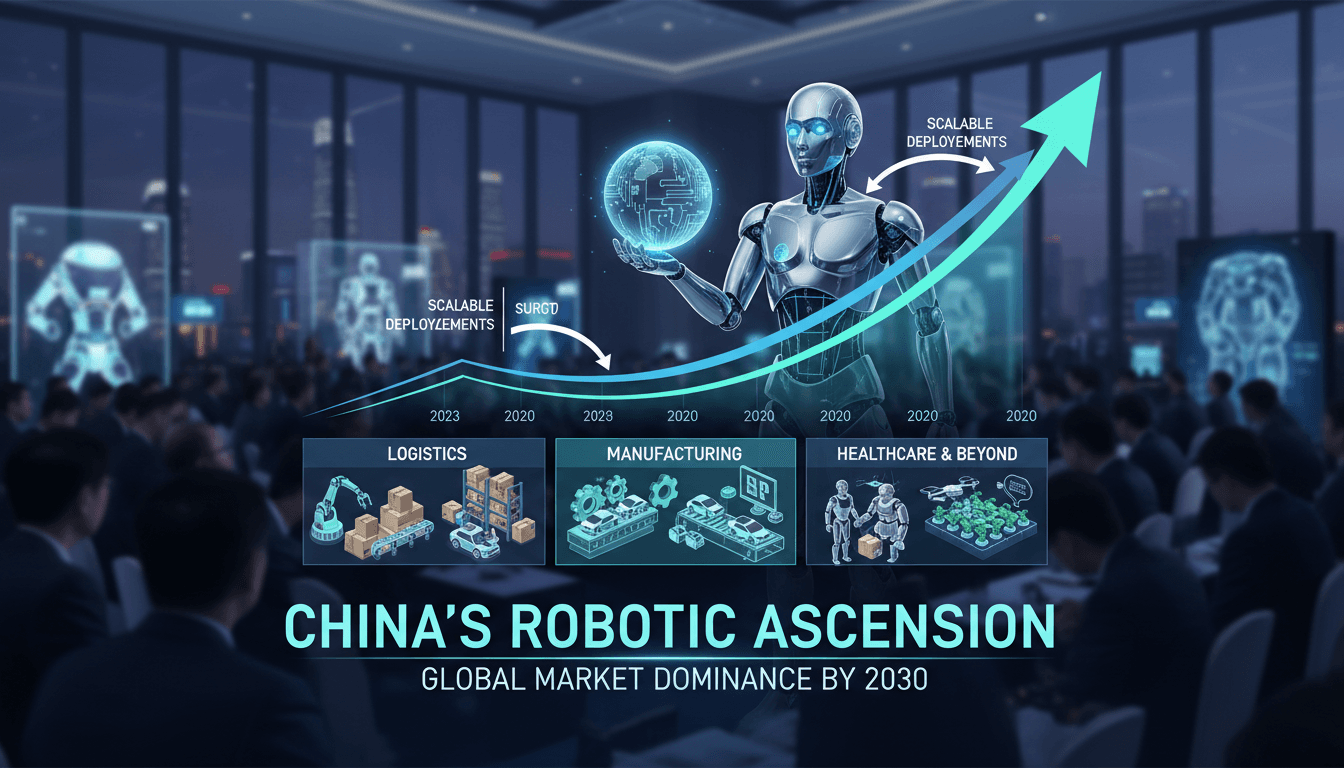
- Pilot projects: Previous deployments have primarily been limited to pilot projects, but the focus is now shifting towards scalable commercial applications in logistics and manufacturing.
What's really happening
The 2026 World Robot Conference in Beijing marks a pivotal moment for China's humanoid robotics industry, transitioning from hype to tangible commercial applications. With over 300 exhibitors and 2,000 products on display, the event underscores a collective effort to harness investor enthusiasm and technological advancements into practical deployments. The Ministry of Industry and Information Technology's support highlights the government's commitment to robotics as a key driver of economic growth.
Unitree Robotics, a standout at the conference, achieved a remarkable IPO, with shares skyrocketing nearly sixfold, reflecting the market's confidence in the sector's potential. Other companies, such as Leju and Robotera, reported efficiencies in their robots that approach or match human performance in specific tasks, with some models capable of operating continuously for up to 1,000 hours. This level of efficiency is crucial for industries like logistics and manufacturing, where operational uptime directly correlates with profitability.
The competitive landscape mirrors that of the electric vehicle sector, with numerous players vying for market share. Analysts project that it may take a decade for the humanoid robotics market to fully mature, but the current trajectory suggests rapid advancements in technology and deployment strategies. Notably, Chinese firms have dominated global humanoid robot shipments, which quadrupled to 19,100 units in the first half of 2026, indicating a robust growth trajectory.
The implications of this shift are profound. As humanoid robots become more integrated into logistics and service sectors, companies will likely experience significant efficiency gains. However, this also raises questions about job displacement and the need for workforce reskilling. The focus on data collection in many of these units suggests that while immediate productive deployment may not be the primary goal, the insights gained will inform future developments and applications.
Who feels it first (and how)
- Logistics companies: Increased automation in sorting and delivery processes.
- Manufacturers: Enhanced efficiency in assembly lines and production tasks.
- Service sectors: Adoption of humanoid robots for customer service and educational roles.
- Investors: Opportunities in emerging robotics firms and technologies.
- Workers: Potential job displacement and the need for reskilling in affected industries.
What to watch next
- Market performance of IPOs: Continued success of robotics companies like Unitree could signal broader market confidence in the sector.
- Regulatory developments: Watch for government policies that may either support or hinder the rapid deployment of humanoid robots.
- Technological advancements: Innovations in AI and robotics that enhance efficiency and capabilities will be critical to the sector's growth.
Humanoid robot shipments from China have quadrupled in 2026.
Increased competition among robotics firms will drive innovation and efficiency.
The long-term impact on employment and workforce dynamics remains to be seen.
Frequently Asked Questions
- Why it matters?
- The rapid advancement of humanoid robots in China signals a shift towards automation that could redefine operational efficiency across industries worldwide.
- What happened (in 30 seconds)?
- The World Robot Conference opened in Beijing on August 19, 2026, showcasing over 2,000 exhibits and 150 new products from more than 300 Chinese robot makers. Unitree Robotics completed a highly successful IPO, with shares rising nearly sixfold, reflecting strong market enthusiasm. Chinese humanoid robot shipments quadrupled to 19,100 units in the first half of 2026, indicating a significant leap in production and deployment capabilities.
- What's really happening?
- The 2026 World Robot Conference in Beijing marks a pivotal moment for China's humanoid robotics industry, transitioning from hype to tangible commercial applications. With over 300 exhibitors and 2,000 products on display, the event underscores a collective effort to harness investor enthusiasm and technological advancements into practical deployments. The Ministry of Industry and Information Technology's support highlights the government's commitment to robotics as a key driver of economic grow
- Who feels it first (and how)?
- Logistics companies: Increased automation in sorting and delivery processes. Manufacturers: Enhanced efficiency in assembly lines and production tasks. Service sectors: Adoption of humanoid robots for customer service and educational roles. Investors: Opportunities in emerging robotics firms and technologies. Workers: Potential job displacement and the need for reskilling in affected industries.
- What to watch next?
- Market performance of IPOs: Continued success of robotics companies like Unitree could signal broader market confidence in the sector. Regulatory developments: Watch for government policies that may either support or hinder the rapid deployment of humanoid robots. Technological advancements: Innovations in AI and robotics that enhance efficiency and capabilities will be critical to the sector's growth.
Market-moving headlines impacting equities, bonds, and related risk assets.
"Real-time catalysts and volatility drivers across indices and sectors."
— A47 Editor
China robot makers seek to turn humanoid hype into useful work
Chinese robot manufacturers are intensifying efforts to transform the excitement surrounding humanoid robots into practical applications, as highlighted by Unitree Robotics' recent IPO plans to raise approximately $900 million. This move reflects a g...
Technology and innovation coverage, including consumer tech and digital transformation stories.
"Emirates 24|7 technology coverage often highlights practical tech developments with relevance to Gulf readers and businesses."
— A47 Editor
China robot makers flock to Beijing show, seek path to mass adoption
At the World Robot Conference in Beijing, over 300 companies showcased their latest robotic innovations, aiming to demonstrate advancements that could lead to broader commercial adoption of robotics. The event features more than 2,000 exhibits and ov...
Regional and international reporting focused on Middle Eastern politics, diplomacy, and economics.
"Asharq Al-Awsat is a Saudi-owned international newspaper reflecting mainstream Gulf political perspectives."
— A47 Editor
China Robot Makers Flock to Beijing Show, Seek Path to Mass Adoption
The 2026 World Robot Conference in Beijing attracted numerous Chinese robotics manufacturers, showcasing their latest innovations and seeking pathways for mass adoption of robotic technologies. This event highlighted the growing interest in robotics ...