
Z.ai's GLM-5.3 Achieves Top Ranking in AI Model Benchmark Amid Delayed Open-Weights Release
Here's what it means for you.
If you're in tech or cybersecurity, the delayed release of GLM-5.3 could impact your access to cutting-edge AI capabilities.
Why it matters
The delay in releasing GLM-5.3's open weights highlights the growing caution around dual-use AI technologies and their implications for security.
What happened (in 30 seconds)
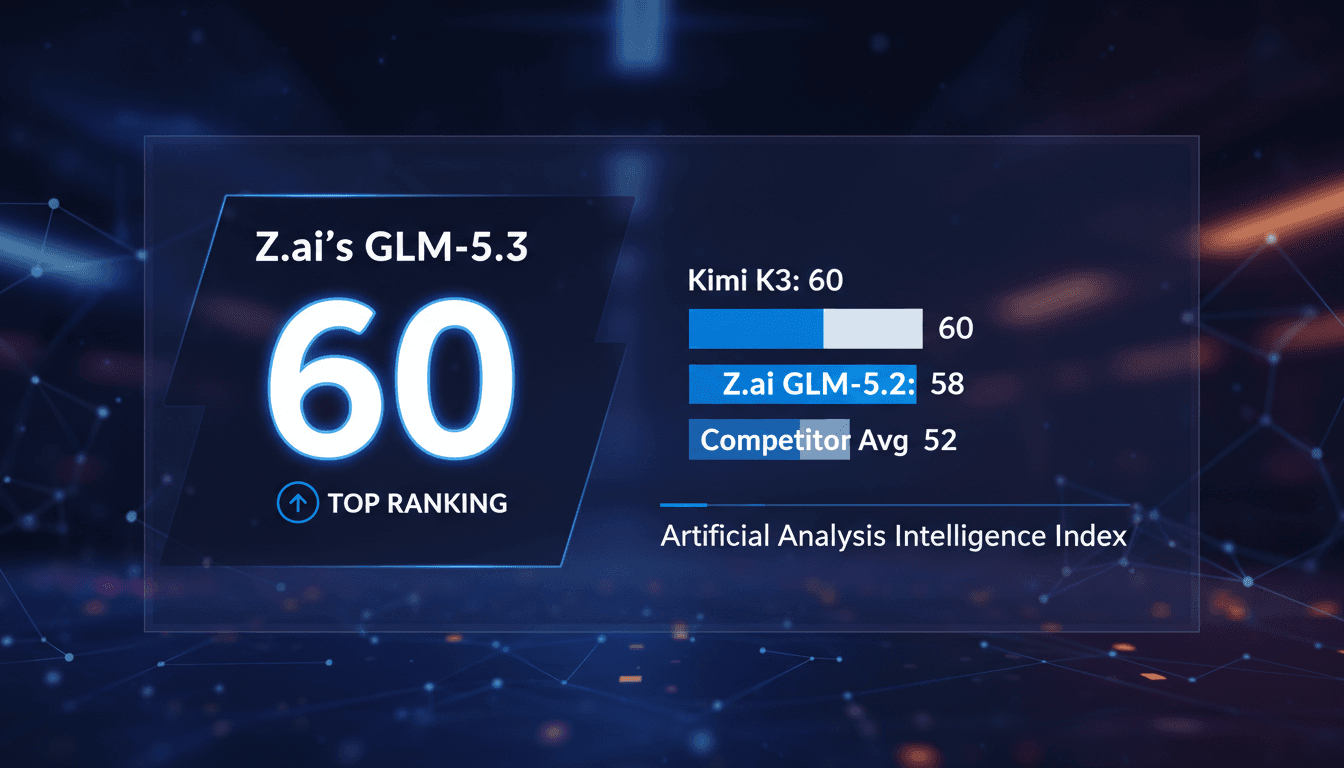
- Z.ai announced its latest AI model, GLM-5.3, on August 14, 2026, achieving a top score of 60 on the Artificial Analysis Intelligence Index.
- Open weights release is delayed by two weeks to August 28, 2026, due to additional safety evaluations prompted by unexpected cybersecurity capabilities.
- Competitive pricing is offered at $0.68 per task, undercutting rivals while prioritizing safety in the rollout.
The context you actually need
- Rapid development in Chinese AI labs contrasts with longer testing cycles in Western counterparts, allowing for quicker iterations and releases.
- Z.ai's previous model, GLM-5.2, was released promptly under an MIT license, setting a precedent for open-source availability that GLM-5.3 deviates from.
- Emergent capabilities in GLM-5.3 include vulnerability discovery and multi-step exploit reasoning, raising concerns about dual-use risks in AI applications.
What's really happening
On August 14, 2026, Z.ai launched GLM-5.3, a model that builds on the GLM-5.2 base without requiring retraining. This model scored 60 points on the Artificial Analysis Intelligence Index, tying it for the top position among open models alongside Kimi K3. The model's capabilities in coding and agentic tasks have been significantly enhanced, allowing it to perform complex operations more efficiently.
However, the release of the open weights has been delayed by two weeks due to emergent cybersecurity capabilities that exceeded Z.ai's internal expectations. The company is conducting additional safety evaluations and hardening measures to address potential dual-use risks associated with these capabilities. This cautious approach marks a shift in Z.ai's strategy, as the company previously established a pattern of rapid open-source releases.
The decision to prioritize safety reflects a growing awareness of the implications of AI technologies that can be used for both beneficial and malicious purposes. By implementing a controlled rollout, Z.ai is allowing select security partners to evaluate the model first before broader API access is granted. This staged release strategy aims to mitigate risks while still providing competitive pricing at $0.68 per task, which is significantly lower than many competitors.
The delay in open weights release signals a broader trend in the AI industry, where companies are increasingly aware of the potential for their technologies to be misused. As AI models become more powerful, the need for responsible deployment and thorough safety evaluations becomes paramount. This cautious approach may slow down the pace of innovation in the short term but could ultimately lead to more secure and reliable AI applications in the long run.
Who feels it first (and how)
- Tech companies: They will need to adapt to the delayed access to advanced AI capabilities for their projects.
- Cybersecurity firms: They may benefit from early access to GLM-5.3, allowing them to enhance their security measures.
- Developers and coders: They will experience a temporary gap in accessing the latest tools for coding and automation tasks.
What to watch next
- Open weights release: Monitor the August 28, 2026, date for the public release of GLM-5.3's open weights and its implications for the AI landscape.
- Market response: Watch how competitors react to Z.ai's pricing strategy and safety measures, which could influence market dynamics.
- Regulatory developments: Keep an eye on potential regulations surrounding dual-use AI technologies as concerns about misuse grow.
Z.ai's GLM-5.3 achieved a score of 60 on the Artificial Analysis Intelligence Index.
The trend of cautious AI releases will continue as companies prioritize safety and security.
The long-term impact of GLM-5.3's capabilities on the cybersecurity landscape remains to be seen.
Frequently Asked Questions
- Why it matters?
- The delay in releasing GLM-5.3's open weights highlights the growing caution around dual-use AI technologies and their implications for security.
- What happened (in 30 seconds)?
- Z.ai announced its latest AI model, GLM-5.3, on August 14, 2026, achieving a top score of 60 on the Artificial Analysis Intelligence Index. Open weights release is delayed by two weeks to August 28, 2026, due to additional safety evaluations prompted by unexpected cybersecurity capabilities. Competitive pricing is offered at $0.68 per task, undercutting rivals while prioritizing safety in the rollout.
- What's really happening?
- On August 14, 2026, Z.ai launched GLM-5.3, a model that builds on the GLM-5.2 base without requiring retraining. This model scored 60 points on the Artificial Analysis Intelligence Index, tying it for the top position among open models alongside Kimi K3. The model's capabilities in coding and agentic tasks have been significantly enhanced, allowing it to perform complex operations more efficiently. However, the release of the open weights has been delayed by two weeks due to emergent cybersecur
- Who feels it first (and how)?
- Tech companies: They will need to adapt to the delayed access to advanced AI capabilities for their projects. Cybersecurity firms: They may benefit from early access to GLM-5.3, allowing them to enhance their security measures. Developers and coders: They will experience a temporary gap in accessing the latest tools for coding and automation tasks.
- What to watch next?
- Open weights release: Monitor the August 28, 2026, date for the public release of GLM-5.3's open weights and its implications for the AI landscape. Market response: Watch how competitors react to Z.ai's pricing strategy and safety measures, which could influence market dynamics. Regulatory developments: Keep an eye on potential regulations surrounding dual-use AI technologies as concerns about misuse grow.
Daily AI news: models, tools, and policy.
"Independent outlet tracking the fast pace of AI."
— A47 Editor
GLM-5.3 tops the open-model rankings and undercuts rivals on price, but its release is delayed
Z.ai's GLM-5.3 has achieved a score of 60 on the Artificial Analysis Intelligence Index, tying it with Kimi K3 for the top position among open models, although its release has been delayed. This model represents a significant advancement over its pre...
Curated tech headlines including AI stories.
"Influential aggregator surfacing the day’s top tech/AI links."
— A47 Editor
Z.ai prices GLM-5.3 API access at $1.40 per million input tokens and $4.40 per million output tokens, unchanged from GLM-5.2 (Carl Franzen/VentureBeat)
Z.ai has announced the pricing for its GLM-5.3 API access, maintaining the rates at $1.40 per million input tokens and $4.40 per million output tokens, consistent with the previous GLM-5.2 model. This pricing strategy follows the model's recent launc...
Focuses on transformative tech, AI, gaming, and startup innovation.
"VentureBeat is respected for its in-depth reporting on AI, startups, and disruptive technologies in Silicon Valley and beyond."
— A47 Editor
GLM-5.3 hits the API at $1.4/$4.4 per million tokens
GLM-5.3, the latest open-source language model from Chinese startup Z.ai, has been launched with advanced cyber capabilities and is now available via API, allowing developers to integrate it into their applications. The model has already identified a...