
Dutch Data Protection Authority Fines Uber €825 Million for Automated Driver Account Suspensions
Here's what it means for you.
If you rely on automated systems for decision-making in your business, this ruling signals a need for enhanced human oversight and transparency.
Why it matters
This fine highlights the increasing regulatory scrutiny on automated decision-making processes across industries, particularly in the gig economy.
What happened (in 30 seconds)
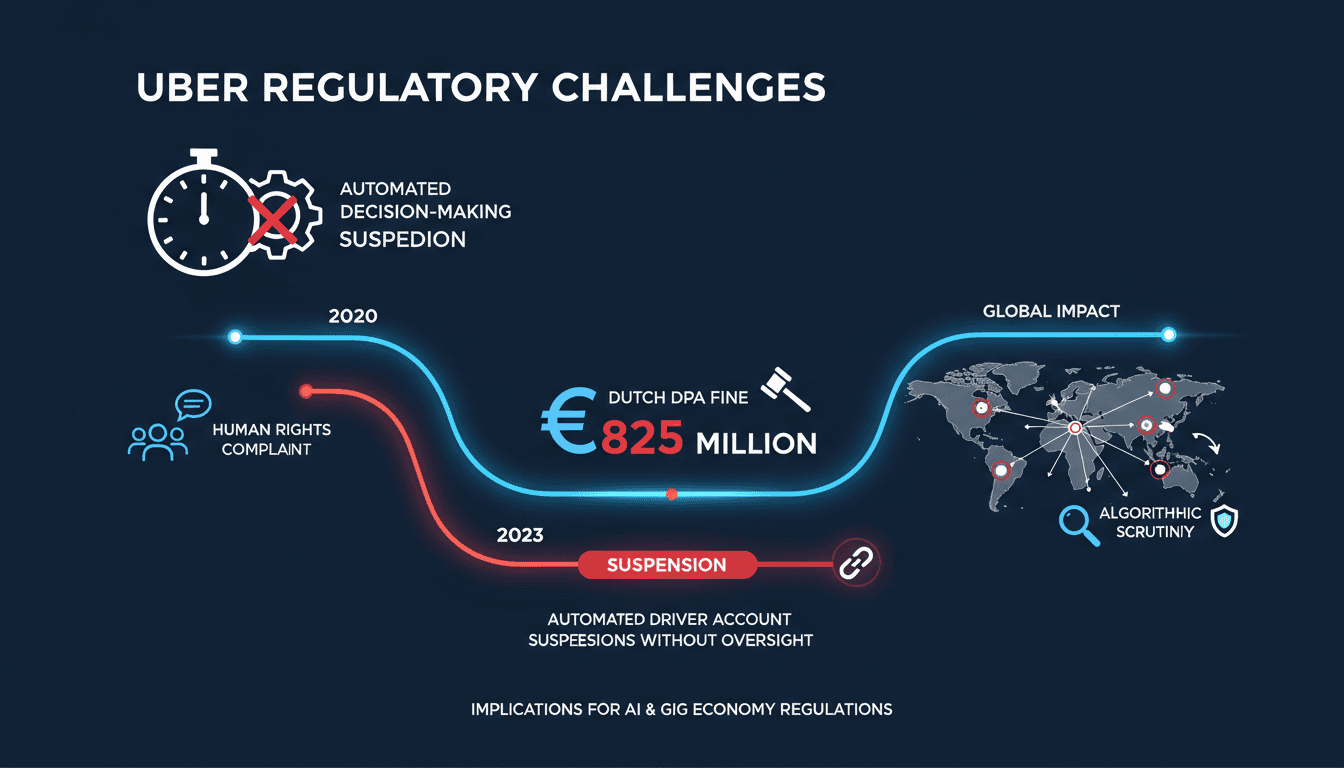
- On August 21, 2026, the Dutch Data Protection Authority fined Uber €824.99 million for violating GDPR regulations.
- The fine stems from practices between 2018 and 2022 where Uber suspended driver accounts based on automated algorithms without human review.
- Uber plans to appeal the decision, disputing the findings and asserting that current processes include human oversight.
The context you actually need
- The investigation began from a 2020 complaint by La Ligue des droits de l'Homme, representing over 170 drivers, highlighting issues with automated account management.
- Prior penalties against Uber include €10 million in 2023 for inadequate driver information and €290 million in 2024 for unlawful data transfers to the U.S.
- The ruling reinforces GDPR Article 22, which prohibits significant automated decisions without human intervention, emphasizing the need for transparency and accountability.
What's really happening
The Dutch Data Protection Authority's fine against Uber is a significant moment in the ongoing evolution of data protection laws, particularly regarding automated decision-making. Between 2018 and 2022, Uber's reliance on algorithmic systems to manage driver accounts led to numerous suspensions based on perceived fraud or performance issues. These actions were taken without any human oversight, raising serious concerns about the fairness and transparency of such automated processes.
The core of the issue lies in the lack of safeguards that GDPR mandates for automated decision-making. Article 22 of the GDPR explicitly prohibits decisions that have legal or similarly significant effects on individuals unless they are based on explicit consent or are subject to appropriate safeguards. The Dutch regulator found that Uber's practices did not meet these requirements, leading to the hefty fine.
Uber's defense hinges on the assertion that the majority of suspensions were temporary and that permanent deactivations involved some level of human review. However, the regulator's findings suggest that the automated systems lacked sufficient transparency and that drivers had inadequate means to appeal their suspensions. This ruling not only impacts Uber but also sets a precedent for other companies relying on similar automated systems, particularly in the gig economy.
As regulatory bodies globally begin to scrutinize automated decision-making more closely, businesses must reassess their reliance on algorithms for critical decisions. The implications extend beyond Uber, as companies across various sectors may face increased pressure to implement human oversight in their automated processes. This shift could lead to a more balanced approach to technology and human involvement, ultimately fostering greater trust among users and stakeholders.
Who feels it first (and how)
- Uber drivers: Directly affected by account suspensions and the potential for improved oversight in future operations.
- Gig economy platforms: Companies like Lyft and DoorDash may face similar scrutiny and need to adapt their practices.
- Regulatory bodies: Increased workload and responsibility to enforce compliance with GDPR and similar regulations globally.
What to watch next
- Uber's appeal process: The outcome could influence how other companies approach automated decision-making and compliance with GDPR.
- Regulatory changes in the EU: Watch for potential updates to GDPR or new regulations that may arise in response to this ruling.
- Global regulatory trends: Increased scrutiny on automated systems in other regions, including the UAE, could lead to similar enforcement actions.
The fine imposed on Uber is the second-largest under GDPR, highlighting regulatory focus on automated decision-making.
Other gig economy platforms will face increased scrutiny and may need to revise their automated processes.
The long-term impact on Uber's operations and driver relations as the appeal unfolds.
Frequently Asked Questions
- Why it matters?
- This fine highlights the increasing regulatory scrutiny on automated decision-making processes across industries, particularly in the gig economy.
- What happened (in 30 seconds)?
- On August 21, 2026, the Dutch Data Protection Authority fined Uber €824.99 million for violating GDPR regulations. The fine stems from practices between 2018 and 2022 where Uber suspended driver accounts based on automated algorithms without human review. Uber plans to appeal the decision, disputing the findings and asserting that current processes include human oversight.
- What's really happening?
- The Dutch Data Protection Authority's fine against Uber is a significant moment in the ongoing evolution of data protection laws, particularly regarding automated decision-making. Between 2018 and 2022, Uber's reliance on algorithmic systems to manage driver accounts led to numerous suspensions based on perceived fraud or performance issues. These actions were taken without any human oversight, raising serious concerns about the fairness and transparency of such automated processes. The core of
- Who feels it first (and how)?
- Uber drivers: Directly affected by account suspensions and the potential for improved oversight in future operations. Gig economy platforms: Companies like Lyft and DoorDash may face similar scrutiny and need to adapt their practices. Regulatory bodies: Increased workload and responsibility to enforce compliance with GDPR and similar regulations globally.
- What to watch next?
- Uber's appeal process: The outcome could influence how other companies approach automated decision-making and compliance with GDPR. Regulatory changes in the EU: Watch for potential updates to GDPR or new regulations that may arise in response to this ruling. Global regulatory trends: Increased scrutiny on automated systems in other regions, including the UAE, could lead to similar enforcement actions.
Tech news, hardware, and AI tools coverage.
"PC/tech site increasingly covering AI hardware and apps."
— A47 Editor
Uber hit with near-$1 billion fine after algorithms suspended drivers without human review
The Dutch Data Protection Authority has imposed a fine of approximately $1 billion on Uber for using automated systems that suspended drivers without human oversight between 2018 and 2022. This penalty stems from allegations that the company deactiva...
Startup news with frequent AI coverage.
"Covers launches, funding, and product updates in AI."
— A47 Editor
Uber faces fine of nearly $1B over automated driver suspensions
Uber is facing a significant fine of €825 million (approximately $1 billion) imposed by the Dutch Data Protection Authority for utilizing automated systems that deactivated driver accounts without adequate notification. This penalty is the second-lar...
RT is a Russian state-funded network covering global events from a Russian perspective.
"RT is widely criticized for promoting pro-Kremlin narratives and is considered by many to be a state propaganda outlet."
— A47 Editor
Dutch watchdog fines Uber nearly $1 billion
A Dutch privacy watchdog has imposed a fine of €825 million on Uber for employing automated systems to suspend drivers without sufficient human oversight. This decision highlights concerns regarding the company's practices in managing its driver work...
Consumer technology news with AI coverage.
"Gadget and tech site reporting on AI in products."
— A47 Editor
Uber hit with a nearly $1 billion fine for automatically deactivating drivers in Europe
Dutch data protection authorities have imposed a fine of 824.9 million euros (approximately $1 billion) on Uber for violating the General Data Protection Regulation (GDPR) by using automated software to deactivate driver accounts without human oversi...
Covers consumer technology, electronics, gadgets, and product reviews.
"Engadget is a trusted source for gadget reviews and consumer tech news, known for its hands-on analysis and industry coverage."
— A47 Editor
Uber hit with a nearly $1 billion fine for automatically deactivating drivers in Europe
Dutch data protection authorities have imposed a fine of 824.9 million euros (approximately $1 billion) on Uber for violating the General Data Protection Regulation (GDPR) by using automated software to deactivate driver accounts without human oversi...