
Abu Dhabi Launches Smart Ambulances for Enhanced Emergency Response
Why it matters
This initiative represents a critical advancement in emergency healthcare, leveraging technology to enhance patient outcomes and operational efficiency.
What happened (in 30 seconds)
- On August 21, 2026, Abu Dhabi launched 18 smart ambulances equipped with real-time data integration.
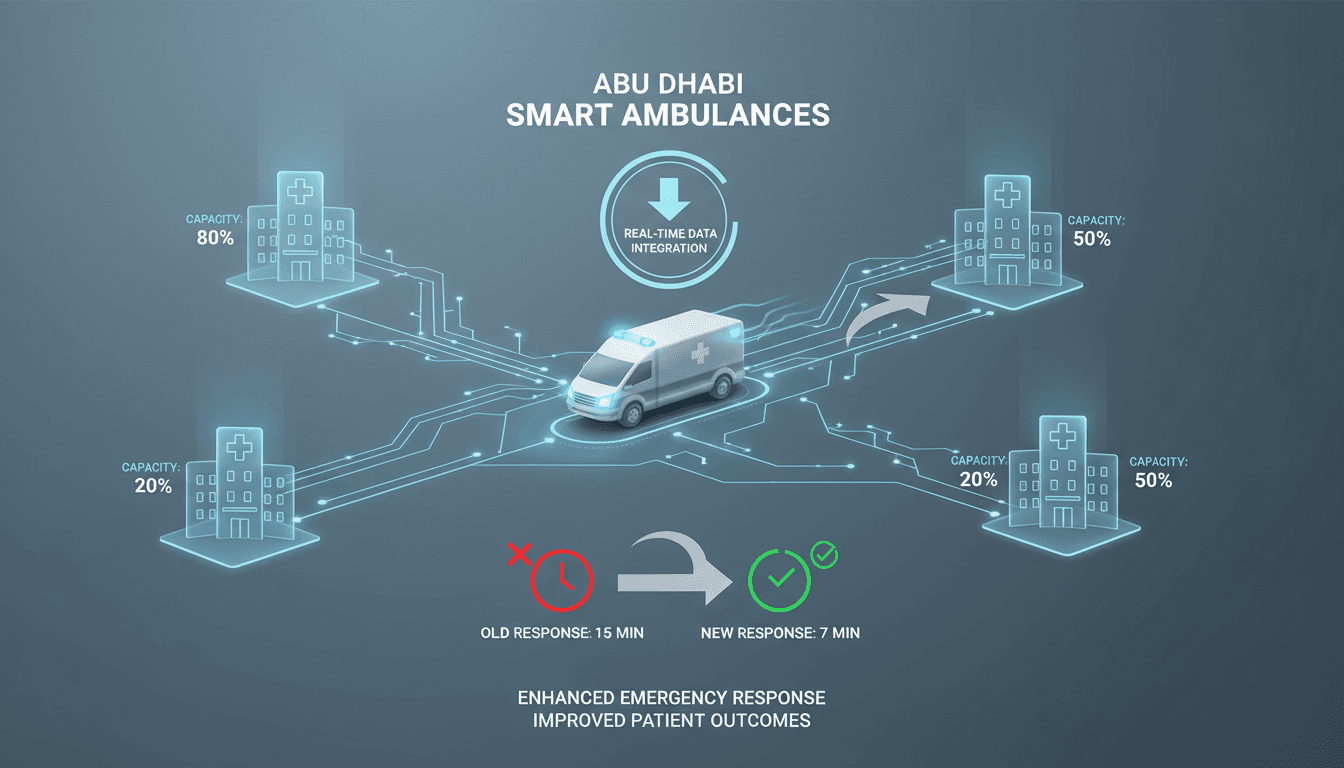
- The system allows for targeted routing of patients to hospitals based on current capacity and specialist availability.
- This development aims to reduce emergency response inefficiencies, particularly for time-sensitive conditions like heart attacks.
The context you actually need
- The control center, established in December 2024, consolidates oversight of the healthcare system, including ambulance movements and hospital services.
- Smart Ambulance Services Systems were initially introduced at GITEX Global 2024, laying the groundwork for live data transmission.
- The ambulances are categorized into critical-care, maternity/neonatal, and bariatric vehicles, each designed for specific patient needs.
What's really happening
Abu Dhabi's deployment of smart ambulances marks a significant leap in emergency medical services, driven by the integration of real-time data and advanced technology. The initiative, spearheaded by the Department of Health – Abu Dhabi and the Abu Dhabi Civil Defence Authority, aims to address longstanding inefficiencies in emergency response systems.
The smart ambulances are equipped with capabilities that allow them to transmit vital signs and other critical data back to a central control room. This real-time communication enables paramedics to make informed decisions about where to transport patients, ensuring they are directed to facilities that can provide the necessary care. For instance, if a hospital is at capacity or lacks specific equipment, the system can reroute the ambulance to a more suitable location, a significant improvement over the previous practice of transporting patients to the nearest hospital without prior coordination.
This system is particularly crucial for time-sensitive medical emergencies, such as STEMI heart attacks, where every minute counts. The initiative has already demonstrated a reduction in door-to-balloon time for STEMI patients from 97 minutes to 49 minutes, approaching the international benchmark of 90 minutes. This improvement not only enhances survival rates but also reflects a broader trend towards data-driven healthcare solutions.
The smart ambulances are categorized into three specialized types: critical-care vehicles for major trauma and pediatric intensive care, maternity and neonatal units for deliveries and resuscitation, and bariatric vehicles designed for patients up to 300 kg. Each type is equipped with the necessary tools and space to handle specific medical situations, further optimizing emergency response.
The establishment of the control center in December 2024 was a pivotal step in consolidating oversight of Abu Dhabi's healthcare system. It allows for better coordination of ambulance movements, hospital services, and even blood supplies, creating a more integrated approach to emergency care. This system emphasizes ongoing data-driven oversight, extending beyond immediate emergency responses to include post-discharge services, which could further enhance patient outcomes.
As this initiative unfolds, it sets a precedent for other regions, including Dubai, which is also modernizing its ambulance services. The Dubai Corporation for Ambulance Services is exploring similar technologies, including self-driving ambulance pods, indicating a regional shift towards smarter healthcare solutions.
Who feels it first (and how)
- Patients experiencing emergencies in Abu Dhabi will benefit from faster and more efficient care.
- Healthcare providers will have improved data access, allowing for better decision-making and resource allocation.
- Emergency responders will experience enhanced coordination and communication, leading to more effective interventions.
What to watch next
- Patient outcomes: Monitor changes in survival rates and recovery times for critical conditions as the system becomes fully operational.
- Inter-emirate transfers: Watch for improvements in patient transfers between Abu Dhabi and Dubai, as both cities modernize their emergency services.
- Expansion of services: Keep an eye on potential expansions of the smart ambulance program to include more vehicles or additional features based on initial performance data.
The smart ambulance system is operational and has begun to reduce response times for critical emergencies.
Other regions in the UAE may adopt similar technologies, leading to a nationwide improvement in emergency healthcare.
The long-term impact on overall healthcare costs and resource allocation remains to be seen.
Frequently Asked Questions
- Why it matters?
- This initiative represents a critical advancement in emergency healthcare, leveraging technology to enhance patient outcomes and operational efficiency.
- What happened (in 30 seconds)?
- On August 21, 2026, Abu Dhabi launched 18 smart ambulances equipped with real-time data integration. The system allows for targeted routing of patients to hospitals based on current capacity and specialist availability. This development aims to reduce emergency response inefficiencies, particularly for time-sensitive conditions like heart attacks.
- What's really happening?
- Abu Dhabi's deployment of smart ambulances marks a significant leap in emergency medical services, driven by the integration of real-time data and advanced technology. The initiative, spearheaded by the Department of Health – Abu Dhabi and the Abu Dhabi Civil Defence Authority, aims to address longstanding inefficiencies in emergency response systems. The smart ambulances are equipped with capabilities that allow them to transmit vital signs and other critical data back to a central control ro
- Who feels it first (and how)?
- Patients experiencing emergencies in Abu Dhabi will benefit from faster and more efficient care. Healthcare providers will have improved data access, allowing for better decision-making and resource allocation. Emergency responders will experience enhanced coordination and communication, leading to more effective interventions.
- What to watch next?
- Patient outcomes: Monitor changes in survival rates and recovery times for critical conditions as the system becomes fully operational. Inter-emirate transfers: Watch for improvements in patient transfers between Abu Dhabi and Dubai, as both cities modernize their emergency services. Expansion of services: Keep an eye on potential expansions of the smart ambulance program to include more vehicles or additional features based on initial performance data.
UAE-based English-language newspaper covering regional politics, economics, and global affairs.
"The National reflects Emirati policy perspectives while maintaining international editorial standards."
— A47 Editor
Could Abu Dhabi's 'smart ambulances' transform rapid-response health care?
Abu Dhabi has introduced a fleet of 18 specialized smart ambulances designed to enhance emergency medical services across the emirate. These ambulances are equipped with advanced technology to improve rapid-response healthcare, aiming to bring emerge...
English-language coverage focused on UAE news, government updates, and domestic affairs.
"Emirates 24|7 reflects a mainstream UAE editorial perspective with strong emphasis on official and domestic developments."
— A47 Editor
Abu Dhabi unveils new specialised smart ambulances to bring advanced emergency care closer to community
Abu Dhabi has introduced a new fleet of 18 specialised smart ambulances, developed by the Department of Health
UAE-based newspaper covering Gulf politics, society, and international developments.
"Gulf News is one of the UAE’s most prominent English-language publications."
— A47 Editor
Abu Dhabi launches 18 smart ambulances across three categories
Abu Dhabi has launched 18 smart ambulances categorized into three types, enhancing emergency medical services across the emirate. This initiative aims to improve response times and the overall efficiency of healthcare delivery in critical situations.
A curated Gulf News feed featuring major stories across news, business, opinion, and lifestyle.
"Gulf News is a major UAE newspaper whose featured stories feed reflects a broad editorial mix shaped for a Gulf audience."
— A47 Editor