
Tiangong Ultra Breaks 100-Meter Sprint Record at World Humanoid Robot Games
Here's what it means for you.
As humanoid robotics advance, industries may soon leverage these technologies for efficiency and innovation.
Why it matters
The Tiangong Ultra's record-setting performance highlights significant strides in robotics, potentially reshaping labor markets and technological applications.
What happened (in 30 seconds)
- Tiangong Ultra shattered the 100-meter sprint record at the World Humanoid Robot Games in Beijing, clocking in at 8.64 seconds.
- Engineering advancements allowed the robot to improve its time from 21.50 seconds in 2025 to 8.64 seconds in 2026.
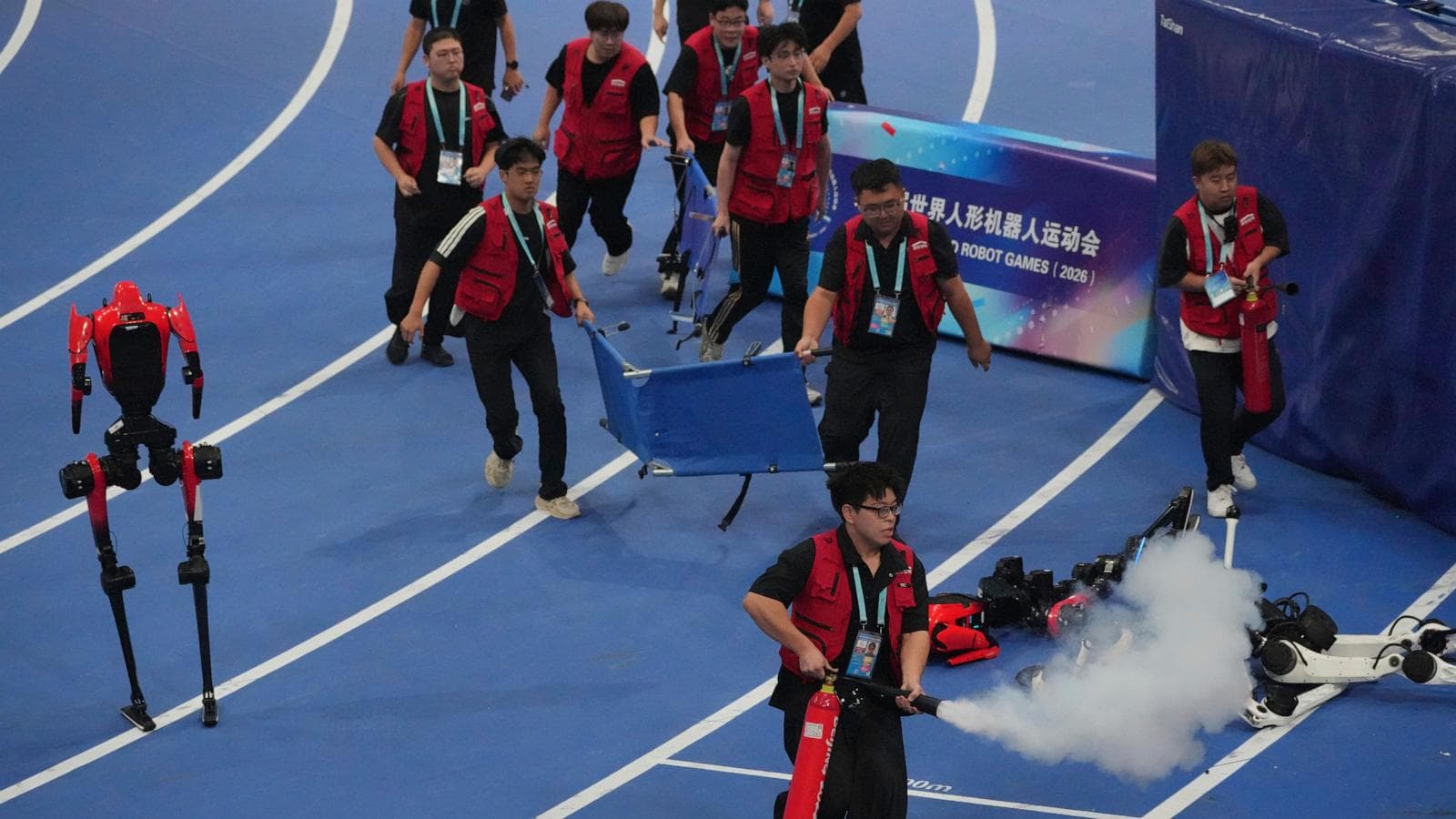
- Multiple robots faced recovery challenges post-race, indicating the physical limits and risks of current humanoid designs.
The context you actually need
- The World Humanoid Robot Games serve as a competitive platform showcasing China's rapid advancements in humanoid robotics amid global technological competition.
- The Tiangong Ultra model, developed by the Beijing Innovation Center of Humanoid Robotics, has undergone significant engineering refinements since its debut.
- The event included not only athletic competitions but also practical applications, emphasizing the dual focus on performance and real-world utility.
What's really happening
The World Humanoid Robot Games, held in Beijing, have become a focal point for demonstrating advancements in robotics technology. The Tiangong Ultra's record-breaking sprint of 8.64 seconds on August 26, 2026, is a testament to the rapid evolution of bipedal robots. This event is not merely a showcase of speed; it reflects a broader trend in robotics where engineering refinements lead to significant performance improvements.
The competition opened with Tiangong Ultra recording a remarkable 9.39 seconds, already surpassing Usain Bolt's human record of 9.58 seconds. This initial performance set the stage for a series of incremental improvements, culminating in the final record. The engineering team behind Tiangong Ultra has focused on optimizing the robot's mechanics, enhancing its agility, and improving its balance—critical factors for sprinting.
However, the event also revealed the challenges that come with pushing the limits of robotics. Several robots, including Tiangong Ultra, crashed into barriers during the race, leading to recovery incidents that required fire extinguishers and medical attention. This highlights the inherent risks in developing high-performance humanoid robots, where the pursuit of speed can compromise safety and reliability.
The implications of these advancements extend beyond the realm of sports. As humanoid robots become more capable, industries may begin to explore their applications in various sectors, including manufacturing, logistics, and emergency response. The ability to perform tasks traditionally done by humans could lead to increased efficiency and reduced labor costs. However, this also raises questions about job displacement and the future of work.
Moreover, the competition serves as a reminder of the global race in robotics technology. Countries are investing heavily in research and development to gain a competitive edge. China's focus on humanoid robotics is part of a broader strategy to position itself as a leader in advanced technologies. As these developments unfold, the potential for collaboration and competition among nations will shape the future landscape of robotics.
Who feels it first (and how)
- Tech companies: They may explore partnerships or investments in humanoid robotics for automation solutions.
- Manufacturers: Industries reliant on labor may begin integrating humanoid robots to enhance productivity.
- Workers in manual jobs: They could face job displacement as robots take over tasks traditionally performed by humans.
- Research institutions: They will likely increase funding and focus on robotics research to keep pace with advancements.
What to watch next
- Industry adoption rates: Monitor how quickly sectors begin integrating humanoid robots into their operations, as this will indicate market readiness.
- Regulatory developments: Watch for government policies regarding the use of humanoid robots in workplaces, which could shape their deployment.
- Technological breakthroughs: Keep an eye on advancements in AI and robotics that could further enhance humanoid capabilities and safety.
The Tiangong Ultra's record time of 8.64 seconds is verified and documented.
Industries will begin exploring the integration of humanoid robots for efficiency.
The long-term impact on job markets and regulatory responses to humanoid robotics remains uncertain.
Frequently Asked Questions
- Why it matters?
- The Tiangong Ultra's record-setting performance highlights significant strides in robotics, potentially reshaping labor markets and technological applications.
- What happened (in 30 seconds)?
- Tiangong Ultra shattered the 100-meter sprint record at the World Humanoid Robot Games in Beijing, clocking in at 8.64 seconds. Engineering advancements allowed the robot to improve its time from 21.50 seconds in 2025 to 8.64 seconds in 2026. Multiple robots faced recovery challenges post-race, indicating the physical limits and risks of current humanoid designs.
- What's really happening?
- The World Humanoid Robot Games, held in Beijing, have become a focal point for demonstrating advancements in robotics technology. The Tiangong Ultra's record-breaking sprint of 8.64 seconds on August 26, 2026, is a testament to the rapid evolution of bipedal robots. This event is not merely a showcase of speed; it reflects a broader trend in robotics where engineering refinements lead to significant performance improvements. The competition opened with Tiangong Ultra recording a remarkable 9.39
- Who feels it first (and how)?
- Tech companies: They may explore partnerships or investments in humanoid robotics for automation solutions. Manufacturers: Industries reliant on labor may begin integrating humanoid robots to enhance productivity. Workers in manual jobs: They could face job displacement as robots take over tasks traditionally performed by humans. Research institutions: They will likely increase funding and focus on robotics research to keep pace with advancements.
- What to watch next?
- Industry adoption rates: Monitor how quickly sectors begin integrating humanoid robots into their operations, as this will indicate market readiness. Regulatory developments: Watch for government policies regarding the use of humanoid robots in workplaces, which could shape their deployment. Technological breakthroughs: Keep an eye on advancements in AI and robotics that could further enhance humanoid capabilities and safety.
Technology and innovation coverage, including consumer tech and digital transformation stories.
"Emirates 24|7 technology coverage often highlights practical tech developments with relevance to Gulf readers and businesses."
— A47 Editor
No metabolic 'wall' but a real wall: China’s robots show the limits of human speed
A Chinese humanoid robot, Tiangong Ultra, has set a new record in the 100-meter sprint by completing the distance in 8.64 seconds, surpassing Usain Bolt's previous world record of 9.58 seconds. This achievement was showcased during the World Humanoid...
Technology industry news and policy coverage.
"Fox News is a highly influential conservative news outlet known for right-leaning political commentary and coverage."
— A47 Editor
Humanoid robot outruns Usain Bolt record as China races ahead
At the World Humanoid Robot Games in Beijing, the humanoid robot TianGong Ultra set a new record by completing a 100-meter sprint in 9.32 seconds, surpassing last year's winner by a significant margin. This achievement highlights the rapid advancemen...
Conservative-leaning coverage of current events.
"Fox News is a highly influential conservative news outlet known for right-leaning political commentary and coverage."
— A47 Editor
Humanoid robot outruns Usain Bolt record as China races ahead
At the World Humanoid Robot Games in Beijing, the X-Humanoid robot, TianGong Ultra, set a remarkable new record by completing a 100-meter sprint in just 9.32 seconds, surpassing last year's champion by a significant margin.
Technology innovations, startups, and trends.
"ABC News delivers broad national coverage with a mainstream editorial stance, focusing on accessibility and balanced reporting."
— A47 Editor
A robot sprinter shatters a 100-meter record again as sparks fly at China’s robot competition
A robot sprinter has once again broken the 100-meter record at the World Humanoid Robot Games held in Beijing, showcasing its advanced capabilities. This event highlighted the rapid progress in robotics, with the robot completing the distance in an i...
Regional and international reporting focused on Middle Eastern politics, diplomacy, and economics.
"Asharq Al-Awsat is a Saudi-owned international newspaper reflecting mainstream Gulf political perspectives."
— A47 Editor
Robot Olympics Ends with Humanoid’s 8.64-Second 100m, Nearly a Second Faster Than Bolt
The Robot Olympics concluded with a remarkable performance by a humanoid robot, which completed the 100-meter race in 8.64 seconds, nearly a second faster than the world-renowned sprinter Usain Bolt. This event showcased advancements in robotics and ...
Technology innovations, startups, and trends.
"ABC News delivers broad national coverage with a mainstream editorial stance, focusing on accessibility and balanced reporting."
— A47 Editor
A Chinese humanoid robot sets a new 100-meter sprint record at Beijing Games
A Chinese humanoid robot has set a new record in the 100-meter sprint, completing the distance in 8.86 seconds during the recent Beijing Games. This achievement highlights the advancements in robotics technology and showcases the capabilities of huma...