
NASA's Nancy Grace Roman Space Telescope Set for Launch in 2026
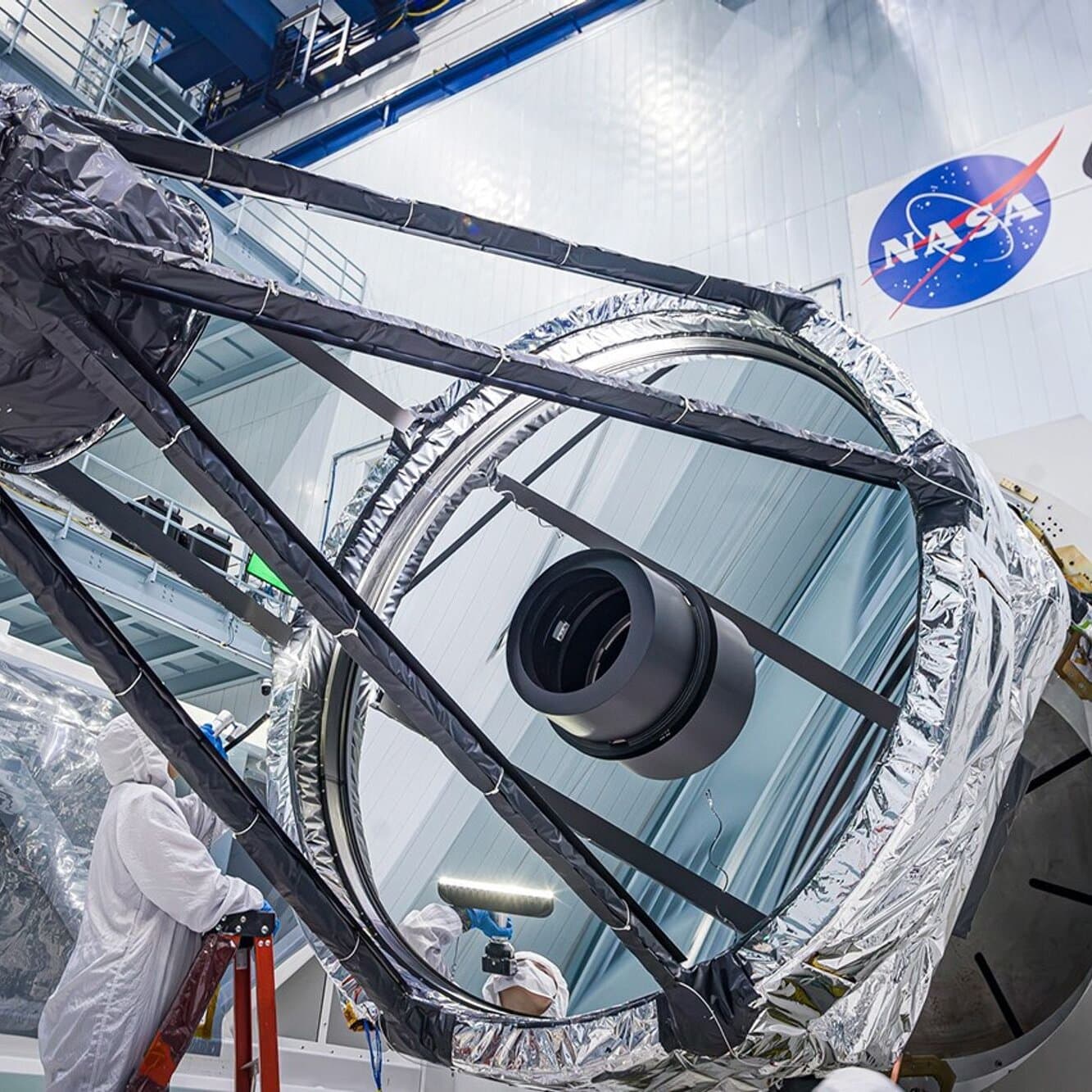
Here's what it means for you.
This mission could redefine our understanding of the universe, impacting fields from technology to data analysis.
What happened
NASA's Nancy Grace Roman Space Telescope is set to launch on August 30, 2026, to conduct wide-field cosmic surveys.
The Context
- Legacy of Exploration: The Roman Telescope builds on the successes of Hubble and James Webb, aiming to fill gaps in our understanding of cosmic expansion and dark matter.
- Advanced Capabilities: With a field of view 100 times wider than Hubble, it will capture vast areas of the sky, significantly speeding up astronomical surveys.
- Global Collaboration: While no localized impacts for Dubai residents have been identified, the data generated will support international research efforts.
The Number
wider field of view than Hubble, enabling the telescope to survey the universe with unprecedented efficiency, which could lead to breakthroughs in various scientific fields.
Takeaway
Expect transformative insights into dark energy and exoplanet demographics as the mission unfolds, with science operations commencing in early 2027.
Space science news, astronomy updates, and spaceflight developments.
"Space.com delivers space science news, astronomy updates, and spaceflight developments with engaging coverage."
— A47 Editor
What time will SpaceX launch NASA's Roman Space Telscope on Aug. 30? (Full mission timeline)
SpaceX is set to launch NASA's Nancy Grace Roman Space Telescope aboard a Falcon Heavy rocket on August 30, 2026, from Cape Canaveral. This mission marks a significant milestone in astronomical exploration, as the telescope aims to enhance our unders...
News in science and technology, with a focus on consumer and innovation stories.
"Popular Science simplifies complex scientific topics for general audiences and celebrates innovation."
— A47 Editor
How NASA’s new Nancy Grace Roman space telescope compares with Hubble and Webb
NASA's Nancy Grace Roman Space Telescope is set to launch on August 30, 2026, promising to capture unprecedented images of the universe, surpassing the capabilities of both the Hubble Space Telescope and the James Webb Space Telescope (JWST). This ne...
Scientific research, space, environment, and health coverage.
"The New York Times is a globally recognized newspaper offering authoritative reporting with a center-left editorial stance."
— A47 Editor
NASA’s Nancy Grace Roman Telescope Promises a Breakthrough in Cosmic Exploration
NASA's Nancy Grace Roman Space Telescope is set to launch from Cape Canaveral on August 30, 2026, marking a significant advancement in cosmic exploration. This telescope, which has recently arrived at the Kennedy Space Center for final preparations, ...
Scientific discoveries, health, technology, and natural phenomena.
"Live Science reports on scientific discoveries, health, technology, and natural phenomena with a popular science tone."
— A47 Editor
NASA's Nancy Grace Roman Space Telescope is set to launch this weekend. When will we see its first photos?
NASA's Nancy Grace Roman Space Telescope is scheduled to launch from Kennedy Space Center in Florida on August 30, 2026. This advanced observatory aims to enhance astronomical observations by studying exoplanets, distant galaxies, dark matter, and ot...
Science and technology stories including AI.
"Longstanding science magazine with thoughtful AI coverage."
— A47 Editor
NASA’s Roman Space Telescope will rewrite how we study the universe
NASA has announced the launch of the Nancy Grace Roman Space Telescope on August 30, 2026, which is eight months ahead of schedule. This next-generation observatory features a field of view 100 times larger than that of the Hubble Space Telescope, al...
Scientific research, technology, environment, and society.
"Scientific American is one of the oldest and most authoritative science magazines, known for deep dives into science, technology, and society."
— A47 Editor
NASA’s Roman Space Telescope will rewrite how we study the universe
NASA has announced the launch of the Nancy Grace Roman Space Telescope on August 30, 2026, which is eight months ahead of schedule. This next-generation observatory features a field of view 100 times larger than that of the Hubble Space Telescope, al...
Space science news, astronomy updates, and spaceflight developments.
"Space.com delivers space science news, astronomy updates, and spaceflight developments with engaging coverage."
— A47 Editor
Trump tried to scrap NASA's Roman Space Telescope last year. Now it's ready to launch
NASA's Nancy Grace Roman Space Telescope is set to launch on August 30, 2026, after nearly facing cancellation due to a leaked budget proposal from former President Trump last year. The telescope has now arrived at the Kennedy Space Center in Florida...