
Pew Research Center Reports Significant Rise in AI-Generated Web Content Since ChatGPT Launch
Here's what it means for you.
As AI-generated content becomes more prevalent, understanding its implications is crucial for navigating the evolving digital landscape.
Why it matters
The rise of AI-authored content is reshaping how information is created, consumed, and monetized across industries.
What happened (in 30 seconds)
- Pew Research Center released an analysis showing a significant increase in AI-generated text since the launch of ChatGPT in November 2022.
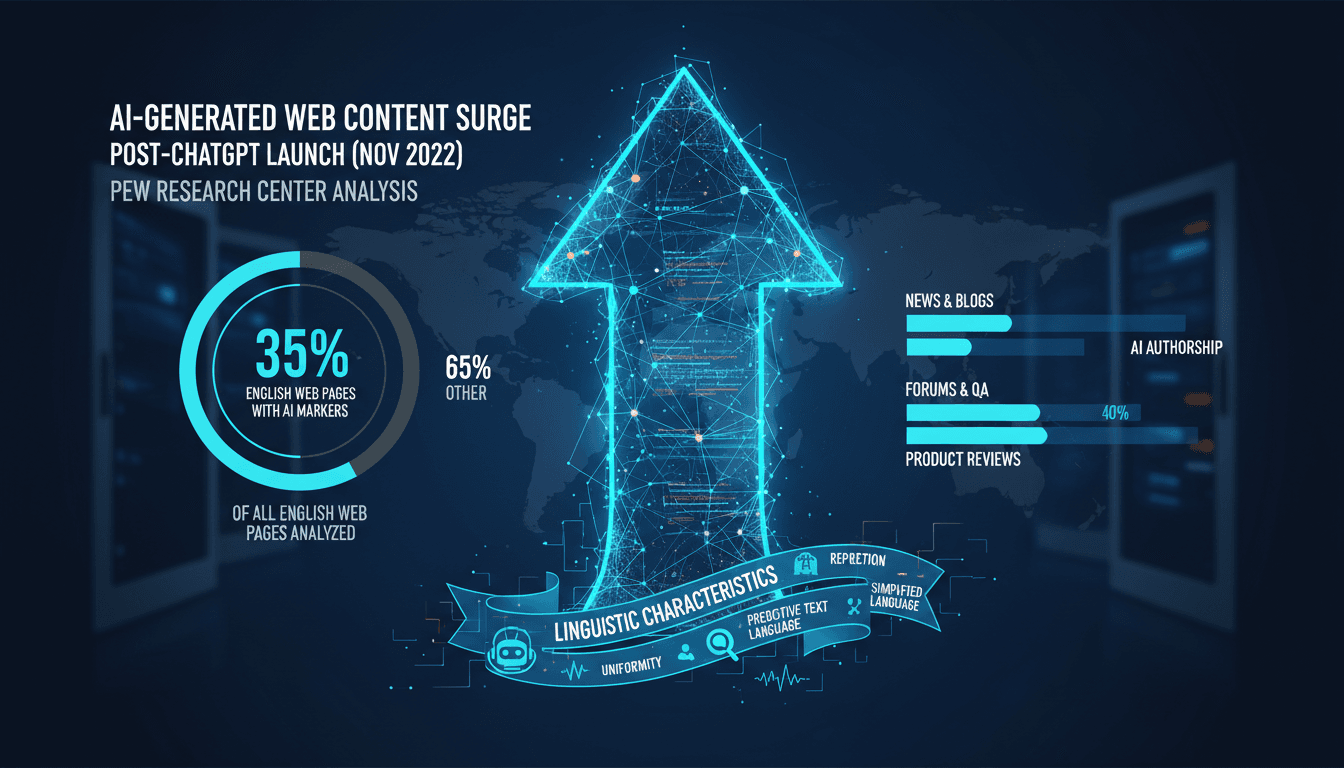
- Over one-third of web pages published after ChatGPT's release exhibit substantial AI authorship markers, indicating widespread adoption.
- Commercial domains are leading the trend, with AI content prevalence approximately ten times higher than educational or governmental sites.
The context you actually need
- ChatGPT's launch in November 2022 marked a turning point for accessible generative AI, leading to rapid integration into content workflows.
- AI detection tools like Open Pangram and archives such as Common Crawl have enabled large-scale analysis of web content, revealing evolving linguistic patterns.
- Linguistic markers in AI-generated text, such as increased use of em dashes and Oxford commas, indicate a shift in writing styles influenced by AI.
What's really happening
Since the launch of ChatGPT, the landscape of web content has transformed dramatically. Initially, AI authorship signals were low, but by mid-2026, the prevalence of AI-generated content reached 10% across sampled pages. For pages published after ChatGPT's release, this figure soared to over one-third, highlighting a rapid adoption of generative AI tools among content creators.
The analysis by Pew Research Center, which examined nearly 500,000 English-language web pages, underscores a significant trend: commercial domains are leading the charge in AI content creation. These sites exhibit AI authorship rates approximately ten times higher than educational (.edu) or governmental (.gov) domains. This disparity suggests that businesses are leveraging AI to enhance productivity and reduce costs, while educational and governmental entities may be slower to adopt these technologies due to regulatory or ethical considerations.
The linguistic patterns emerging from AI-generated content are noteworthy. The frequency of certain markers, such as em dashes, has doubled, while the use of Oxford commas has increased by 63%. Additionally, vocabulary choices favored by AI, like "delve," have more than doubled since 2023. These changes reflect not only the capabilities of AI but also its influence on writing styles and norms across the web.
Despite the rapid growth of AI-generated content, there has been little to no regulatory response from governments. This lack of oversight may lead to further proliferation of AI tools in content creation, raising questions about the quality and authenticity of information available online. The market has responded with a surge in AI detection tools and studies corroborating Pew's findings, such as research from Imperial College London, which noted that 35% of new websites are AI-generated. This trend towards textual uniformity could have significant implications for the diversity of voices and perspectives in digital content.
As AI continues to evolve, the implications for content creators, marketers, and consumers will be profound. The ability to produce high-quality content quickly and efficiently may lead to an oversaturation of similar content, making it challenging for unique voices to stand out. Furthermore, the reliance on AI-generated content raises ethical questions about authorship, accountability, and the potential for misinformation.
Who feels it first (and how)
- Content creators: Writers and marketers may find their roles evolving as AI tools become integral to content production.
- Businesses: Companies leveraging AI for content creation can expect increased efficiency but must navigate potential quality issues.
- Consumers: Readers may encounter a more uniform web landscape, impacting their ability to find diverse and authentic information.
What to watch next
- Regulatory developments: Keep an eye on potential government responses to the rise of AI-generated content, which could shape industry standards.
- Market shifts: Watch for the growth of AI detection tools and their impact on content authenticity and trustworthiness.
- Linguistic trends: Monitor changes in writing styles and norms as AI continues to influence content creation across various sectors.
AI-generated content is on the rise, particularly in commercial domains.
The trend will continue, leading to increased competition among content creators and potential regulatory scrutiny.
The long-term impact on content diversity and quality remains uncertain as AI tools evolve.
Frequently Asked Questions
- Why it matters?
- The rise of AI-authored content is reshaping how information is created, consumed, and monetized across industries.
- What happened (in 30 seconds)?
- Pew Research Center released an analysis showing a significant increase in AI-generated text since the launch of ChatGPT in November 2022. Over one-third of web pages published after ChatGPT's release exhibit substantial AI authorship markers, indicating widespread adoption. Commercial domains are leading the trend, with AI content prevalence approximately ten times higher than educational or governmental sites.
- What's really happening?
- Since the launch of ChatGPT, the landscape of web content has transformed dramatically. Initially, AI authorship signals were low, but by mid-2026, the prevalence of AI-generated content reached 10% across sampled pages. For pages published after ChatGPT's release, this figure soared to over one-third, highlighting a rapid adoption of generative AI tools among content creators. The analysis by Pew Research Center, which examined nearly 500,000 English-language web pages, underscores a signific
- Who feels it first (and how)?
- Content creators: Writers and marketers may find their roles evolving as AI tools become integral to content production. Businesses: Companies leveraging AI for content creation can expect increased efficiency but must navigate potential quality issues. Consumers: Readers may encounter a more uniform web landscape, impacting their ability to find diverse and authentic information.
- What to watch next?
- Regulatory developments: Keep an eye on potential government responses to the rise of AI-generated content, which could shape industry standards. Market shifts: Watch for the growth of AI detection tools and their impact on content authenticity and trustworthiness. Linguistic trends: Monitor changes in writing styles and norms as AI continues to influence content creation across various sectors.
Daily AI news: models, tools, and policy.
"Independent outlet tracking the fast pace of AI."
— A47 Editor
Pew study confirms sharp rise of AI-written text on the web since ChatGPT's launch
A recent Pew Research Center study has revealed a significant increase in AI-generated text on the web since the launch of ChatGPT, with over one-third of English-language web pages published post-launch showing signs of machine authorship. Commercia...
Reporting on emerging tech including AI.
"Magazine covering AI’s business and social impacts."
— A47 Editor
Kids outlearn AI—and we still don’t know why
A recent analysis highlights that while artificial intelligence, particularly ChatGPT, has made significant strides in language processing, human children still outperform AI in language acquisition, leaving researchers puzzled about the underlying r...
Tech news and guides occasionally covering AI.
"Independent tech blog with practical tips and news."
— A47 Editor
OpenAI Launches ChatGPT for Teens With Study-Focused Features and Default Safety Protections
OpenAI has launched ChatGPT for Teens, a specialized version of its AI chatbot designed for users aged 13 to 17, featuring enhanced safety measures such as Study Mode and reminders to take breaks. This initiative aims to provide a safer and more educ...