
Major AI Platforms Enhance User Privacy Controls Amid Growing Concerns
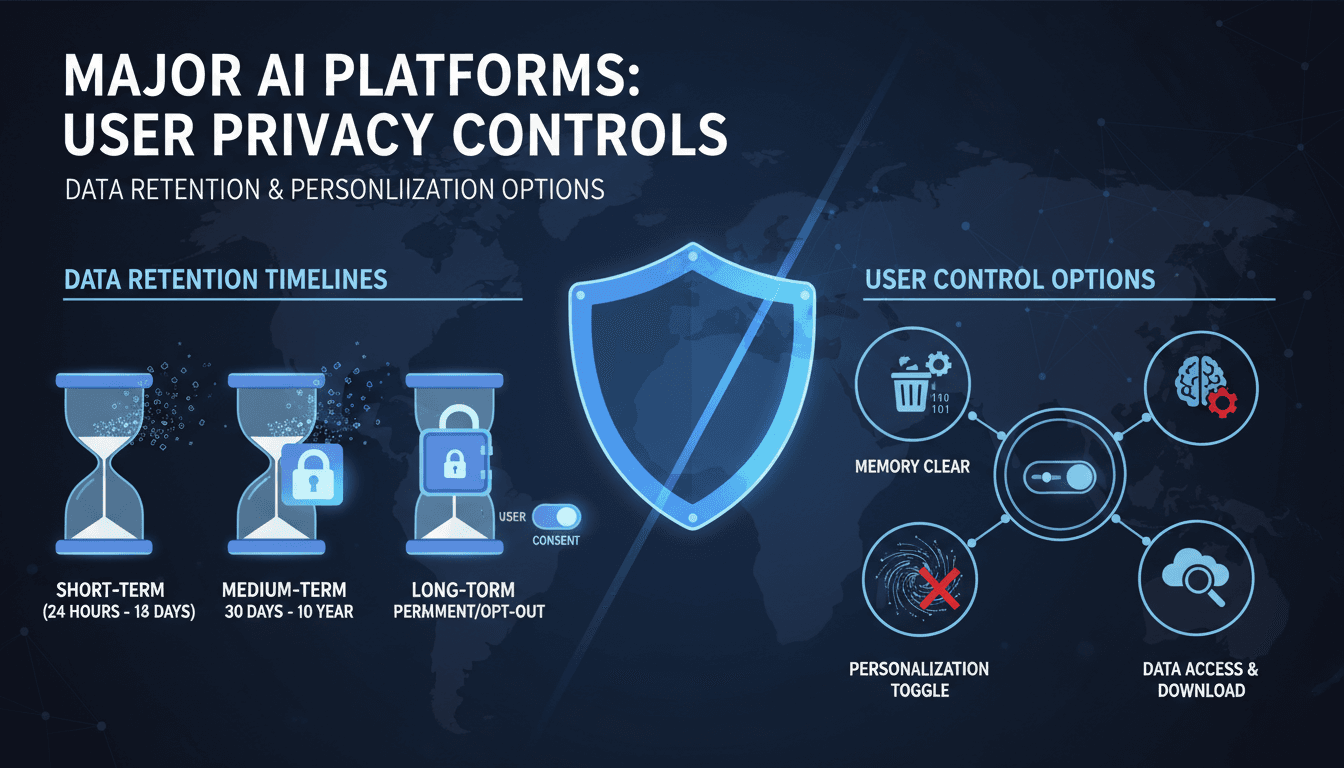
Here's what it means for you.
As AI chatbots become more integrated into daily life, understanding their memory and data practices is crucial for safeguarding your personal information.
Why it matters
The evolution of AI memory features raises significant privacy concerns, impacting how users interact with technology and manage their data.
What happened (in 30 seconds)
- AI services are evolving: Major platforms like OpenAI, Google, Meta, and Apple are implementing memory features that retain user interactions for personalization.
- User controls are complex: While platforms offer privacy settings, disabling one feature may not affect others, complicating user control over personal data.
- No immediate regulatory response: Following the Fox News article on August 24, 2026, there have been no significant regulatory actions or market shifts regarding AI privacy practices.
The context you actually need
- AI assistants have advanced: From single-session tools to persistent systems, AI chatbots now retain long-term memory and cross-platform context, enhancing user experience but raising privacy issues.
- Recent developments: Meta's 2025 announcement on using AI interactions for ad signals and OpenAI's macOS Computer History feature highlight the growing trend of data retention for personalization.
- User awareness is increasing: As users become more informed about data practices, platforms are responding by expanding privacy settings, though the effectiveness of these measures remains uncertain.
What's really happening
The integration of memory features in AI chatbots represents a significant shift in how these technologies operate and interact with users. OpenAI's Computer History feature, for instance, allows the recording of interactions across macOS apps and websites, retaining temporary files for up to 48 hours and storing plain-text memory files locally. This capability enhances the chatbot's ability to provide personalized responses based on past interactions, but it also raises concerns about the extent of data retention and user privacy.
Google's expansion of Search Services History allows for the saving of uploaded media for personalization and potential AI training, with a maximum retention period of four years after disconnection from a user account. This means that even if a user opts out of certain features, their data may still be retained for an extended period, complicating the notion of user control over personal information.
Meta's approach incorporates non-sensitive AI conversations into ad personalization across its platforms, further blurring the lines between user privacy and targeted advertising. Meanwhile, Apple emphasizes on-device processing and Private Cloud Compute, claiming no retention for its systems, although third-party integrations may follow different rules. This inconsistency across platforms creates a complex landscape for users trying to navigate their privacy options.
The ongoing rollout of these features indicates a trend towards deeper integration of AI into daily life, with companies incentivized to enhance user engagement through personalization. However, this comes at the cost of user privacy, as the depth of personal profiles constructed from AI interactions raises ongoing questions about data security and user consent. The challenge lies in balancing the benefits of personalized AI experiences with the need for robust privacy protections.
Who feels it first (and how)
- Tech-savvy users: Individuals who frequently use AI services for work or personal tasks may be more aware of privacy implications.
- Advertisers and marketers: Companies leveraging AI for targeted advertising will need to adapt to evolving privacy regulations and user expectations.
- Regulatory bodies: Government agencies monitoring data privacy will be impacted by the ongoing developments in AI memory features and user data practices.
- General consumers: Everyday users may experience confusion and concern regarding how their data is used and retained across platforms.
What to watch next
- User adoption of privacy controls: Monitor how effectively users engage with privacy settings and whether this leads to changes in platform practices.
- Regulatory developments: Keep an eye on potential government actions regarding AI privacy, especially as user awareness grows.
- Market responses: Watch for shifts in how companies position their AI services in light of privacy concerns, potentially leading to new business models focused on user trust.
Major AI platforms are implementing memory features that retain user data for personalization.
User awareness of privacy practices will increase, prompting platforms to enhance their privacy settings.
The long-term regulatory response to AI memory features and their impact on user privacy remains uncertain.
Frequently Asked Questions
- Why it matters?
- The evolution of AI memory features raises significant privacy concerns, impacting how users interact with technology and manage their data.
- What happened (in 30 seconds)?
- AI services are evolving: Major platforms like OpenAI, Google, Meta, and Apple are implementing memory features that retain user interactions for personalization. User controls are complex: While platforms offer privacy settings, disabling one feature may not affect others, complicating user control over personal data. No immediate regulatory response: Following the Fox News article on August 24, 2026, there have been no significant regulatory actions or market shifts regarding AI privacy pr
- What's really happening?
- The integration of memory features in AI chatbots represents a significant shift in how these technologies operate and interact with users. OpenAI's Computer History feature, for instance, allows the recording of interactions across macOS apps and websites, retaining temporary files for up to 48 hours and storing plain-text memory files locally. This capability enhances the chatbot's ability to provide personalized responses based on past interactions, but it also raises concerns about the exten
- Who feels it first (and how)?
- Tech-savvy users: Individuals who frequently use AI services for work or personal tasks may be more aware of privacy implications. Advertisers and marketers: Companies leveraging AI for targeted advertising will need to adapt to evolving privacy regulations and user expectations. Regulatory bodies: Government agencies monitoring data privacy will be impacted by the ongoing developments in AI memory features and user data practices. General consumers: Everyday users may experience confusion
- What to watch next?
- User adoption of privacy controls: Monitor how effectively users engage with privacy settings and whether this leads to changes in platform practices. Regulatory developments: Keep an eye on potential government actions regarding AI privacy, especially as user awareness grows. Market responses: Watch for shifts in how companies position their AI services in light of privacy concerns, potentially leading to new business models focused on user trust.
Conservative-leaning coverage of current events.
"Fox News is a highly influential conservative news outlet known for right-leaning political commentary and coverage."
— A47 Editor
AI chatbot privacy: What your AI may know about you
Major AI platforms, including ChatGPT, Meta AI, and Google, are increasingly utilizing memory, connected applications, and past interactions to tailor advertisements and responses, a trend that many users may not fully recognize. This personalization...
Daily AI news: models, tools, and policy.
"Independent outlet tracking the fast pace of AI."
— A47 Editor
AI chatbots regularly link pregnant users to anti-abortion websites without disclosure
An investigation by AlgorithmWatch revealed that AI chatbots, including ChatGPT, Gemini, Grok, and Claude, frequently direct users inquiring about unplanned pregnancies to anti-abortion organizations like Profemina, without disclosing their affiliati...
Reporting on emerging tech including AI.
"Magazine covering AI’s business and social impacts."
— A47 Editor
Kids outlearn AI—and we still don’t know why
A recent analysis highlights that while artificial intelligence, particularly ChatGPT, has made significant strides in language processing, human children still outperform AI in language acquisition, leaving researchers puzzled about the underlying r...