
Thomson Reuters Launches Proprietary Thomson LLM for Legal Work
Here's what it means for you.
If you're in the legal sector, this new AI model could reshape how you handle document reviews and legal research.
Why it matters
The launch of Thomson's proprietary AI model signifies a pivotal shift towards sovereign AI solutions in the legal industry, potentially reducing reliance on external providers.
What happened (in 30 seconds)
- Thomson Reuters launched its proprietary large language model, Thomson, on August 24, 2026, aimed at enhancing legal workflows.
- The model is integrated into the CoCounsel Legal AI assistant, focusing on high-volume document review tasks.
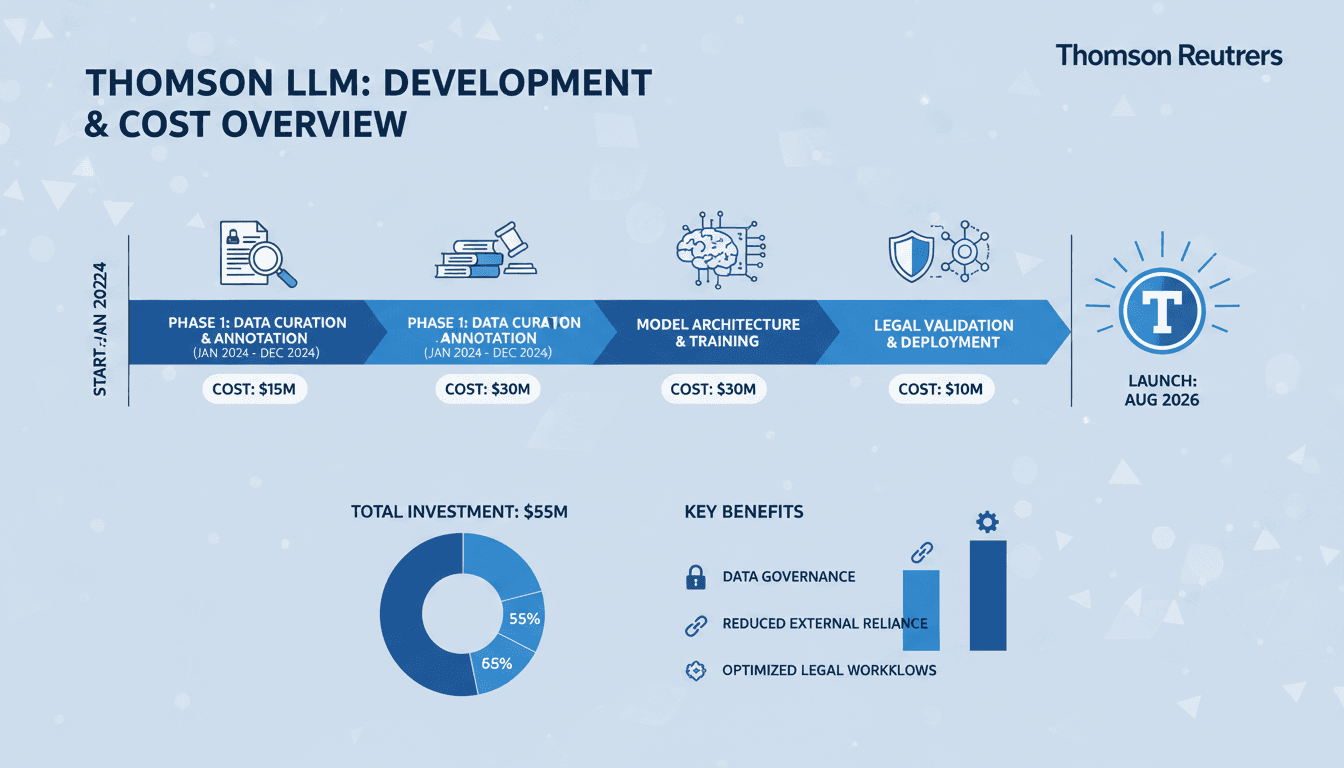
- The development cost approximately $40 million, with the final training run costing $450,000, leveraging existing proprietary legal content.
The context you actually need
- Thomson Reuters has a long history in the legal sector, with 175 years of expertise that informs its AI development strategy.
- The company acquired Safe Sign Technologies in 2024 to bolster its internal AI capabilities, emphasizing data sovereignty and fiduciary-grade AI principles.
- The legal industry is rapidly evolving, with increasing demand for specialized AI solutions that address the limitations of general-purpose models.
What's really happening
On August 24, 2026, Thomson Reuters unveiled its proprietary large language model, Thomson, marking a significant milestone in the legal technology landscape. This model was developed over two years, starting with an open-weight base model known as Snowdon, which was then fine-tuned using proprietary legal content from Westlaw and Practical Law. The final training run, which cost $450,000, was achieved through strategic economies, allowing Thomson Reuters to avoid the high costs typically associated with developing a foundation model from scratch.
The launch is part of a broader strategy to deliver sovereign, cost-efficient AI solutions that are deeply rooted in the company's extensive legal expertise. By controlling the data governance and future development of the model, Thomson Reuters aims to mitigate the risks associated with reliance on external AI providers. This is particularly relevant in the legal sector, where data privacy and compliance are paramount.
The initial deployment of Thomson targets Tabular Analysis within the CoCounsel Legal AI assistant, focusing on structured document review tasks that are often labor-intensive and time-consuming. By integrating Thomson into CoCounsel, Thomson Reuters is positioning itself to enhance the efficiency of legal workflows, potentially reducing the time and costs associated with document review.
Market observers have noted that this launch could significantly impact the competitive landscape of legal technology. Thomson Reuters is in discussions with large law firms for direct access to the model, which could lead to customized solutions tailored to specific legal practices. This move not only strengthens Thomson Reuters' position against other legal tech providers but also highlights the growing trend towards specialized AI solutions that cater to the unique needs of the legal industry.
As the legal sector continues to embrace AI, the implications of Thomson's launch extend beyond mere efficiency gains. The model's development reflects a shift towards a more controlled and sovereign approach to AI, where companies prioritize data governance and ethical considerations in their AI strategies. This could set a precedent for other sectors looking to adopt similar approaches, emphasizing the importance of domain specialization in AI development.
Who feels it first (and how)
- Legal professionals: Lawyers and paralegals will experience enhanced efficiency in document review processes.
- Law firms: Large firms may benefit from customized AI solutions that streamline workflows and reduce operational costs.
- Legal tech providers: Competitors will need to adapt to the new landscape shaped by Thomson's capabilities, potentially leading to innovation or consolidation.
What to watch next
- Adoption rates among law firms: Monitoring how quickly firms integrate Thomson into their workflows will indicate its market impact.
- Regulatory responses: Keep an eye on any governmental or industry regulations that may arise in response to the launch of proprietary AI in legal contexts.
- Competitive developments: Watch for moves from other legal tech providers as they respond to Thomson Reuters' advancements, which could reshape the market dynamics.
Thomson Reuters has launched its proprietary AI model, Thomson, for legal applications.
The model will lead to increased efficiency in legal document review and may prompt other firms to develop similar proprietary solutions.
The long-term regulatory implications and market reactions to the shift towards sovereign AI in legal services remain uncertain.
Frequently Asked Questions
- Why it matters?
- The launch of Thomson's proprietary AI model signifies a pivotal shift towards sovereign AI solutions in the legal industry, potentially reducing reliance on external providers.
- What happened (in 30 seconds)?
- Thomson Reuters launched its proprietary large language model, Thomson, on August 24, 2026, aimed at enhancing legal workflows. The model is integrated into the CoCounsel Legal AI assistant, focusing on high-volume document review tasks. The development cost approximately $40 million, with the final training run costing $450,000, leveraging existing proprietary legal content.
- What's really happening?
- On August 24, 2026, Thomson Reuters unveiled its proprietary large language model, Thomson, marking a significant milestone in the legal technology landscape. This model was developed over two years, starting with an open-weight base model known as Snowdon, which was then fine-tuned using proprietary legal content from Westlaw and Practical Law. The final training run, which cost $450,000, was achieved through strategic economies, allowing Thomson Reuters to avoid the high costs typically associ
- Who feels it first (and how)?
- Legal professionals: Lawyers and paralegals will experience enhanced efficiency in document review processes. Law firms: Large firms may benefit from customized AI solutions that streamline workflows and reduce operational costs. Legal tech providers: Competitors will need to adapt to the new landscape shaped by Thomson's capabilities, potentially leading to innovation or consolidation.
- What to watch next?
- Adoption rates among law firms: Monitoring how quickly firms integrate Thomson into their workflows will indicate its market impact. Regulatory responses: Keep an eye on any governmental or industry regulations that may arise in response to the launch of proprietary AI in legal contexts. Competitive developments: Watch for moves from other legal tech providers as they respond to Thomson Reuters' advancements, which could reshape the market dynamics.
AI news with an enterprise and cloud focus.
"Covers AI in the context of data infrastructure, cloud, and enterprise stacks."
— A47 Editor
Thomson Reuters launches proprietary AI model for legal work
Thomson Reuters Corp. has launched its first proprietary large language model, named Thomson, which integrates the company's extensive legal knowledge with external LLMs to provide legal advice. The initial deployment will focus on Tabular Analysis, ...
Business and tech news excluding paywalled content.
"High-volume business/tech outlet with frequent AI coverage."
— A47 Editor
Thomson Reuters built its own AI model off Chinese tech to rely less on Claude
Thomson Reuters has launched its first AI model, named Thomson-1, as part of a strategic initiative to reduce its reliance on Anthropic's Claude for AI solutions. This move marks a significant step for the company in developing proprietary technology...
Daily AI news: models, tools, and policy.
"Independent outlet tracking the fast pace of AI."
— A47 Editor
Thomson Reuters bets $40M on owning its AI instead of renting from OpenAI or Anthropic
Thomson Reuters is investing approximately $40 million over two years to develop its own language model named 'Thomson,' built on Alibaba's Qwen. This strategic move aims to leverage the company's proprietary content, such as Westlaw, to enhance the ...