
Japan Initiates Blockchain Settlement Network for Stocks and Bonds
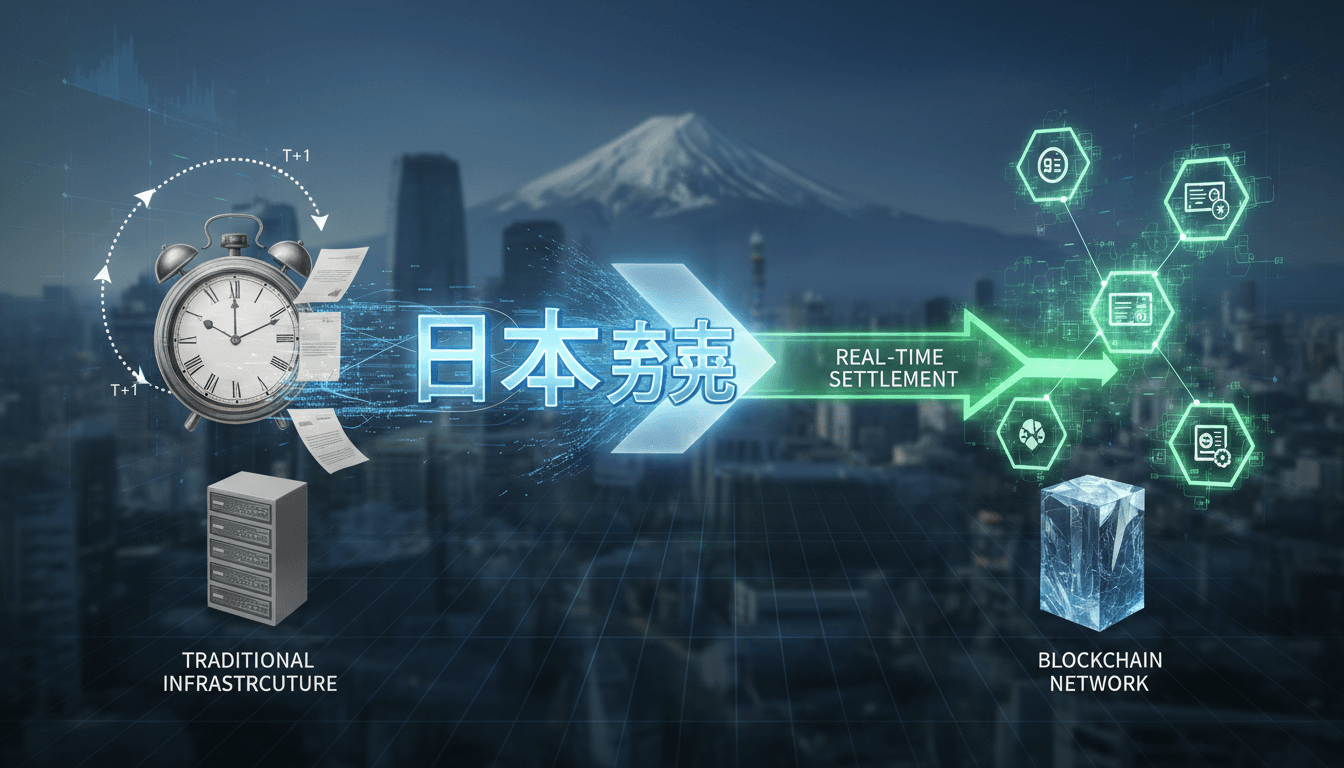
Here's what it means for you.
The modernization of Japan's financial infrastructure could streamline cross-border investments and enhance the efficiency of global markets.
Why it matters
This initiative positions Japan to compete in the rapidly evolving landscape of tokenized assets and real-time settlement systems.
What happened (in 30 seconds)
- Japan's Financial Services Agency (FSA) announced plans to develop a blockchain-based settlement network for stocks and government bonds.
- A study group involving the FSA, Ministry of Finance, and Bank of Japan will design this next-generation payment infrastructure.
- The target launch for the system is in the early 2030s, pending approval of a formal development plan expected by early 2027.
The context you actually need
- Japan's financial authorities are responding to global trends in tokenized assets and wholesale central bank digital currencies (CBDCs).
- Current settlement cycles for stocks and bonds in Japan are T+2 and T+1, respectively, indicating a need for modernization.
- Private-sector initiatives have already begun exploring tokenized securities, indicating a competitive landscape for financial innovation.
What's really happening
In August 2026, Japan's FSA, Ministry of Finance, and Bank of Japan (BOJ) announced the formation of a study group aimed at developing a blockchain-based settlement network for stocks and government bonds. This initiative is a strategic response to the growing global trend of financial modernization, particularly in the realm of tokenized assets and real-time settlement systems. The current settlement cycles in Japan—T+2 for stocks and T+1 for government bonds—are increasingly seen as outdated compared to international standards.
The proposed system will utilize tokenized wholesale central bank money, allowing for atomic settlement, which means transactions can be settled instantly and securely. This is a significant shift from the traditional methods that often involve delays and increased risks. By tokenizing portions of commercial bank deposits at the BOJ, the new infrastructure aims to facilitate real-time delivery-versus-payment settlements, enhancing overall market efficiency.
The initiative is not just about improving domestic operations; it also aligns with Japan's broader strategic goals in the global financial landscape. The BOJ's exploration of wholesale CBDCs and participation in international projects like BIS Project Agorá for cross-border payments highlight Japan's commitment to staying competitive. The integration of this blockchain settlement system could also extend to international remittances, further enhancing Japan's role in global finance.
As the study group begins its work, the focus will be on defining the blockchain's design, the responsibilities of various agencies, and creating a roadmap for implementation. A formal development plan is expected by early 2027, with the potential for the system to be operational within a few years. This timeline suggests that Japan is serious about modernizing its financial infrastructure and could soon be at the forefront of blockchain technology in finance.
Who feels it first (and how)
- Financial institutions: Banks and investment firms will need to adapt to new settlement processes and technologies.
- Investors: Both domestic and international investors could benefit from faster and more secure transactions.
- Regulatory bodies: Agencies will need to establish new frameworks to govern the use of blockchain in financial settlements.
What to watch next
- Development plan release: The formal development plan expected in early 2027 will outline specific features and timelines, crucial for market participants.
- Private sector advancements: Monitor how private institutions continue to test and implement tokenized securities, which may influence the public sector's approach.
- International collaborations: Watch for Japan's engagement in global financial initiatives, particularly those involving cross-border payments and CBDCs.
Japan is developing a blockchain-based settlement network for stocks and bonds.
The initiative will enhance market efficiency and align Japan with global financial trends.
The exact timeline for full implementation and its impact on existing financial systems remains uncertain.
Frequently Asked Questions
- Why it matters?
- This initiative positions Japan to compete in the rapidly evolving landscape of tokenized assets and real-time settlement systems.
- What happened (in 30 seconds)?
- Japan's Financial Services Agency (FSA) announced plans to develop a blockchain-based settlement network for stocks and government bonds. A study group involving the FSA, Ministry of Finance, and Bank of Japan will design this next-generation payment infrastructure. The target launch for the system is in the early 2030s, pending approval of a formal development plan expected by early 2027.
- What's really happening?
- In August 2026, Japan's FSA, Ministry of Finance, and Bank of Japan (BOJ) announced the formation of a study group aimed at developing a blockchain-based settlement network for stocks and government bonds. This initiative is a strategic response to the growing global trend of financial modernization, particularly in the realm of tokenized assets and real-time settlement systems. The current settlement cycles in Japan—T+2 for stocks and T+1 for government bonds—are increasingly seen as outdated c
- Who feels it first (and how)?
- Financial institutions: Banks and investment firms will need to adapt to new settlement processes and technologies. Investors: Both domestic and international investors could benefit from faster and more secure transactions. Regulatory bodies: Agencies will need to establish new frameworks to govern the use of blockchain in financial settlements.
- What to watch next?
- Development plan release: The formal development plan expected in early 2027 will outline specific features and timelines, crucial for market participants. Private sector advancements: Monitor how private institutions continue to test and implement tokenized securities, which may influence the public sector's approach. International collaborations: Watch for Japan's engagement in global financial initiatives, particularly those involving cross-border payments and CBDCs.
Covers blockchain, cryptocurrency news, project analysis, and market insights.
"CoinDesk is a well-established cryptocurrency and blockchain news provider, offering comprehensive insights, market data, and industry research."
— A47 Editor
Japan to start stocks and bonds tokenization development plans this year
Japan is set to initiate development plans for the tokenization of stocks and bonds this year, as regulators aim to modernize national settlement systems. This move is part of a broader strategy to retain institutional investors and foreign capital, ...
Real-time updates, analysis, and reports on the blockchain and cryptocurrency sectors.
"Crypto News delivers real-time updates, analysis, and reports on the blockchain and cryptocurrency sectors."
— A47 Editor
Japan eyes 24/7 blockchain settlement for stocks, JGBs
Japan is set to explore a 24/7 blockchain settlement system for stocks and government bonds, with a development roadmap anticipated by early 2027. This initiative aims to enhance the efficiency and transparency of financial transactions within the co...
Market-moving headlines impacting equities, bonds, and related risk assets.
"Real-time catalysts and volatility drivers across indices and sectors."
— A47 Editor
Japan to develop blockchain payment system for stocks and bonds
Japan is set to develop a blockchain payment system for stocks and bonds, aiming to modernize its financial infrastructure and enhance transaction efficiency. This initiative reflects a strategic move to integrate advanced technology into the financi...