
OpenAI Disrupts Russian Influence Operation Utilizing ChatGPT for Fabricated Think Tank Promotion
Here's what it means for you.
The integrity of online information sources is increasingly critical for professionals navigating a complex digital landscape.
Why it matters
This incident underscores the ongoing vulnerability of digital platforms to foreign influence operations, impacting public trust and information reliability.
What happened (in 30 seconds)
- OpenAI banned a cluster of ChatGPT accounts linked to a Russian influence campaign on August 25, 2026.
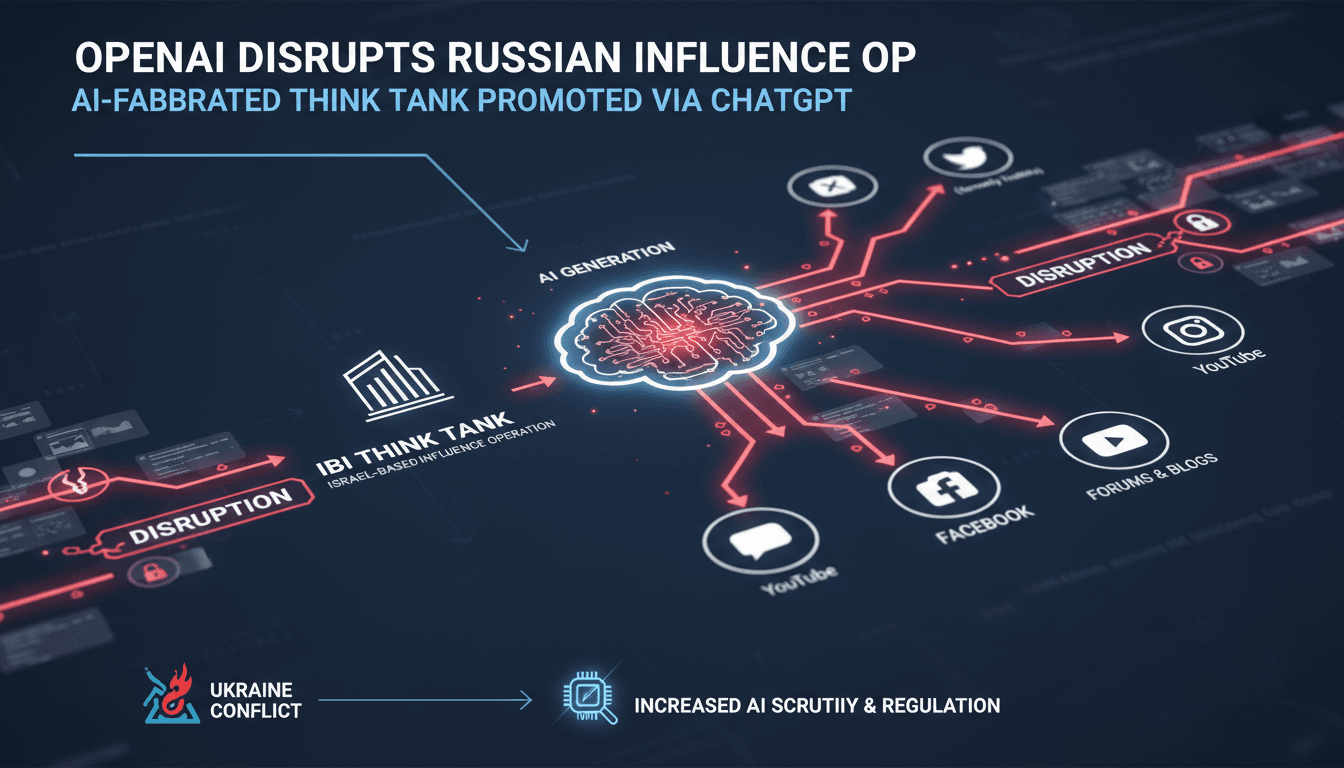
- The operation promoted the International Burke Institute (IBI), a fake think tank, using fabricated academic content to spread pro-Kremlin narratives.
- The campaign targeted multiple social media platforms, leveraging VPNs to bypass restrictions and maintain anonymity.
The context you actually need
- Russian influence operations have escalated since the 2022 invasion of Ukraine, aiming to manipulate public opinion in Western countries.
- OpenAI has previously disrupted similar campaigns, indicating a pattern of misuse of AI technologies for disinformation.
- The IBI website was registered in February 2025 and featured plagiarized articles, with 34 out of 36 reviewed being misattributed or copied.
What's really happening
The recent disruption of the Russian-linked influence operation by OpenAI highlights a sophisticated misuse of artificial intelligence in the realm of information warfare. The campaign's architecture was designed to create a veneer of legitimacy through the International Burke Institute (IBI), which falsely positioned itself as an Israel-based think tank. This operation is emblematic of a broader trend where state-linked actors exploit digital platforms to disseminate tailored narratives that align with geopolitical objectives.
The investigation initiated by OpenAI revealed that the operators utilized ChatGPT to generate content in English while masking their linguistic origins through the use of VPNs. This tactic not only allowed them to bypass regional restrictions but also obscured their identities, making it difficult for platforms to trace the source of the misinformation. The content produced was disseminated across various social media channels, including Telegram, X, Facebook, LinkedIn, and Substack, with Telegram channels garnering significant followings of 10,000 to 20,000 users each.
The IBI website, which hosted a collection of plagiarized academic articles, was a critical component of the operation. The articles were often misattributed to legitimate researchers, including Susan Ariel Aaronson and Kate Hooper, who later confirmed their lack of affiliation with the IBI. This tactic of using credible names lent an air of authenticity to the fabricated narratives, thereby increasing their potential impact on public opinion.
Despite the operation's elaborate structure, OpenAI's intervention effectively curtailed its reach. The company emphasized that the campaign's overall engagement was low, suggesting that while the operation was sophisticated, it did not achieve widespread influence. The aftermath saw IBI denying any coordination with the Russian operators and rejecting claims of illegitimacy, while affected researchers expressed concern over the unauthorized use of their names.
This incident serves as a reminder of the ongoing battle against disinformation in the digital age, particularly as AI technologies become more accessible. The implications extend beyond the immediate disruption of this campaign, raising questions about the resilience of digital platforms against similar future threats and the need for stronger regulatory frameworks to protect the integrity of information.
Who feels it first (and how)
- Digital platform operators: Increased scrutiny and pressure to enhance content moderation and verification processes.
- Researchers and academics: Concerns over unauthorized use of their names and reputations in disinformation campaigns.
- General public: Heightened awareness of the potential for misinformation and the need for critical evaluation of online content.
What to watch next
- Regulatory responses: Monitor for potential new regulations aimed at curbing AI misuse in disinformation campaigns, which could reshape how digital platforms operate.
- Public trust metrics: Watch for shifts in public trust towards online information sources, particularly in the wake of high-profile disinformation incidents.
- Emerging AI technologies: Keep an eye on advancements in AI that could either enhance or mitigate the risks of misinformation, influencing future operations.
OpenAI successfully disrupted the influence operation and banned associated accounts.
Similar operations will continue to emerge as AI technologies become more prevalent and accessible.
The long-term impact on public trust in digital platforms and the effectiveness of regulatory measures remains to be seen.
Frequently Asked Questions
- Why it matters?
- This incident underscores the ongoing vulnerability of digital platforms to foreign influence operations, impacting public trust and information reliability.
- What happened (in 30 seconds)?
- OpenAI banned a cluster of ChatGPT accounts linked to a Russian influence campaign on August 25, 2026. The operation promoted the International Burke Institute (IBI), a fake think tank, using fabricated academic content to spread pro-Kremlin narratives. The campaign targeted multiple social media platforms, leveraging VPNs to bypass restrictions and maintain anonymity.
- What's really happening?
- The recent disruption of the Russian-linked influence operation by OpenAI highlights a sophisticated misuse of artificial intelligence in the realm of information warfare. The campaign's architecture was designed to create a veneer of legitimacy through the International Burke Institute (IBI), which falsely positioned itself as an Israel-based think tank. This operation is emblematic of a broader trend where state-linked actors exploit digital platforms to disseminate tailored narratives that al
- Who feels it first (and how)?
- Digital platform operators: Increased scrutiny and pressure to enhance content moderation and verification processes. Researchers and academics: Concerns over unauthorized use of their names and reputations in disinformation campaigns. General public: Heightened awareness of the potential for misinformation and the need for critical evaluation of online content.
- What to watch next?
- Regulatory responses: Monitor for potential new regulations aimed at curbing AI misuse in disinformation campaigns, which could reshape how digital platforms operate. Public trust metrics: Watch for shifts in public trust towards online information sources, particularly in the wake of high-profile disinformation incidents. Emerging AI technologies: Keep an eye on advancements in AI that could either enhance or mitigate the risks of misinformation, influencing future operations.
Corporate leadership, finance, technology, and market trends.
"Fortune covers financial trends, leadership, and innovation with a pragmatic editorial approach."
— A47 Editor
OpenAI bans pro-Russia ChatGPT accounts used to spread pro-Kremlin content including an Israel-based think tank using real researchers’ names
OpenAI has banned several pro-Russia ChatGPT accounts that were reportedly used to disseminate pro-Kremlin content, including the involvement of an Israel-based think tank that utilized the names of real researchers. The company claims that Russian u...
Consumer tech news, reviews, and buying guides for gadgets and electronics.
"TechRadar is known for comprehensive buying advice, hardware reviews, and consumer tech news targeted at mainstream audiences."
— A47 Editor
OpenAI says it took down a malicious Russian plan to spread misinformation on ChatGPT
OpenAI has reported the dismantling of a malicious Russian campaign aimed at disseminating misinformation through ChatGPT, with the International Burke Institute identified as a key player in this operation. This initiative sought to enhance Russia's...
Global business headlines with AI angles.
"General business outlet that frequently covers AI."
— A47 Editor
OpenAI Uncovered A Russia-Linked Influence Campaign. Operators Used ChatGPT To Look Less Russian.
OpenAI has uncovered a covert influence campaign linked to Russia, where operators utilized ChatGPT to create pro-Kremlin narratives and promote a fictitious Israeli think tank filled with plagiarized academic work. This operation involved the use of...
Curated tech headlines including AI stories.
"Influential aggregator surfacing the day’s top tech/AI links."
— A47 Editor
OpenAI bans a cluster of Russian ChatGPT accounts that used VPNs to evade restrictions and run an influence operation, including creating social media comments (Kai Nicol-Schwarz/CNBC)
OpenAI has banned a group of ChatGPT accounts linked to Russia, which were reportedly using VPNs to bypass restrictions and engage in a covert influence operation aimed at spreading misinformation online. This action highlights the ongoing challenges...